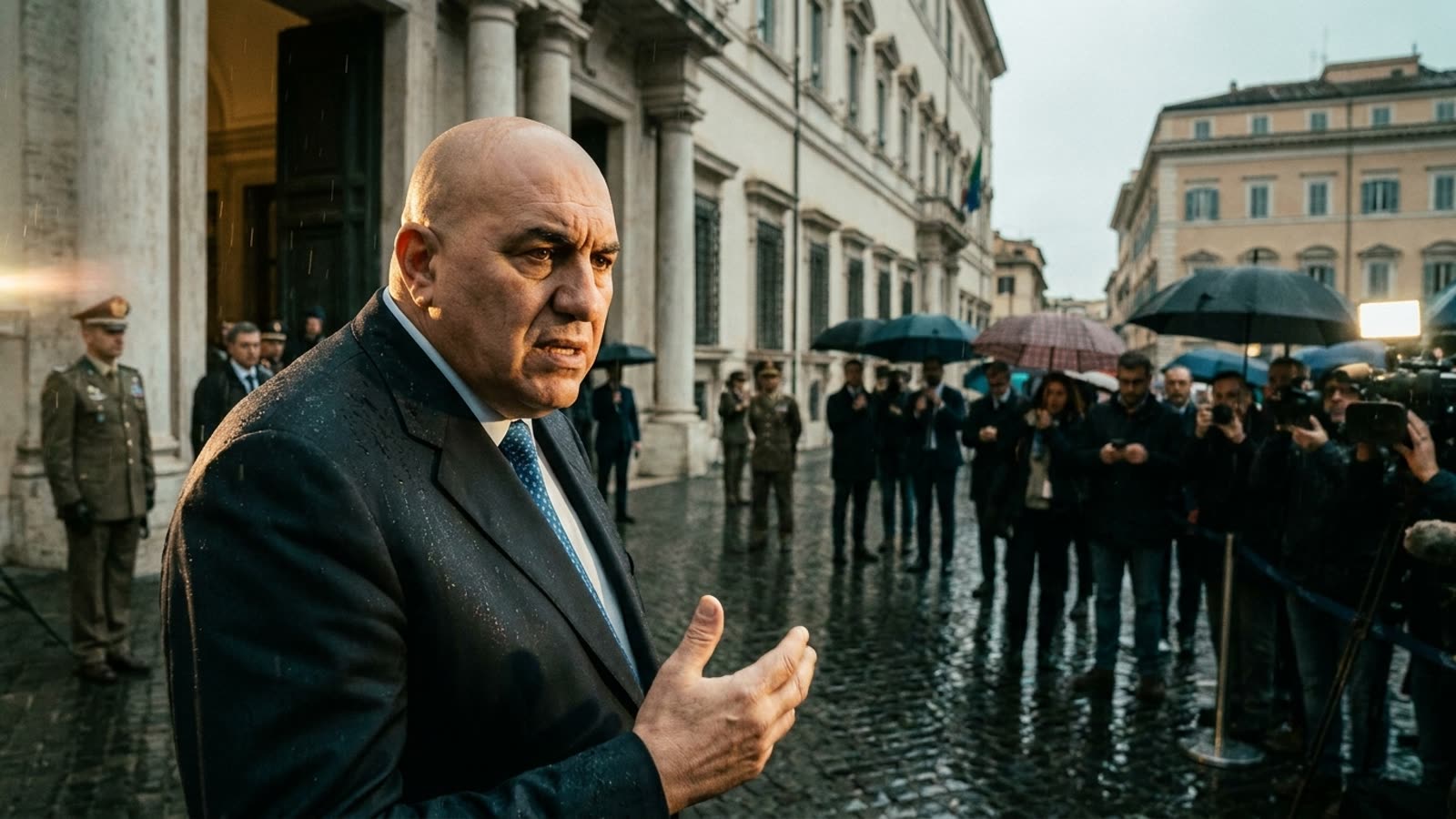
When Italy's defence minister tells the BBC that the American president is "completely wrong" on the defining security question of the decade, the polite fiction of allied unity collapses. Guido Crosetto's interview, aired Friday, did not mince words: restricting support for Ukraine risks prolonging Russia's invasion rather than ending it. Coming from a minister in Giorgia Meloni's right-wing government—one that has carefully cultivated ties to the Trump administration—the rebuke lands with particular force.
Crosetto is no dove. A former arms-industry executive and co-founder of Meloni's Brothers of Italy party, he has spent two years quietly expanding Italian military aid to Kyiv while Rome sought to preserve its commercial relationship with Washington. That he now speaks so bluntly suggests internal calculations have shifted: the costs of silent acquiescence to Trump's Ukraine scepticism have begun to outweigh the diplomatic benefits.
The alliance fractures in public
NATO's southern flank has long been its most transactional wing. Italy, Spain, and Greece historically balanced Atlantic commitments against Mediterranean interests—energy deals with Algeria, migration compacts with Libya, trade with the Gulf. But Ukraine scrambled those equations. For two years, Meloni threaded the needle: supporting Kyiv militarily while avoiding the rhetorical confrontations with Trump that Emmanuel Macron seemed to relish.
Crosetto's interview ends that balancing act. By asserting that American restrictions prolong the war, he implicitly accuses Washington of strategic sabotage—a charge that, until now, only opposition politicians and think-tank analysts dared articulate. The Italian government has not walked back his comments.
Why Rome moved now
Timing matters. The midterm elections loom, and Trump's political weakness is no secret; his approval ratings have cratered, and Republican candidates are distancing themselves from his tariff agenda. European leaders are quietly recalculating how much deference they owe a president who may soon face a hostile Congress.
More immediately, the Strait of Hormuz blockade Trump touted Friday has rattled European energy markets already strained by the Iran standoff. Italy imports roughly forty percent of its natural gas; supply disruptions would hit Rome harder than Washington. Crosetto's critique can be read as a warning shot: if American policy destabilises both Eastern Europe and the Gulf simultaneously, allies will say so publicly.
Our take
The transatlantic relationship has survived worse than a BBC interview. But Crosetto's comments matter because they come from the ideological quarter Trump assumed was safest—nationalist, Eurosceptic, instinctively sympathetic to strongman politics. If even Meloni's cabinet is willing to break with Washington on camera, the administration's claim to lead a unified Western front against Moscow is functionally over. The alliance is not dead, but it is no longer pretending to agree.