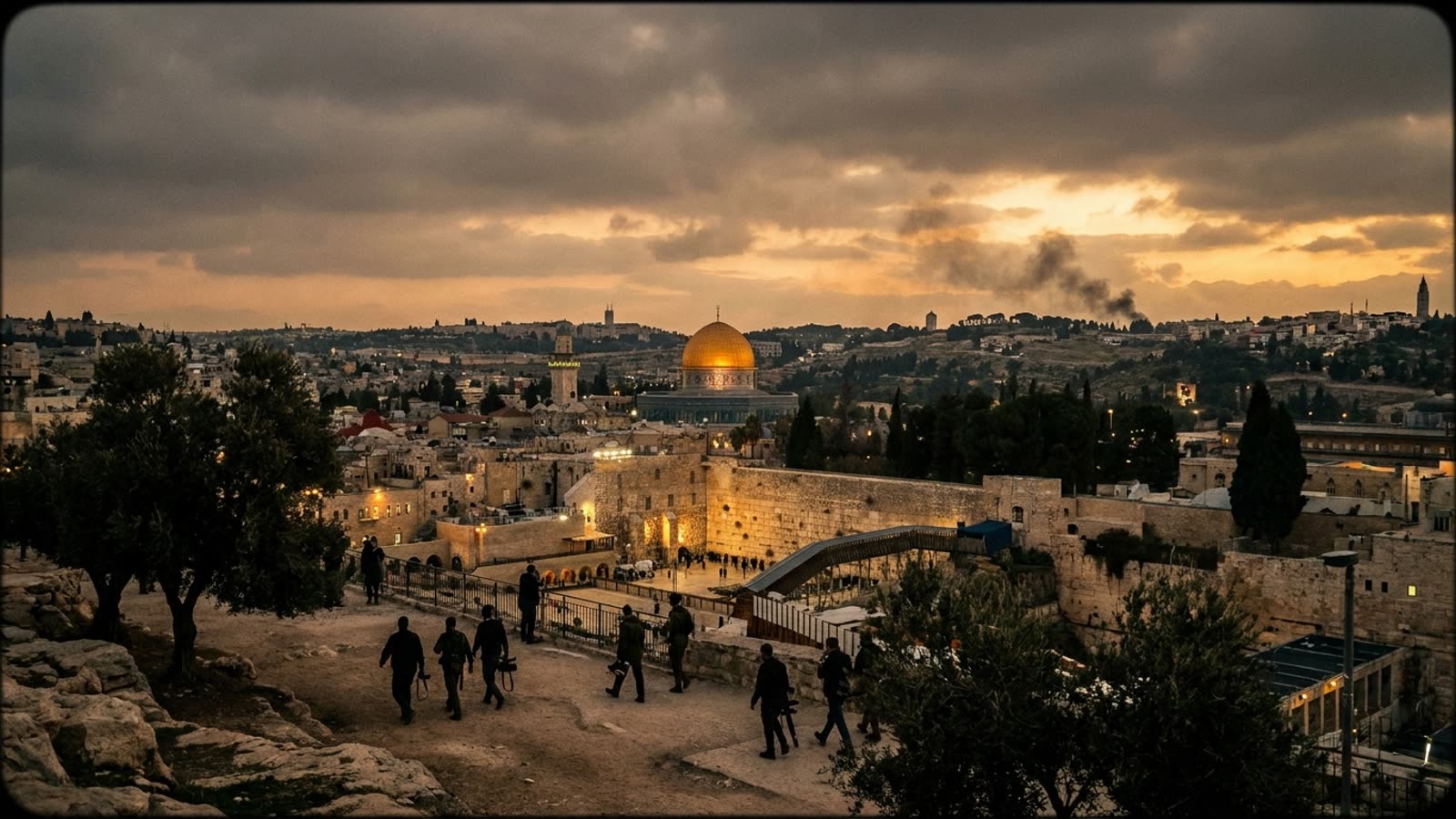
The olive harvest in the West Bank is not merely agricultural; it is an annual assertion of Palestinian presence on contested land, a ritual that predates the modern state of Israel and persists despite decades of occupation. This week, Israeli settlers made clear they understand the symbolism perfectly well, attacking Palestinian farmers and, in a development that complicates the usual diplomatic evasions, a Washington Post journalist documenting the violence.
The attacks occurred during what Palestinians call the mawsim, the harvest season that runs from October through November and accounts for a significant portion of Palestinian agricultural income. Settler violence during this period has become so predictable that human rights organizations now deploy observers specifically to document it. What distinguishes this year's incidents is their brazenness—and the inclusion of an American journalist among the targets.
The economics of intimidation
Olive oil production represents one of the few viable economic activities for Palestinians in Area C, the roughly 60 percent of the West Bank under full Israeli military and civil control. Settlers have long understood that disrupting the harvest accomplishes multiple objectives: it inflicts economic damage, asserts territorial dominance, and—when Palestinian farmers abandon groves out of fear—creates facts on the ground that can later be cited to justify land appropriation.
The Israeli government's response to settler violence has followed a familiar pattern: rhetorical condemnation occasionally issued by centrist ministers, followed by no meaningful enforcement. The Netanyahu coalition's reliance on far-right settler parties has transformed what was once a fringe phenomenon into something closer to unofficial policy.
Washington's studied ambiguity
The Biden administration has imposed sanctions on individual settlers involved in violence, a measure that allows officials to claim action while avoiding confrontation with Jerusalem. The targeting of an American journalist—whose employer, the Washington Post, maintains significant influence in Washington policy circles—tests whether this approach can survive contact with domestic media pressure.
State Department statements following the attack deployed the usual formulations: concern expressed, investigations urged, commitment to press freedom affirmed. What was absent was any suggestion that continued military aid might be conditioned on Israeli action against settler militias. The administration appears to have calculated that the costs of a genuine confrontation with Israel outweigh the reputational damage of appearing ineffectual.
Our take
The olive harvest attacks reveal a truth that American policymakers prefer to obscure: the occupation is not a frozen conflict awaiting resolution but an active process of dispossession that continues daily. Targeting a Washington Post journalist was tactically foolish—it guaranteed coverage that settler violence against Palestinians alone rarely receives—but it also exposed the limits of American influence. When your closest ally's government depends on parties that view settler violence as legitimate resistance to Palestinian presence, strongly worded statements accomplish nothing. The Biden administration knows this. Its continued pretense otherwise is not diplomacy; it is complicity with extra steps.