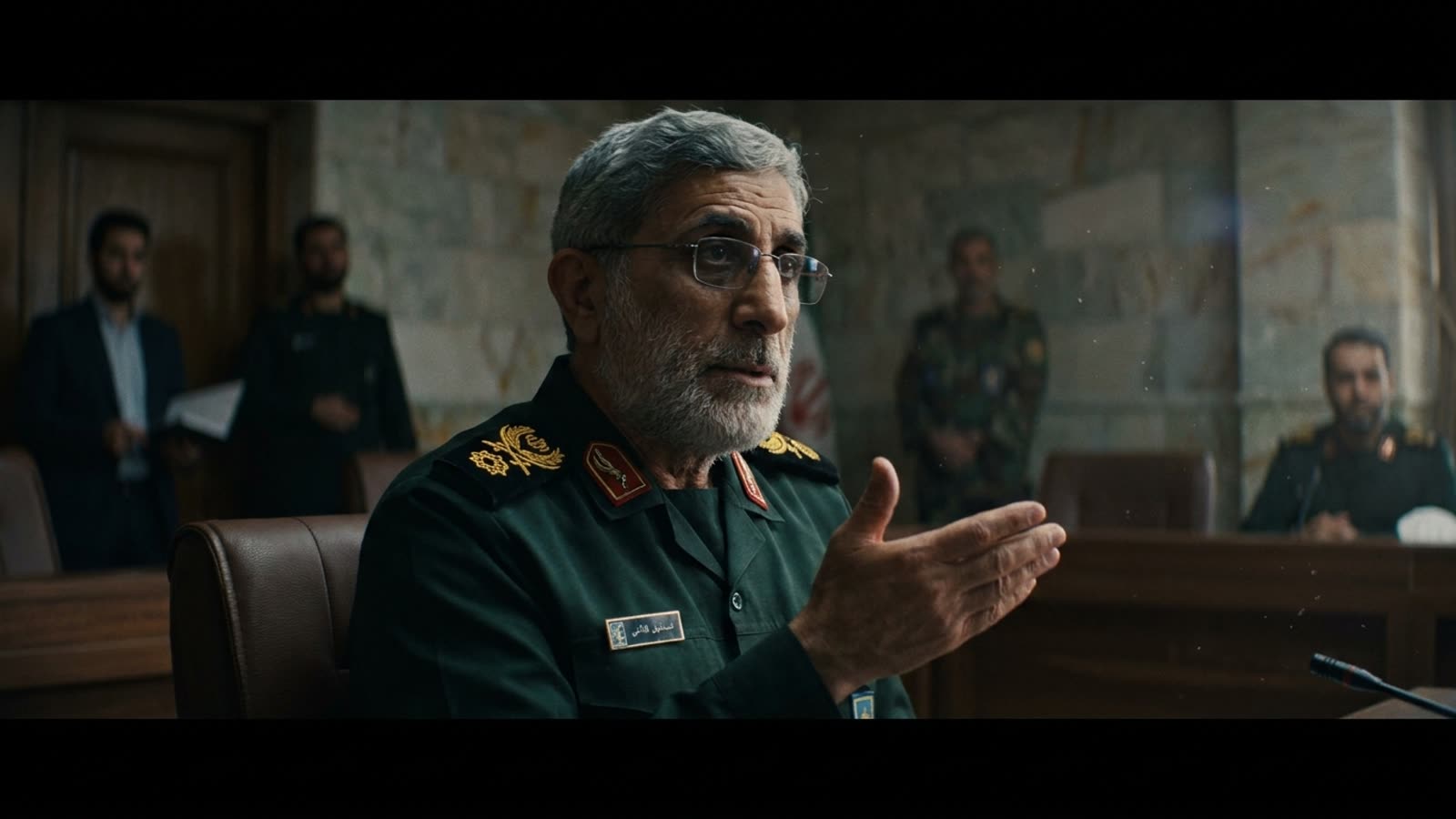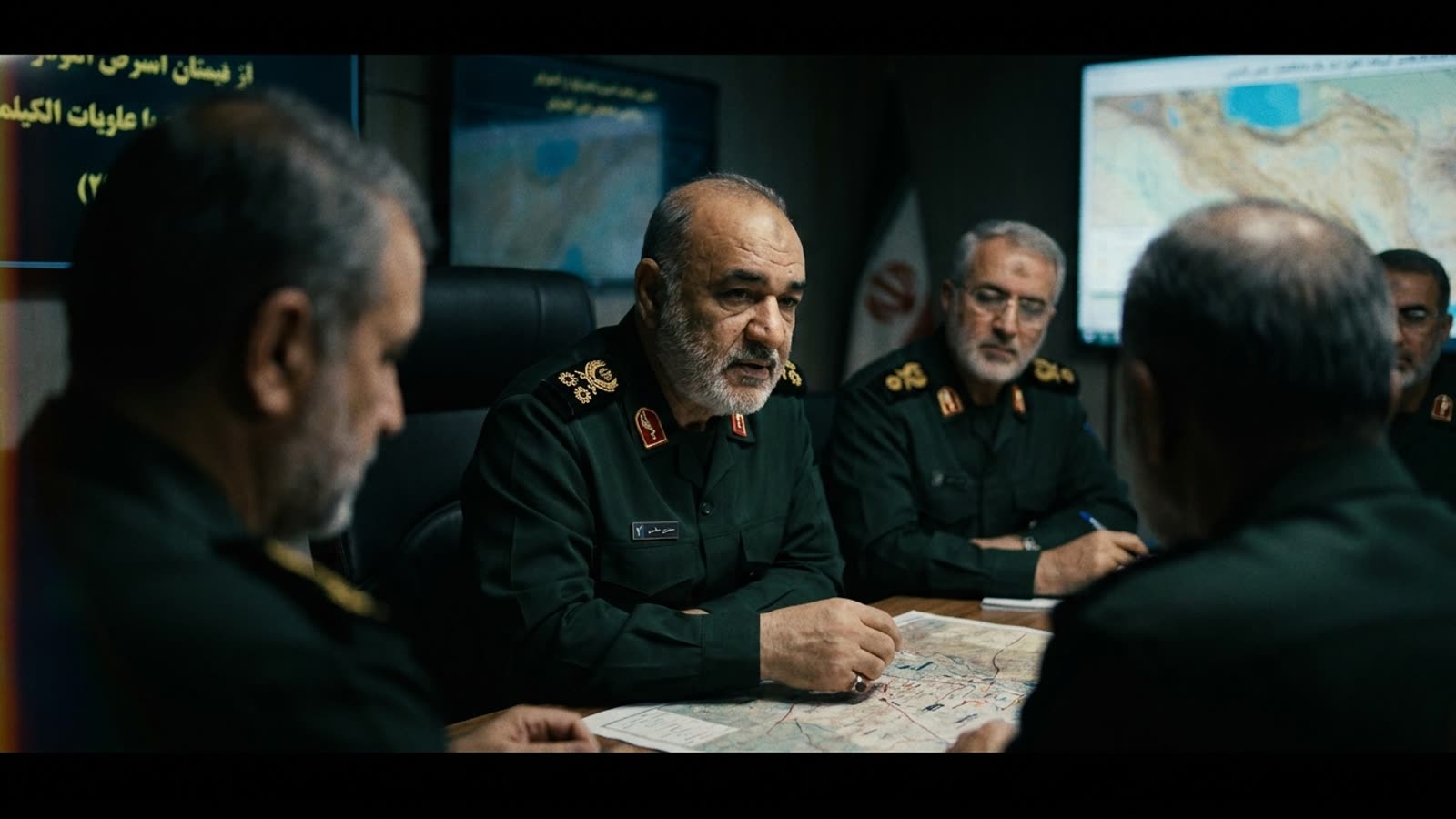
The general directing Iran's strategic posture against a potential American strike is himself a fugitive from international justice. That Tehran has placed its chips on a commander wanted by Interpol tells you everything about where the regime believes this confrontation is heading.
Hossein Salami, the Islamic Revolutionary Guard Corps commander-in-chief, has consolidated control over Iran's military decision-making at precisely the moment the Trump administration is weighing a second wave of strikes. Salami, who faces an Interpol red notice connected to the 1994 AMIA bombing in Buenos Aires that killed 85 people, represents the IRGC's most uncompromising faction—men who view any negotiation with Washington as capitulation and any restraint as weakness.
The hardliner's hour
Salami's ascent within Iran's war council reflects a broader purge of pragmatists from Tehran's security establishment. The IRGC has systematically sidelined figures associated with the Rouhani-era diplomatic opening, replacing them with officers whose formative experiences were the Iran-Iraq War and the subsequent decades of shadow conflict with Israel and the United States. These are men who believe Iran survived eight years of Iraqi chemical weapons attacks; they are not inclined to flinch at American cruise missiles.
The general's influence extends beyond military planning. He has become the regime's primary interpreter of American intentions, reportedly telling Supreme Leader Khamenei that Trump's domestic political troubles make sustained military action unlikely. Whether this assessment is correct matters less than the fact that it has become operational doctrine in Tehran.
Washington's blind spot
American intelligence has struggled to map the internal dynamics of Iran's Revolutionary Guard leadership since the Soleimani assassination in 2020. The killing removed the one IRGC figure whose thinking Washington understood reasonably well, replacing him with a generation of commanders who came of age entirely within the Islamic Republic's closed system. Salami in particular has maintained an almost paranoid operational security, rarely appearing in contexts where his communications might be intercepted.
This opacity creates genuine risk. The Trump administration is making decisions about military escalation based on assumptions about Iranian red lines that may no longer hold. A regime whose war planning is dominated by a wanted terrorist with nothing to lose from confrontation may not respond to American pressure the way previous Iranian governments have.
Our take
There is a grim irony in the fact that American maximum pressure campaigns have consistently elevated Iran's most extreme voices. Salami's prominence is not despite American policy but partly because of it—each escalation strengthens the IRGC's argument that diplomacy is futile and only force commands respect. The general wanted for mass murder is now the man deciding whether the Middle East tips into wider war. That should concern everyone, regardless of their views on the underlying conflict.