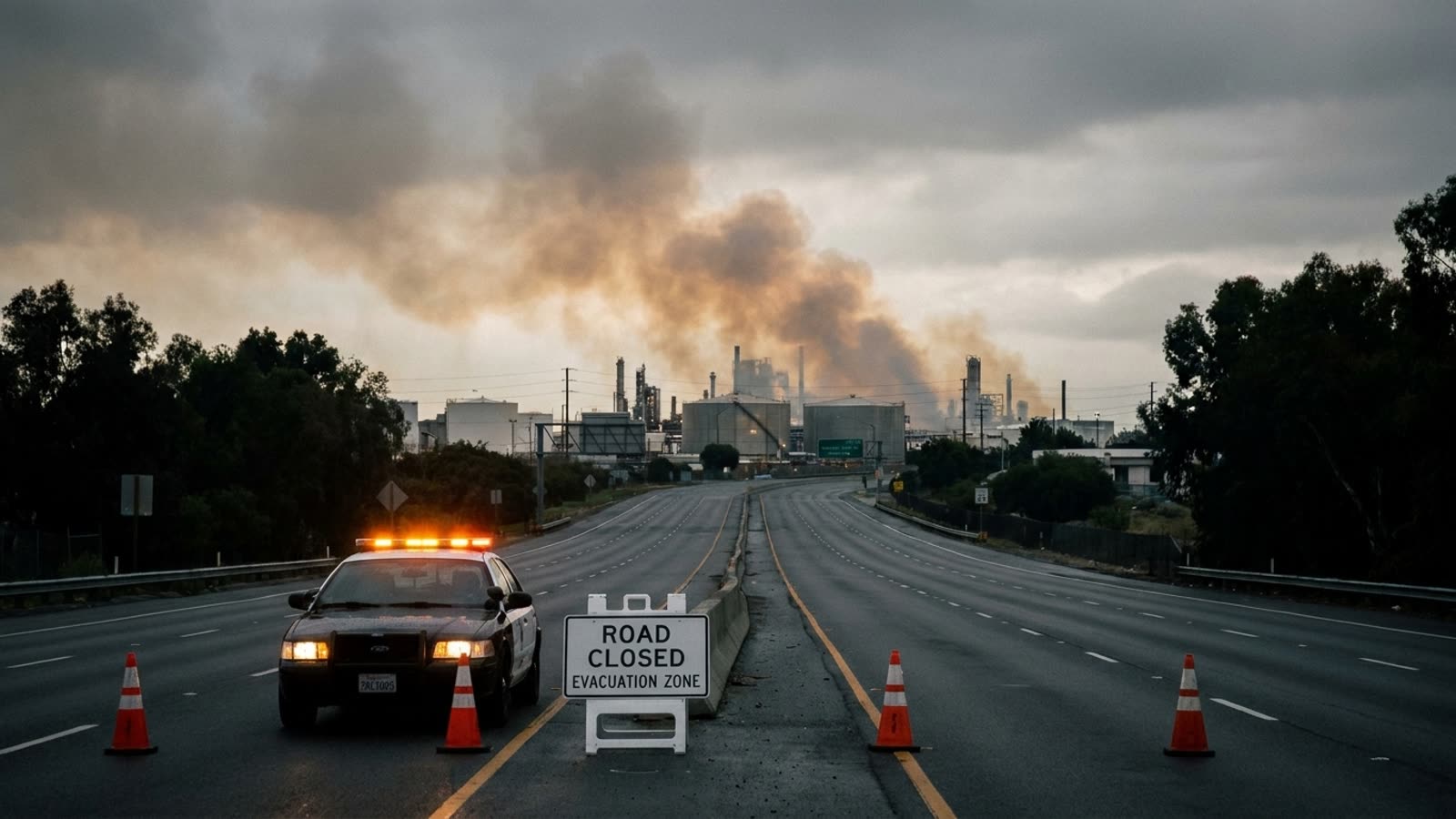
A tank containing toxic chemicals is at risk of explosion in California, forcing approximately 40,000 residents to evacuate their homes in what has become one of the most significant emergency displacement events of 2026. The crisis exposes the persistent tension between industrial infrastructure and residential expansion in the state's sprawling communities.
The evacuation order, issued as authorities assess the structural integrity of the compromised tank, represents the kind of large-scale emergency response that tests both municipal resources and public trust. For residents ordered to leave with little notice, the experience is a visceral reminder that proximity to industrial facilities carries risks that zoning maps and disclosure documents rarely make tangible.
The logistics of mass displacement
Moving 40,000 people on short notice is an operational challenge that few local governments are equipped to handle smoothly. Emergency shelters must be opened, traffic must be managed, and vulnerable populations—the elderly, those with medical dependencies, people without transportation—must be identified and assisted. The effectiveness of this response will likely become a case study for emergency management professionals nationwide.
California has invested heavily in disaster preparedness, but much of that infrastructure is oriented toward wildfires and earthquakes. Industrial chemical emergencies occupy a different category, one that requires specialized hazmat expertise and coordination with federal agencies. The state's response in the coming hours will reveal whether those capabilities have kept pace with the state's industrial footprint.
Industrial safety under scrutiny
The incident will inevitably reignite debates about industrial facility oversight in California. The state has some of the nation's strictest environmental regulations, yet enforcement resources have not always matched regulatory ambition. Questions about inspection frequency, maintenance requirements, and the adequacy of buffer zones between industrial sites and residential areas will demand answers once the immediate crisis passes.
For communities that have grown up around industrial facilities—often lower-income areas with less political capital to resist such development—the evacuation is a familiar anxiety made suddenly concrete. Environmental justice advocates have long argued that the distribution of industrial risk in California follows predictable demographic patterns.
Our take
Emergency evacuations make for dramatic headlines, but the more important story is what happens after the all-clear sounds. If this crisis produces only temporary concern followed by bureaucratic inertia, it will join a long list of near-misses that failed to catalyze meaningful reform. California's industrial safety regime needs examination not when tanks are threatening to explode, but in the quiet periods when prevention is still possible. Forty thousand displaced residents deserve more than relief; they deserve assurance that the systems meant to protect them are actually functioning.