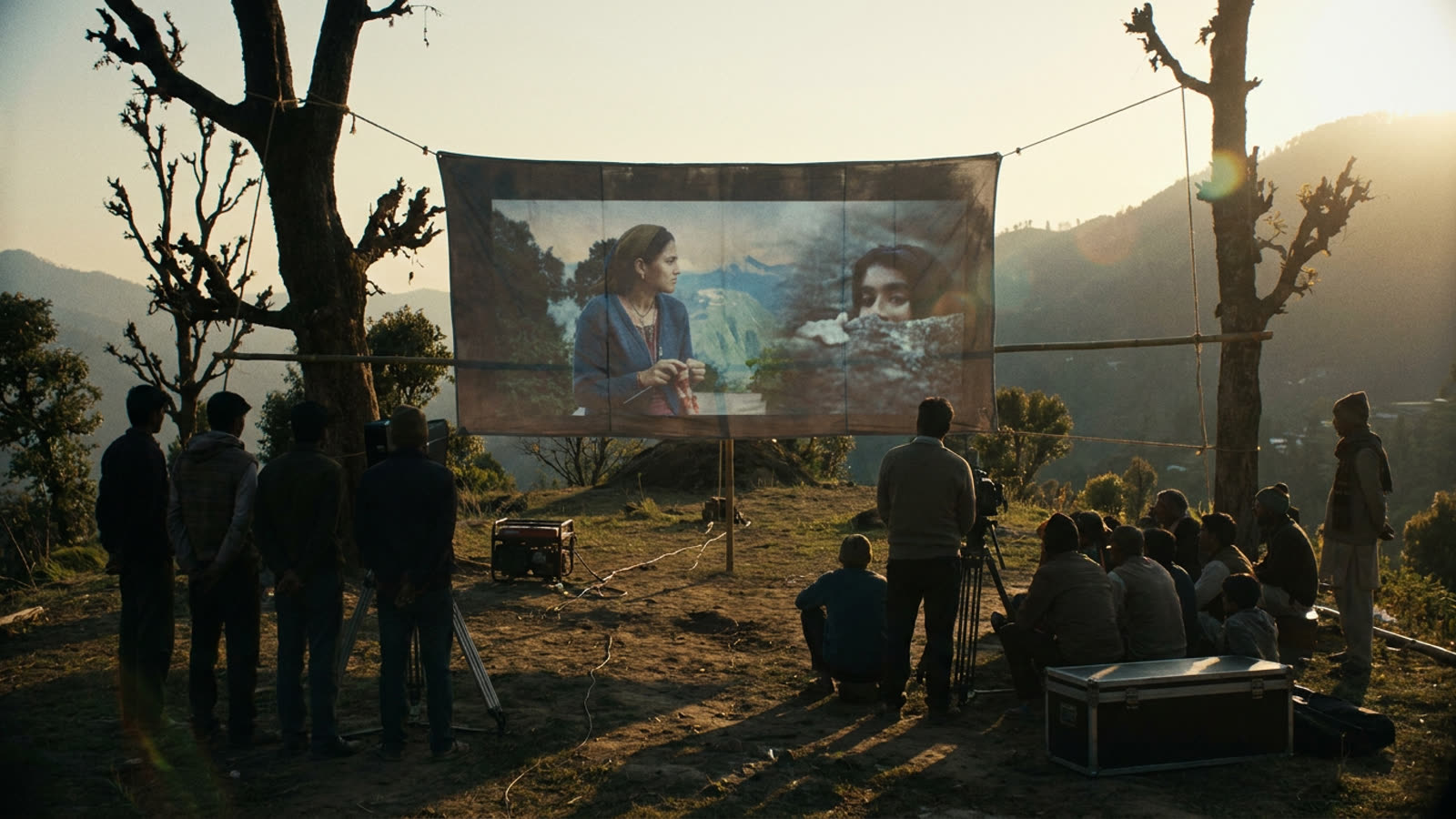
The Indian film industry produces more movies annually than any other country on earth, yet the vast majority never reach a theater screen or find a home on streaming platforms. That paradox has finally produced an organized response: the Independent Filmmakers Association of India, a not-for-profit collective of over 120 filmmakers and producers who have decided that if the system won't accommodate them, they will route around it.
The timing is strategic. As Cannes 2026 unfolds with India's arthouse contingent once again relegated to sidebar sections while commercial Bollywood spectacles dominate domestic screens, the IFAI's formation reads as both a practical intervention and a pointed critique of an industry that has grown comfortable ignoring its most adventurous voices.
The distribution wall
India's theatrical landscape is controlled by a handful of multiplex chains that prioritize guaranteed returns from star-driven Hindi films and regional blockbusters. An independent feature without a celebrity cast faces a near-impossible path to screens—even when it has festival credentials, critical acclaim, or both. The economics are brutal: exhibitors demand minimum guarantees that most indie productions cannot afford, and without theatrical visibility, streaming platforms show little interest.
The IFAI plans to negotiate collectively with exhibitors and streamers, pooling leverage that individual filmmakers lack. The model echoes similar movements in South Korea and Latin America, where filmmaker collectives have successfully pressured distributors to reserve screen quotas for domestic independent work.
Beyond Bollywood's shadow
India's regional cinema—Tamil, Malayalam, Bengali, Marathi, and dozens of other language industries—has produced some of the most critically celebrated work in world cinema over the past decade. Yet these films struggle for oxygen in a market where Hindi-language content dominates streaming algorithms and marketing budgets. The IFAI explicitly positions itself as a pan-Indian coalition, uniting filmmakers across linguistic and regional lines to advocate for distribution pathways that don't require a Mumbai blessing.
The collective also plans to address the streaming platforms directly. Netflix, Amazon Prime Video, and Disney+ Hotstar have all expanded aggressively in India, but their acquisition strategies have favored commercial content with proven audience appeal. Independent films, when acquired at all, often receive minimal promotion and disappear into algorithmic obscurity within weeks of release.
Our take
Filmmaker collectives rarely change industries overnight, but they do shift the conversation—and in India, that conversation has been overdue for years. The IFAI's formation acknowledges an uncomfortable truth: the world's largest film industry has been systematically underserving its most creative talents while flooding the market with forgettable commercial product. Whether the collective can translate solidarity into actual screen time remains to be seen, but the mere fact of its existence puts exhibitors and streamers on notice. The gatekeepers have been comfortable for too long.