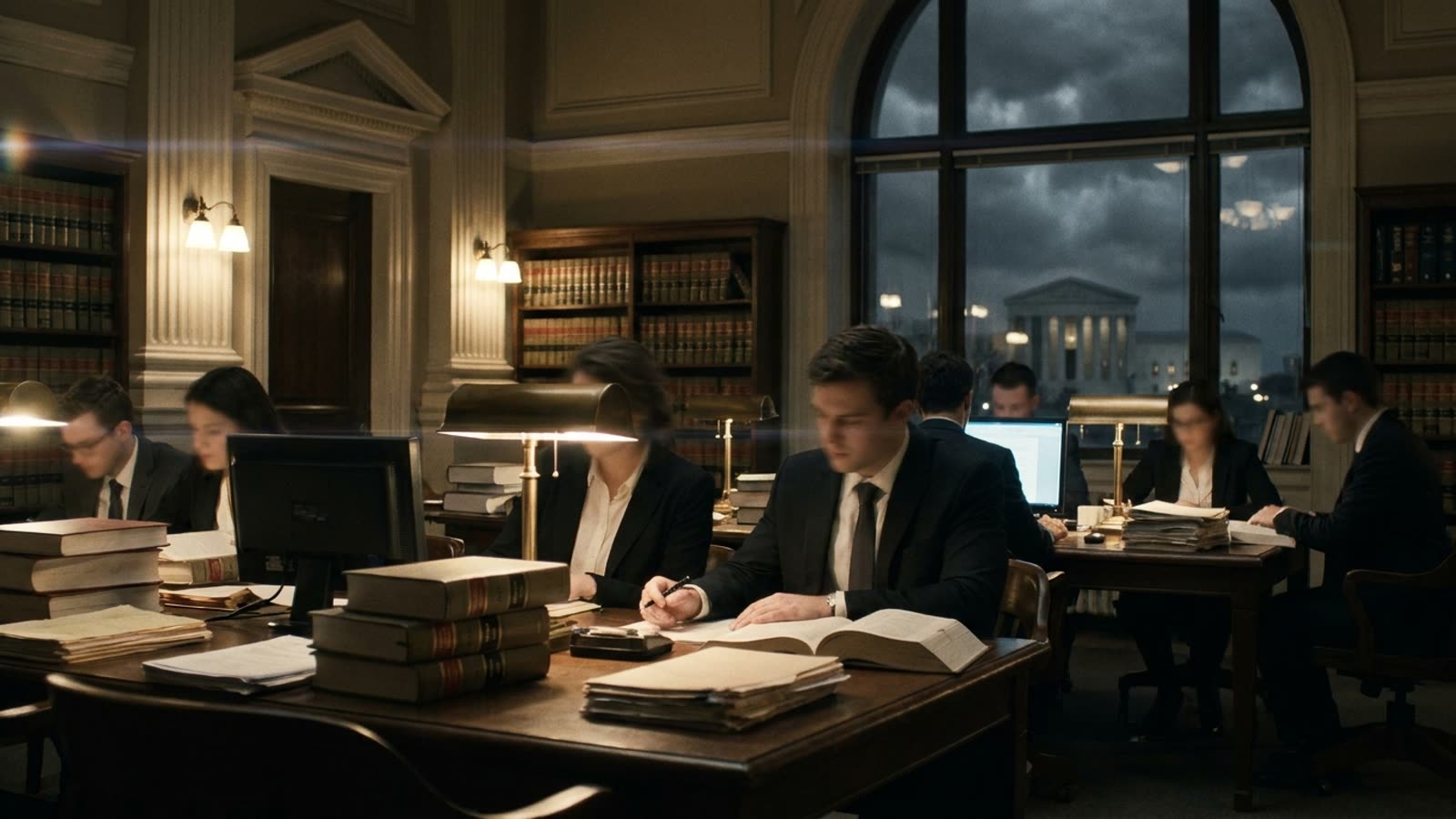
The Supreme Court of the United States employs approximately four hundred people. Thirty-six of them—four per justice—write the first drafts of opinions that become the law of the land. They are typically one or two years out of law school, selected through a process with no oversight, no confirmation hearings, and no public accountability. They are Supreme Court clerks, and their influence on American jurisprudence is both profound and systematically underexamined.
The clerkship pipeline begins years before a young lawyer arrives at One First Street. Prospective clerks must first secure a federal appellate clerkship, itself a brutally competitive process. The most coveted feeder judges—a handful of circuit court judges known for placing clerks at the Supreme Court—receive thousands of applications for two or three positions. These judges effectively serve as gatekeepers to the highest court, creating a system where a small network of mentors shapes who interprets the Constitution.
The work behind closed doors
Clerks draft bench memos summarizing cases before oral argument, research legal questions, and—most consequentially—write initial drafts of opinions. The extent of judicial editing varies dramatically by justice. Some rewrite drafts extensively; others make minimal changes. Former clerks have described producing opinion drafts that emerged largely intact as binding precedent. This means a twenty-seven-year-old's prose, reasoning, and word choices can become constitutional doctrine cited for generations.
The cert pool amplifies this influence. Eight justices share their clerks' recommendations on which cases to hear from among the roughly seven thousand petitions filed annually. A single clerk's memo, arguing that a case lacks merit, can effectively end a legal dispute that took years to reach the Court. The justices review these recommendations but cannot independently analyze every petition—they rely heavily on their clerks' judgment about what questions deserve the Court's attention.
The ideology question
Clerkship hiring has become increasingly ideological. Conservative justices draw primarily from the Federalist Society network and feeder judges known for originalist jurisprudence. Liberal justices select from the American Constitution Society orbit and progressive feeder chambers. The result is a Court staffed by young lawyers who largely share their justice's worldview, reinforcing rather than challenging existing perspectives.
This ideological sorting extends to post-clerkship careers. Former clerks command signing bonuses exceeding four hundred thousand dollars at major law firms. Many cycle into government, academia, or advocacy organizations aligned with their justice's philosophy. The clerkship thus functions as both credential and ideological certification, creating a self-perpetuating elite that moves between the Court, the legal academy, and political appointments.
Our take
The clerkship system represents a remarkable delegation of constitutional authority to individuals selected through an entirely private process. No one votes for these lawyers. No one confirms them. Their work product is shielded by deliberative privilege indefinitely. In a democracy that obsesses over judicial nominations, the near-total invisibility of the people who actually draft judicial opinions is striking. The justices bear ultimate responsibility for their decisions, but the hands that first shape those decisions belong to thirty-six young lawyers whose names most Americans will never know.