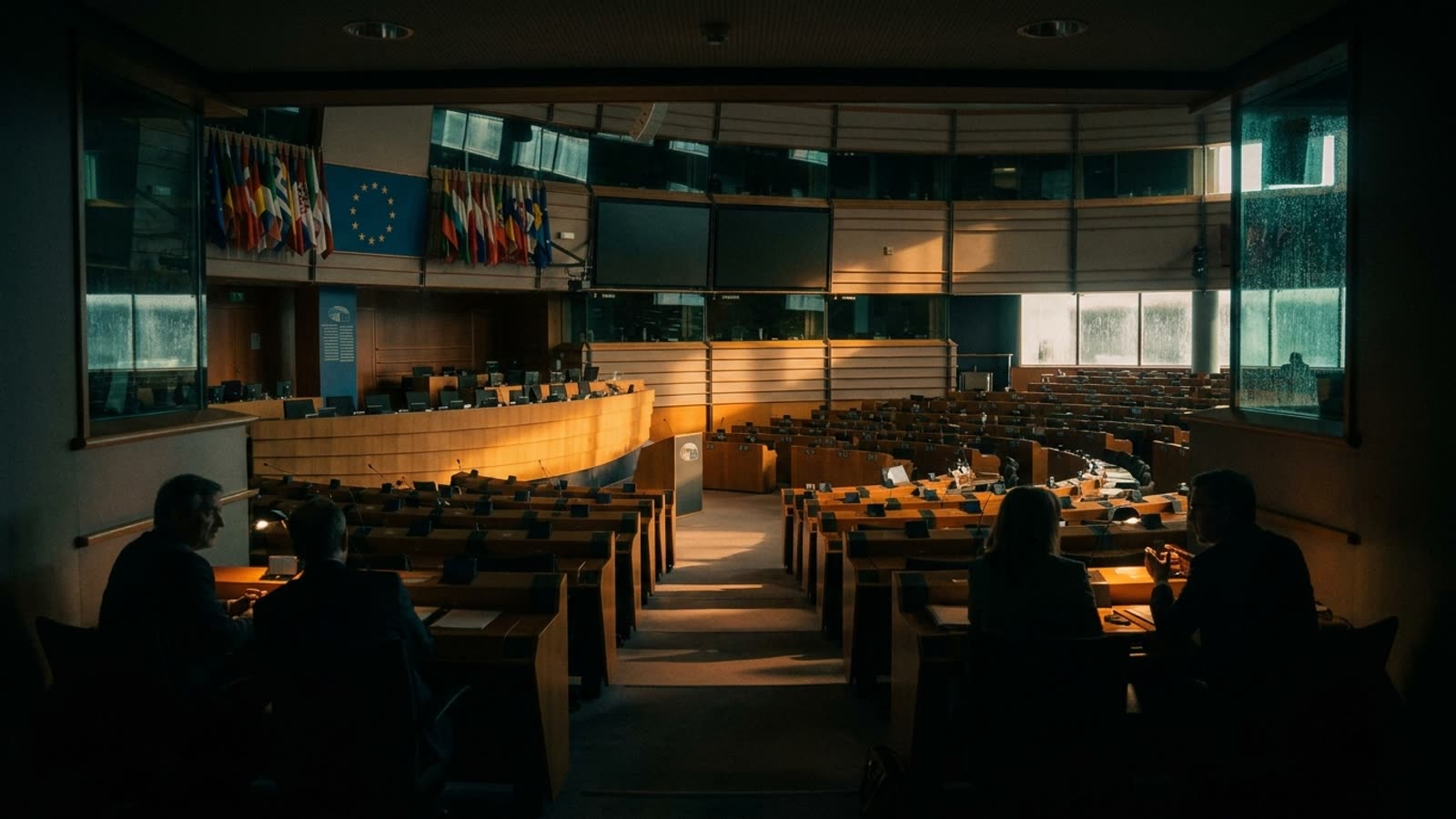
The European Parliament sits in a gleaming hemicycle in Strasbourg, conducts most of its business in Brussels, and maintains a secretariat in Luxembourg. This geographic absurdity — mandated by treaty and costing hundreds of millions annually — is perhaps the most honest metaphor for an institution that defies every assumption visitors bring from national politics.
Unlike Congress, the Parliament cannot initiate legislation. Unlike the House of Commons, it cannot bring down a government through a vote of no confidence in the traditional sense. Unlike the Bundestag, it has no clear majority-opposition dynamic. And yet this 720-member assembly has quietly become one of the most consequential legislative bodies on Earth, shaping everything from smartphone charging standards to the global regulation of artificial intelligence.
The co-decision machine
The Parliament's power rests on a procedure called "ordinary legislative procedure" — Brussels-speak for co-decision with the Council of the European Union, which represents member-state governments. Since the Lisbon Treaty expanded this mechanism, the Parliament has held genuine veto power over most EU law. No directive on consumer protection, environmental standards, or digital markets can pass without parliamentary consent.
This creates a peculiar dynamic. The European Commission proposes legislation, but Parliament and Council must both approve the final text. In practice, this means most laws are hammered out in "trilogues" — closed-door negotiations between representatives of all three institutions. By the time a vote reaches the Strasbourg floor, the outcome is typically predetermined. The drama happens in committee rooms and coffee bars.
The strange arithmetic of consensus
National parliaments operate on government-versus-opposition logic. The European Parliament cannot. Its two largest groups — the center-right European People's Party and the center-left Socialists & Democrats — have historically controlled roughly half the seats between them. Neither can govern alone, and neither has a stable coalition partner.
The result is a chamber that runs on shifting, issue-by-issue majorities. On trade policy, the EPP might align with liberals and parts of the right. On environmental regulation, the Socialists partner with Greens and occasionally centrists. Individual MEPs enjoy remarkable freedom compared to their national counterparts; party discipline exists but cannot be enforced with the threat of bringing down a government.
This consensus-seeking culture frustrates ideological purists but produces legislation with broad buy-in. The landmark AI Act and Digital Services Act both passed with supermajorities that would be unthinkable in polarized national contexts.
The rapporteur system
Power in the European Parliament flows to those who master procedure. The most important figure on any given file is the rapporteur — the MEP assigned to shepherd legislation through committee and negotiation. Rapporteurships are distributed among political groups roughly proportional to their size, then assigned internally based on seniority, expertise, and political horse-trading.
A skilled rapporteur on a major file wields influence that far exceeds their formal status. They draft the Parliament's position, lead trilogue negotiations, and often become the de facto author of laws affecting half a billion people. The MEP who served as rapporteur for the General Data Protection Regulation became, for a time, one of the most important privacy policymakers on the planet — despite holding no executive office and remaining largely unknown outside specialist circles.
Our take
The European Parliament's opacity is a feature, not a bug. An institution designed to aggregate twenty-seven national political cultures into workable legislation was never going to resemble the theatrical clarity of Prime Minister's Questions. What it lacks in democratic legibility it compensates for in technocratic output — a trade-off that satisfies Brussels insiders while leaving European citizens perpetually bewildered by their own continental democracy. Whether that bargain remains sustainable as populist pressures mount is the question the Parliament's architects never quite answered.