The most consequential word in international diplomacy is not "war" or "peace" but "nyet" — or its equivalents in English, French, and Mandarin. The veto power held by the five permanent members of the United Nations Security Council has shaped the boundaries of what the international community can and cannot do since 1945, and understanding how it actually works reveals why so many crises end in stalemate rather than resolution.
The P5 — the United States, Russia, China, France, and the United Kingdom — each possess the ability to kill any substantive Security Council resolution with a single negative vote. This is not a bug in the system; it is the system. The architects of the UN Charter, meeting in San Francisco as World War II drew to a close, understood that the League of Nations had failed partly because major powers could simply walk away when decisions went against them. The veto was the price of keeping the great powers inside the tent.
The arithmetic of inaction
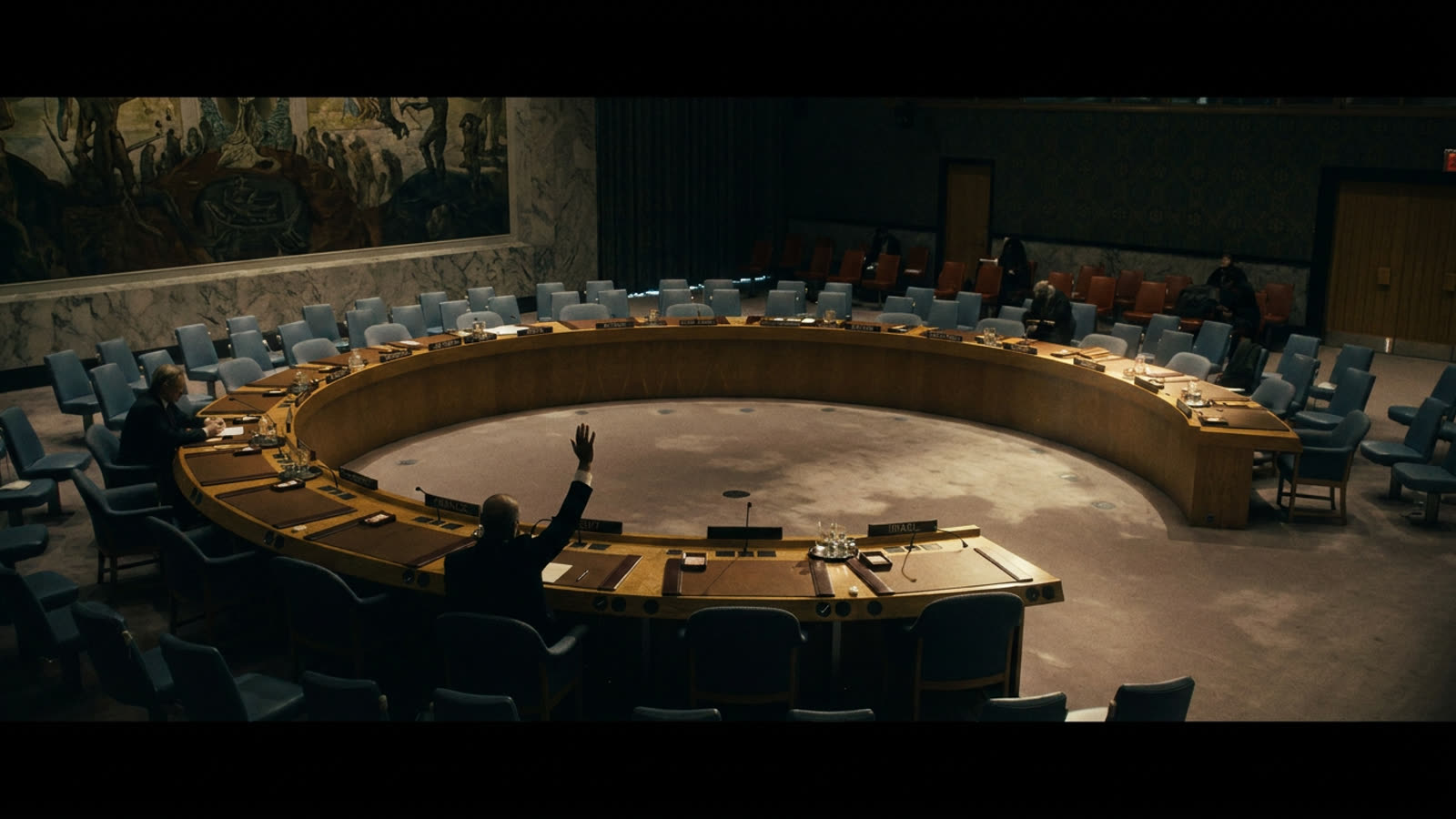
The Security Council has fifteen members, but only five matter when push comes to shove. Nine affirmative votes are needed to pass a resolution, but any single P5 veto nullifies even unanimous support from the other fourteen. This creates a peculiar dynamic: the Council is not designed to act but to prevent action that any major power finds intolerable. Russia has used its veto more than any other nation since the Cold War ended, blocking resolutions on Syria, Ukraine, and various other conflicts where it perceives its interests at stake. The United States has deployed its veto most frequently to shield Israel from condemnation. China, historically more sparing, has increasingly wielded the power to protect allies and assert its vision of non-interference in sovereign affairs.
The veto's shadow extends far beyond the votes actually cast. Diplomats speak of the "pocket veto" — resolutions that never reach a vote because sponsors know a P5 member will block them. This invisible exercise of power is impossible to quantify but arguably more significant than the public vetoes that make headlines.
Why reform never happens
Every few years, proposals emerge to reform or abolish the veto. They go nowhere, for a reason embedded in the Charter itself: amending the UN's founding document requires ratification by two-thirds of member states, including all five permanent members. The P5 would have to vote to diminish their own power. This is not a design flaw but a deliberate lock, ensuring that the postwar settlement cannot be overturned without the consent of its principal beneficiaries.
Some reformers advocate for voluntary restraint — a pledge by P5 members not to veto resolutions addressing mass atrocities. France and the United Kingdom have endorsed versions of this idea. Russia and China have not. The United States has remained ambivalent, unwilling to constrain its future options. The result is that the veto remains as potent as it was when Stalin's diplomats first discovered its utility.
Our take
The veto is neither a noble safeguard nor a cynical obstruction; it is simply the price of having major powers participate in a collective security system at all. Critics who demand its abolition rarely explain how they would keep nuclear-armed states committed to an institution that could override their core interests. The honest answer is that the Security Council was never meant to be a world government — it was meant to be a forum where great powers could avoid stumbling into wars with each other. By that modest standard, it has worked. By any more ambitious standard, it was designed to fail.