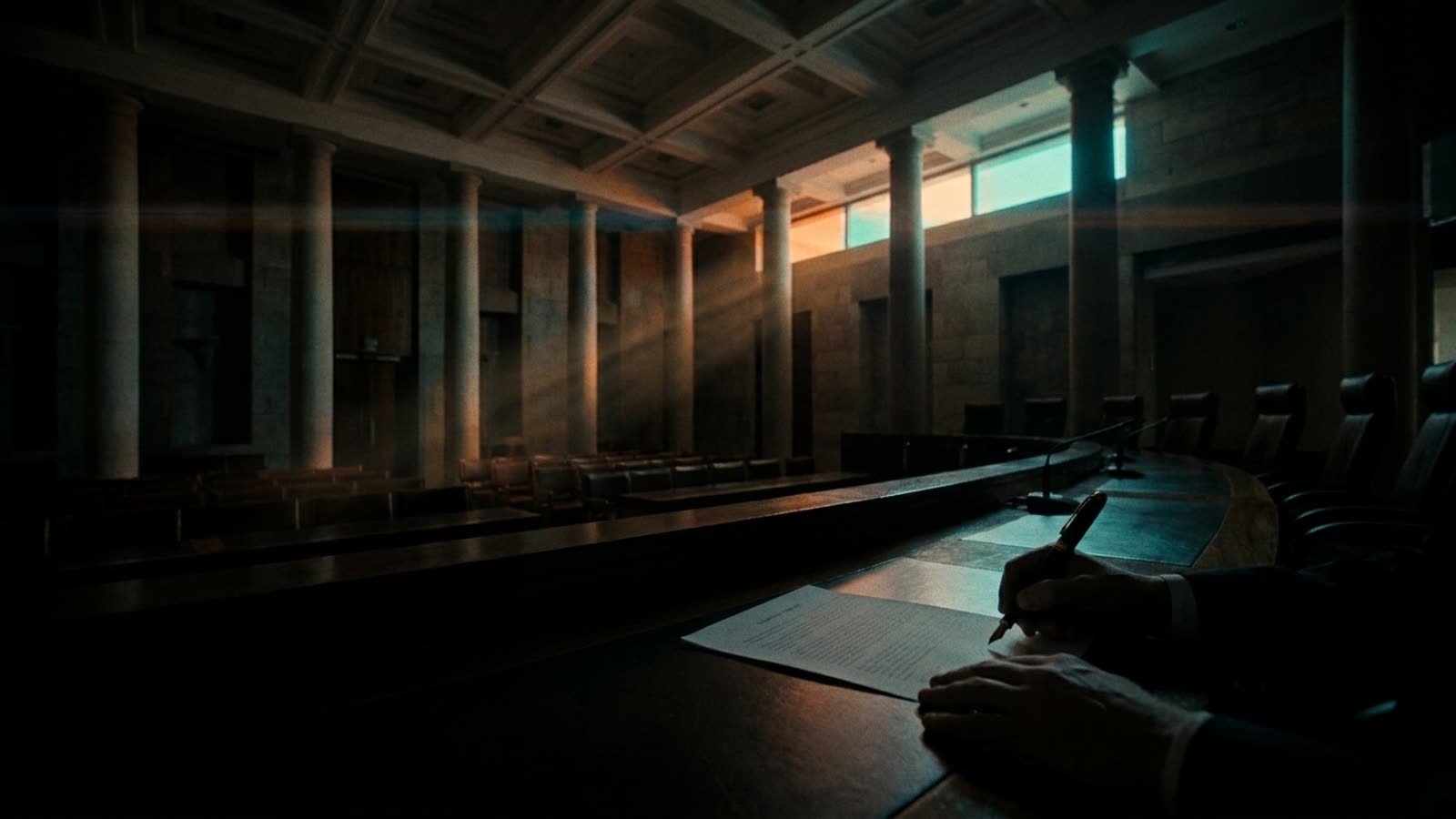
Every major democracy tells itself a comforting story: that its highest court stands above politics, interpreting law with scholarly detachment while elected branches squabble below. The story has always been a polite fiction, but in recent decades it has become an increasingly threadbare one. From Warsaw to Washington, from Ankara to Brasília, the battle over who controls constitutional courts has emerged as perhaps the defining political struggle of our era—one that unfolds largely out of public view until the consequences become irreversible.
The logic is straightforward, if rarely stated plainly. Legislatures can be lost in the next election. Executive power is constrained by term limits and coalition partners. But a constitutional court justice appointed at forty-five may still be shaping national policy at seventy-five, long after the government that appointed them has become a historical footnote. A working majority on the high bench can entrench a political vision for a generation.
The Mechanics of Court Capture
The techniques vary by constitutional design, but the playbook has become remarkably consistent. The first move is often to change the rules of appointment—lowering the required parliamentary majority, shortening or eliminating confirmation hearings, or transferring nomination power from independent judicial councils to the executive. Poland's Law and Justice party pioneered a particularly elegant maneuver: refusing to seat judges lawfully appointed by the previous parliament, then filling those seats with loyalists and declaring the matter settled.
The second technique targets the court's composition directly. Expanding the number of seats—court-packing, in the American vernacular—allows a government to dilute hostile majorities without removing sitting judges. Hungary's Fidesz government combined expansion with mandatory retirement age reductions, creating a cascade of vacancies to fill. Turkey took the more direct route of mass dismissals following the 2016 coup attempt, reconstituting its Constitutional Court with judges whose loyalty to the ruling party was beyond question.
The third approach is subtler: jurisdiction-stripping. If you cannot control the court, you can shrink its authority. Remove its power to review certain categories of legislation, or create parallel judicial bodies with overlapping mandates that can be played against each other. The effect is to make the constitutional court one voice among many, rather than the final arbiter.
Why Liberal Democracies Are Vulnerable
Constitutional courts are paradoxical institutions. They derive their legitimacy from being above politics, yet they are created by political processes and their members are chosen by political actors. This tension is manageable when there exists broad consensus about the rules of the game—when the major parties accept that they might lose power and expect to regain it, and therefore have incentives to preserve institutions that will protect them when they are out of office.
That consensus has frayed in many democracies. Polarization has raised the stakes of each election to existential levels in the minds of partisans. Demographic and cultural changes have convinced some political movements that they face permanent minoritarian status unless they lock in structural advantages. And the courts themselves, by wading into increasingly contentious social questions, have made themselves targets in a way that purely procedural bodies might have avoided.
The European Union's experience is instructive. Brussels has leverage over member states through budget mechanisms and rule-of-law conditionality, yet it has struggled to reverse court capture once accomplished. The reason is that judicial independence is easier to destroy than to rebuild. Once a court has been packed with loyalists, what does restoration look like? Removing sitting judges raises its own rule-of-law concerns. The damage tends to be sticky.
Our take
The uncomfortable truth is that constitutional courts have always been political—the question is whether they are political in ways that preserve or undermine democratic competition. A court that occasionally frustrates the governing majority is performing its function. A court that reliably delivers victories to one political faction, regardless of the legal merits, has become something else entirely: a veto point captured by a single team. The distinction matters enormously, but it is difficult to encode in law and nearly impossible to enforce from outside. Democracies that wish to preserve independent courts must do so before the crisis arrives, not after. By the time court capture becomes visible to ordinary citizens, it is usually too late to reverse without the kind of constitutional rupture that carries its own dangers.