The vice presidency of the United States is the only job in the world where the holder's primary constitutional duty is to wait for someone else to die. This is not a bug in the American system but a feature, one that has shaped the office into something genuinely peculiar: immense proximity to power combined with almost total irrelevance to its exercise.
John Adams, the first to hold the position, called it "the most insignificant office that ever the invention of man contrived." Two centuries later, his assessment remains structurally accurate. The Constitution grants the vice president exactly two responsibilities: presiding over the Senate and casting tie-breaking votes, and assuming the presidency upon vacancy. Everything else—the policy portfolios, the diplomatic missions, the task forces—exists purely at the pleasure of the president.
The Senate's Absent Landlord
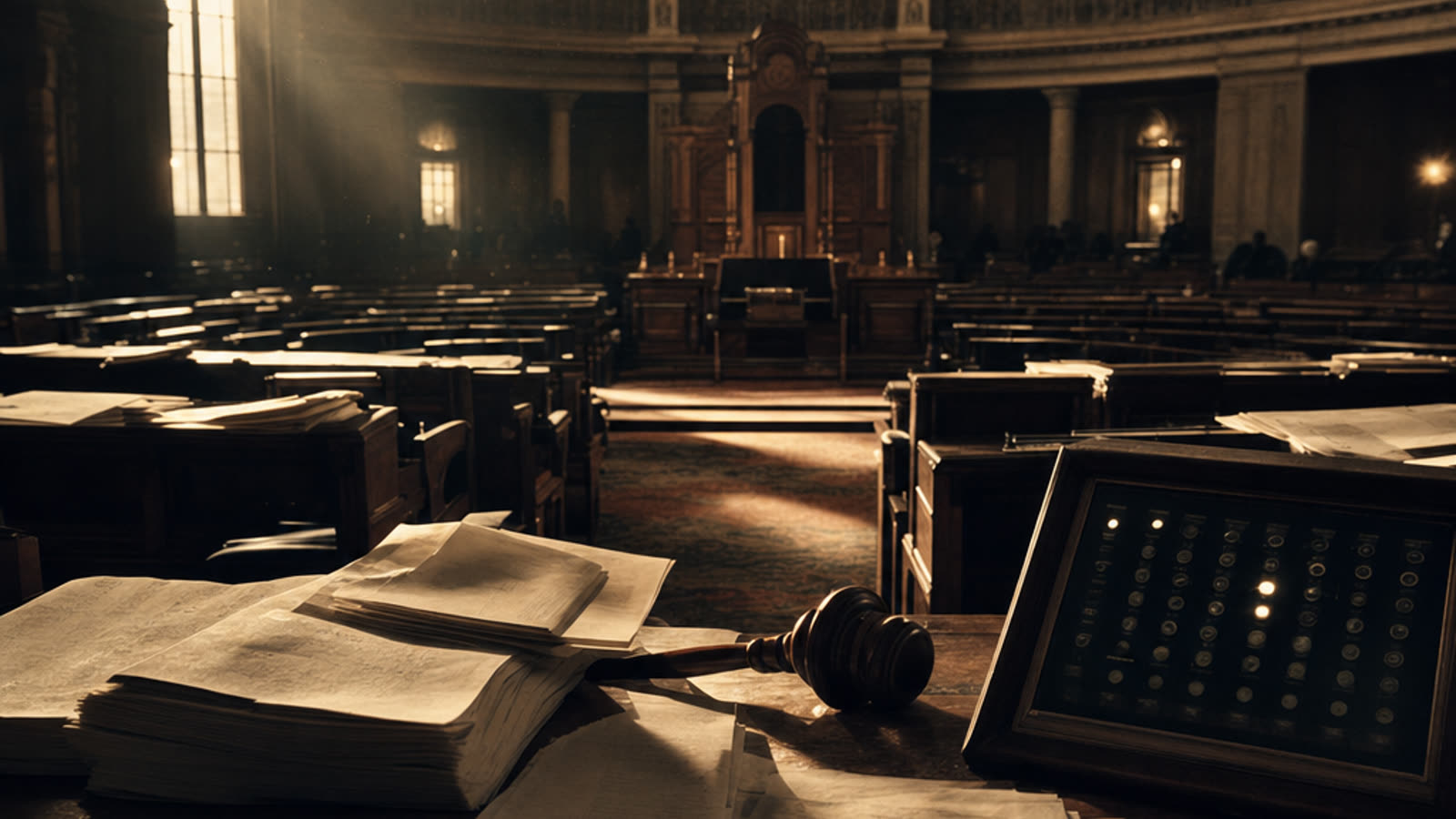
The presiding role sounds substantial until you examine it. The vice president may recognize speakers and maintain order, but cannot participate in debate, propose legislation, or vote except to break ties. Even this limited function has atrophied; modern vice presidents rarely appear in the chamber except for ceremonial occasions or when their vote is genuinely needed. The Senate president pro tempore and rotating junior senators handle the daily tedium instead.
Tie-breaking votes themselves are rare enough to be memorable. Most vice presidents cast fewer than a dozen across their entire tenure. The occasions when they matter—confirming a controversial nominee, passing a budget resolution along party lines—generate headlines precisely because they represent the exception rather than the rule of vice presidential utility.
The Succession Paradox
The succession function creates the office's central paradox. A vice president must be qualified to assume the presidency instantly, which suggests they should be deeply involved in governance. Yet involving them too deeply risks creating a rival power center, undermining the president's authority, and complicating the clean hierarchy that executive function requires. Presidents have historically resolved this tension by choosing marginalization.
Franklin Roosevelt kept Harry Truman so uninformed that Truman learned of the atomic bomb's existence only after taking office. Dwight Eisenhower, asked to name a major idea Richard Nixon had contributed to his administration, requested a week to think about it. The pattern persists because it reflects genuine institutional logic rather than personal pettiness.
The Modern Reinvention Attempts
Recent decades have seen efforts to make the vice presidency substantive. Walter Mondale negotiated an office in the West Wing and weekly private lunches with Jimmy Carter. Dick Cheney accumulated influence unprecedented for the office, though his model proved controversial and unrepeatable. These experiments depend entirely on presidential willingness; nothing in law or constitution compels a president to delegate meaningful authority.
The vice president's value, such as it is, lies primarily in electoral utility—balancing a ticket geographically, ideologically, or demographically—and in providing a credible successor who reassures voters about continuity. Once in office, that electoral logic expires, leaving the occupant to find meaning in whatever scraps the president offers.
Our take
The vice presidency's insignificance is not a failure of imagination but a rational response to constitutional constraints. You cannot give the office real power without either subordinating the presidency or creating destructive internal competition. The jokes about the position's uselessness are therefore not merely unkind but fundamentally accurate. America has decided, through two centuries of practice, that it prefers its backup president visible but idle, ready but uninvolved—a constitutional understudy who rehearses endlessly for a performance that usually never comes.