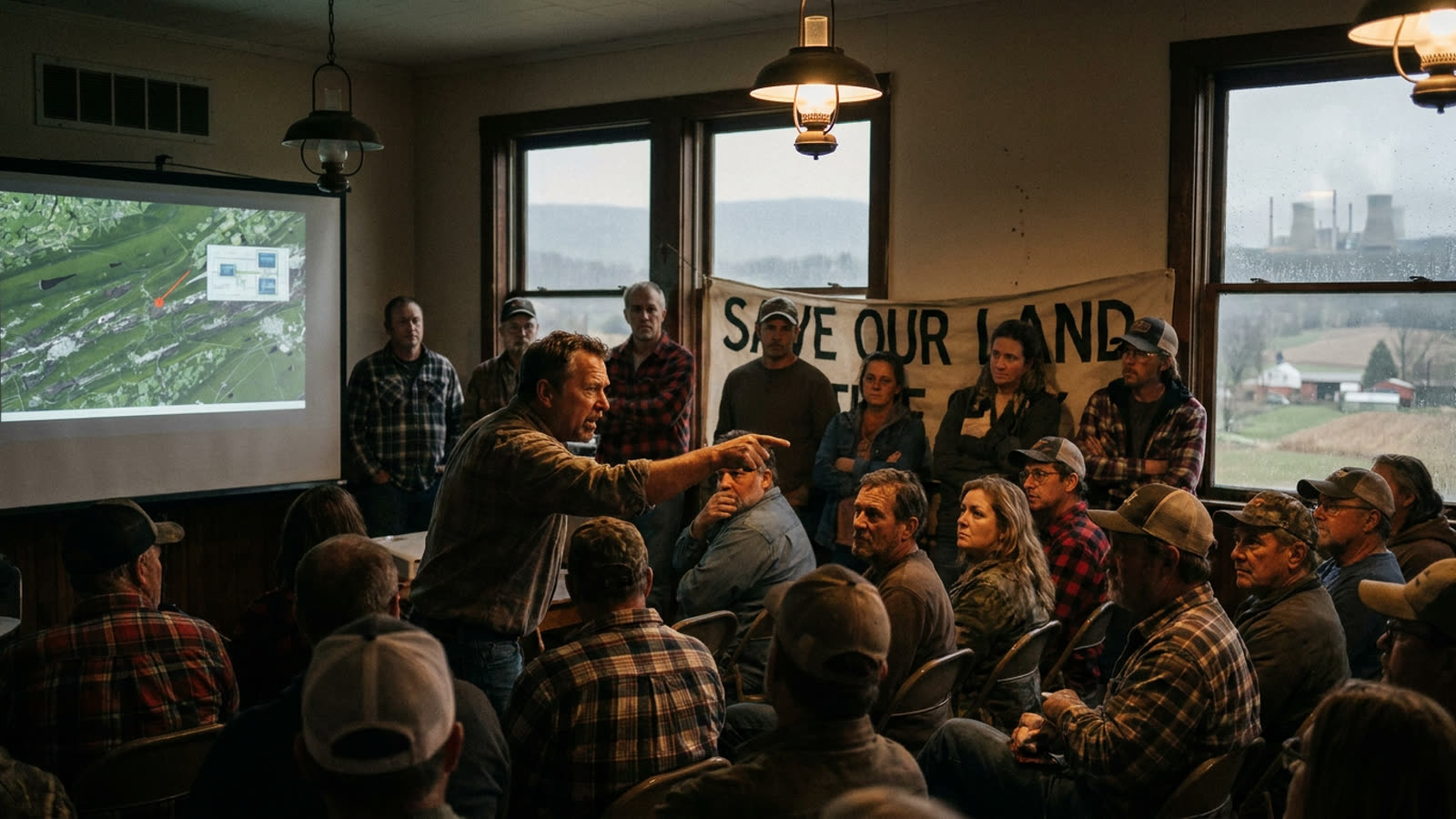
The data center industry has a problem it cannot build its way out of: communities don't want them. From Pennsylvania town halls to Lake Tahoe utility disputes, the backlash against industrial-scale AI infrastructure has become a genuine political force. Enter the latest pitch from the AI gold rush—why not distribute the load across millions of American homes?
A handful of startups are now actively recruiting homeowners to host compact, containerized compute units in garages, basements, and backyards. The proposition sounds almost quaint: earn passive income by contributing spare square footage and electrical capacity to the insatiable appetite of large language models. In practice, it represents either a clever arbitrage of residential electricity rates and underutilized space, or a regulatory time bomb waiting for its first house fire.
The economics of distributed desperation
The math, on paper, is seductive. Residential electricity in many U.S. markets runs 30-50% cheaper than commercial rates. Homeowners face no permitting gauntlet. And the physical footprint—a unit roughly the size of a large refrigerator—fits where a traditional data center never could. Proponents cite monthly payouts ranging from several hundred to over a thousand dollars, depending on configuration and local power costs.
But the economics obscure significant externalities. These units generate heat, noise, and substantial electrical load—often requiring dedicated 240-volt circuits or panel upgrades. Insurance implications remain murky; most homeowner policies explicitly exclude commercial operations. And the arbitrage only works until utilities notice the usage patterns and reclassify the residence.
Zoning is the real battleground
The deeper issue is regulatory. Residential zoning in virtually every American municipality prohibits commercial data processing operations. The startups promoting home hosting are betting on enforcement gaps—that code inspectors won't notice a quiet box in a garage, that neighbors won't complain about the hum. This is not a sustainable business model; it's a prayer.
Municipal governments already struggling with hyperscaler pressure are unlikely to welcome a distributed version of the same problem. The Pennsylvania town halls that erupted over proposed data centers were not objecting to the abstract concept of AI—they were objecting to noise, water usage, grid strain, and property value concerns. Shrinking the unit doesn't shrink the objections.
The safety question nobody wants to answer
Compute generates heat. Concentrated compute generates concentrated heat. The lithium batteries often included for backup power add fire risk. Placing this equipment in residential structures—often older homes with outdated electrical systems—introduces failure modes that purpose-built facilities are engineered to prevent. The startups dismiss these concerns with references to "enterprise-grade" safety features, but enterprise-grade equipment typically lives in enterprise-grade environments with fire suppression systems, not next to the lawn mower.
Our take
This is what happens when an industry's growth outpaces its infrastructure: someone inevitably proposes putting the problem in your garage. The home data center pitch is less a vision of distributed computing than an admission that centralized approaches have hit political and physical limits. Some homeowners will make money. Some will void their insurance. A few will learn why data centers have dedicated fire suppression. The AI boom's appetite for power is real, but the solution isn't suburbanization—it's building the political consensus and grid capacity that hyperscalers have so far failed to secure. Turning American homes into nodes in a shadow compute network is creative, possibly lucrative, and almost certainly temporary.