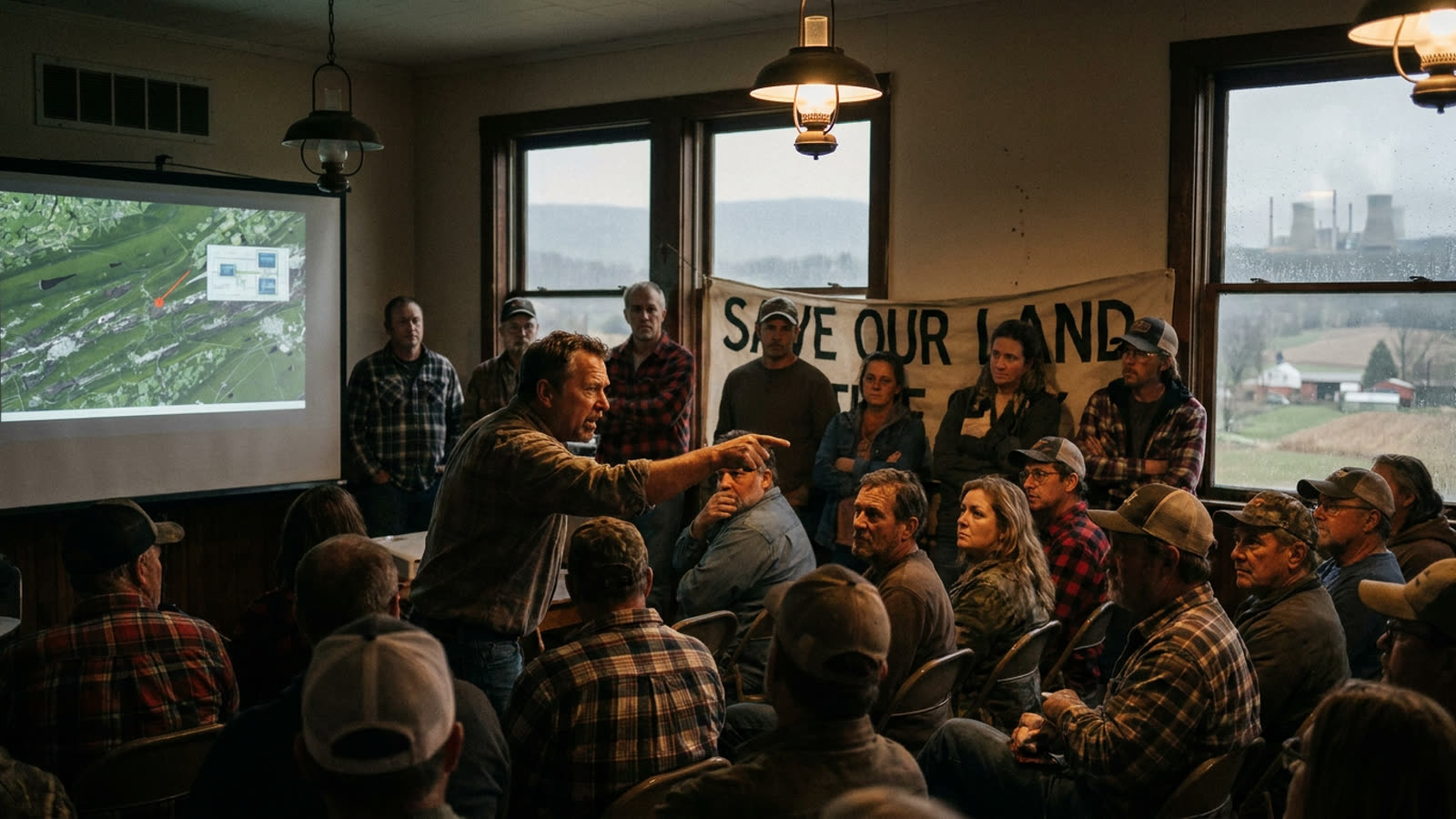
The residents of East Hempfield Township did not come to their community center on a Tuesday evening to discuss artificial intelligence. They came to talk about noise, water, and the trucks that have been rattling down roads never designed for industrial traffic. That their grievances happen to trace back to the explosive demand for compute powering ChatGPT and its rivals is, for most of them, an abstraction—one that matters far less than the diesel generators humming through the night.
Pennsylvania has emerged as an unlikely battleground in the infrastructure war underpinning the AI boom. The state offers what hyperscalers crave: cheap electricity from a deregulated grid, proximity to East Coast population centers, and—until recently—communities willing to accept the trade-offs of hosting server farms. But the calculus is shifting. At the East Hempfield meeting, more than two hundred residents packed a room built for eighty, and the tone was not curious. It was hostile.
The infrastructure math that nobody explained
Data centers are ravenous. A single large facility can consume as much electricity as a small city, and the new generation of AI-optimized campuses—packed with Nvidia's power-hungry H100 and B200 GPUs—push those demands higher still. Pennsylvania's grid, already strained by the retirement of coal plants and the slow pace of transmission upgrades, is being asked to absorb megawatts that were never part of the plan.
For townships like East Hempfield, the immediate impacts are prosaic but infuriating. Backup generators roar during grid instability. Water tables drop as cooling systems draw from aquifers. Property values near facilities have become a subject of bitter dispute, with developers promising premiums and longtime residents seeing only blight. The state's economic-development offices tout job creation, but the numbers are thin: a 50-megawatt facility might employ fewer than fifty people once construction ends.
The political vacuum
What struck observers at the town hall was not the anger—that was predictable—but the absence of anyone to absorb it. No representative from the data-center developer attended. No state official appeared to explain permitting decisions. Township supervisors, visibly uncomfortable, admitted they had limited authority to block projects that meet zoning requirements drafted decades before anyone imagined server farms.
This vacuum is not unique to Pennsylvania. Across the country, the AI infrastructure buildout is outpacing the regulatory frameworks meant to govern it. Local governments find themselves rubber-stamping projects with regional or even national implications, while federal agencies treat data centers as a matter of private investment rather than critical infrastructure requiring coordinated planning.
Our take
The AI industry has spent three years telling a story about intelligence, creativity, and the future of work. It has spent considerably less time explaining that the future runs on diesel backup and chilled water. Pennsylvania's town halls are a preview of a broader reckoning. The technology may be transformative, but the politics of where to put it are as old as the railroad—and just as contentious. If the hyperscalers want their permits, they might consider showing up to the meetings.