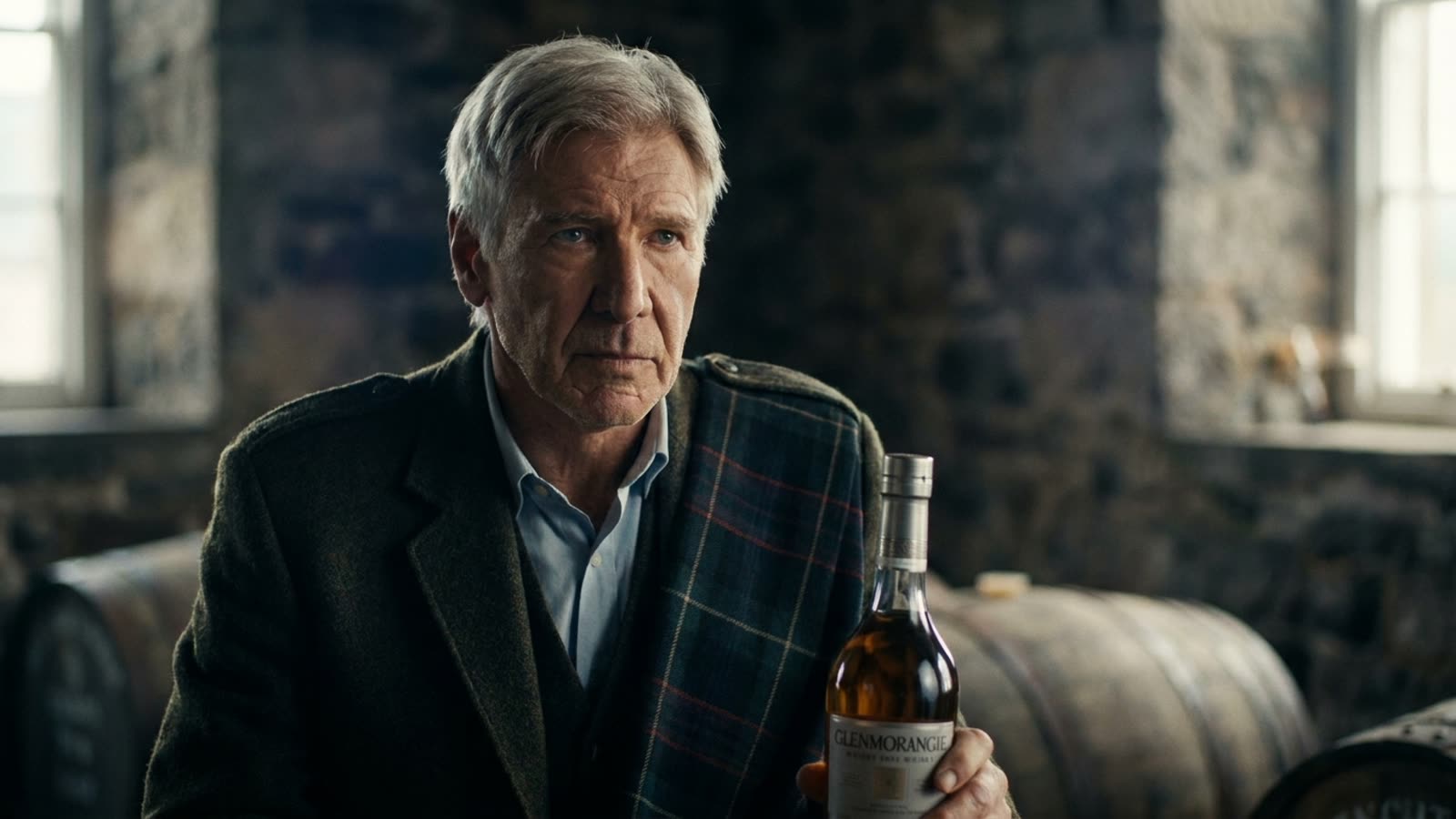
Harrison Ford has spent five decades cultivating an image of reluctant stardom—the guy who'd rather be flying planes or building furniture than doing press. So when he showed up to the Sunset Tower Hotel in Los Angeles on Monday wearing a kilt to celebrate his new limited-edition Glenmorangie whisky, the cognitive dissonance was the point.
"It's a bit breezy," Ford reportedly quipped about the traditional Scottish garment, delivering exactly the kind of laconic one-liner that made Han Solo a cultural touchstone. The 83-year-old wasn't just selling single malt; he was selling the idea that Harrison Ford, of all people, would do something this whimsical.
The celebrity spirits gold rush matures
Ford joins a crowded field of actors-turned-liquor-moguls, but his entry is notably different from the tequila boom that minted fortunes for George Clooney, Dwayne Johnson, and Ryan Reynolds. Whisky partnerships tend to skew older, more prestigious, and less about volume than about brand alignment. Glenmorangie, owned by luxury conglomerate LVMH, isn't looking for the college tailgate crowd. They want the collector who'll pay premium prices for a bottle that comes with a story.
The kilt is part of that story—a visual that will circulate through social feeds and lifestyle coverage, doing the marketing work that traditional advertising increasingly cannot. Ford's participation suggests he understands something younger celebrities often miss: at a certain point, your currency isn't reach, it's rarity.
Why legacy stars are worth more now
Hollywood's older generation has become unexpectedly valuable in an era of franchise fatigue and streaming fragmentation. Ford himself demonstrated this with his return to Indiana Jones in 2023 and his upcoming role in the Marvel Cinematic Universe. But acting requires physical presence and promotional tours. Licensing your persona to a prestige brand requires only occasional appearances and a willingness to wear something unexpected.
The economics are compelling. Celebrity liquor deals typically involve equity stakes rather than flat endorsement fees, meaning Ford's downside is limited while his upside scales with sales. For an actor whose blockbuster days are numbered by actuarial reality, this is smart estate planning dressed up as lifestyle content.
The performance of authenticity
What makes Ford's whisky moment work is the same quality that made his film career work: the appearance of not trying too hard. The kilt is absurd, and he knows it's absurd, and we know he knows. This triple-layered irony is catnip for a media environment that punishes earnestness and rewards self-aware spectacle.
Compare this to younger celebrities who launch brands with slick campaigns and influencer saturation. Ford's approach is almost anti-marketing—a single event, a memorable image, a dry comment. It feels accidental even when it's clearly choreographed.
Our take
There's something both charming and melancholy about watching Harrison Ford play the fame game this skillfully at 83. The man who once shot first and asked questions never is now a brand strategist in tartan. But perhaps that's the only honest move left for an actor who's outlived the era that made him. The kilt wasn't just breezy—it was a masterclass in knowing exactly what you're selling and to whom.