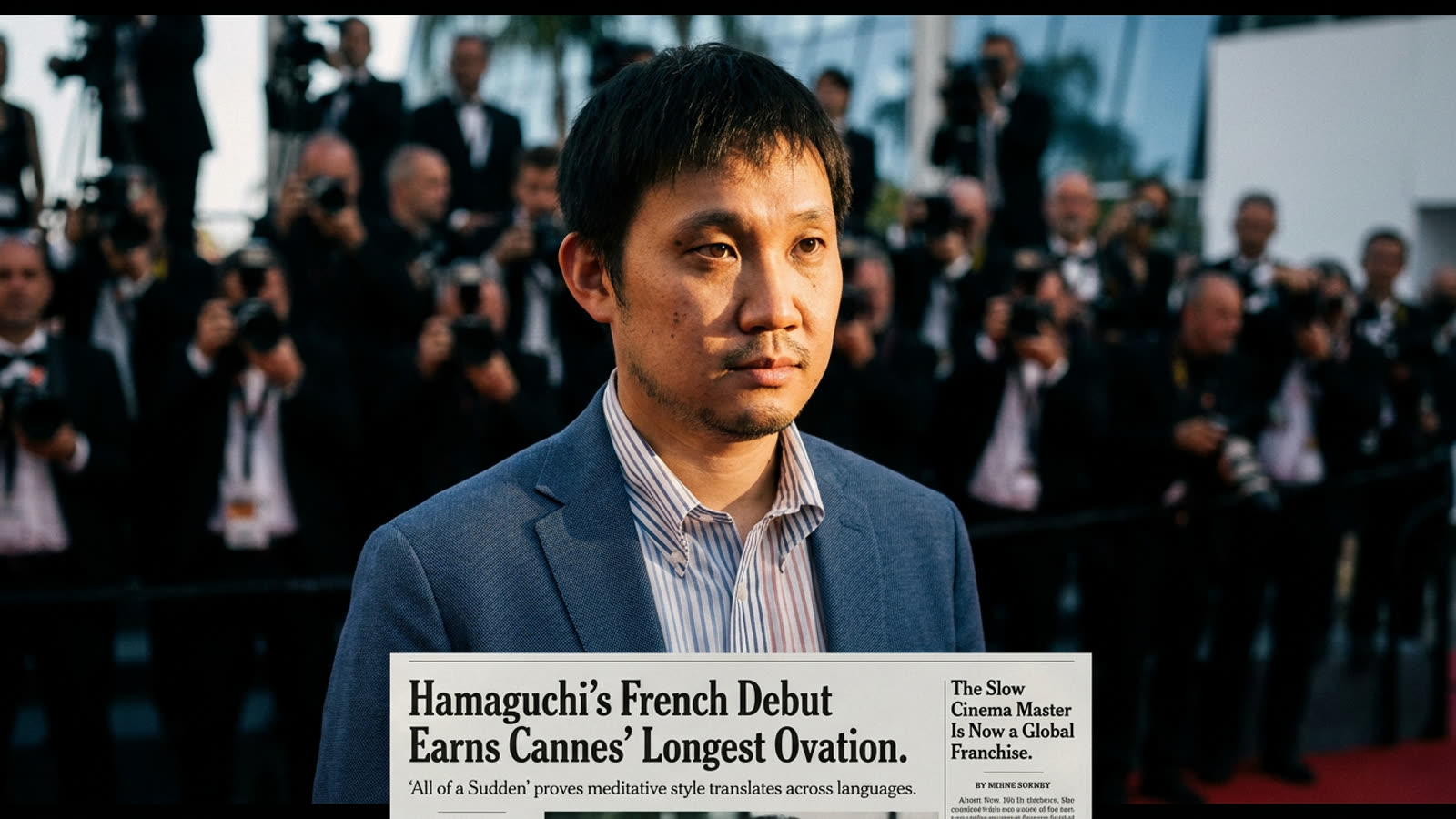
Three years after "Drive My Car" turned a three-hour Murakami adaptation into an unlikely Oscar winner, Ryusuke Hamaguchi has done something arguably more audacious: he has made a three-hour French film about a nursing home, and Cannes gave it a seven-minute standing ovation—the longest of this year's festival.
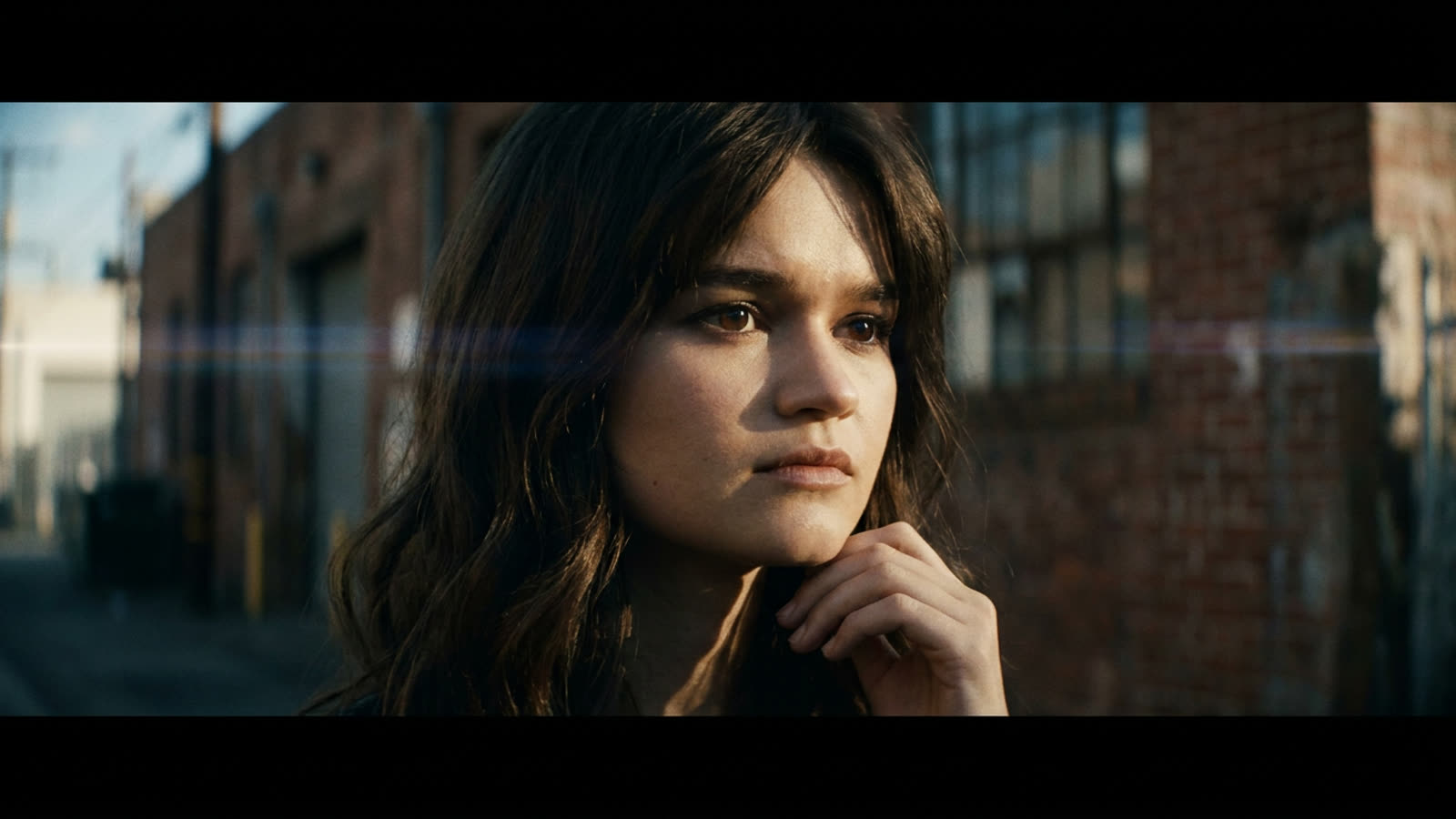
"All of a Sudden" stars Virginie Efira and Tao Okamoto as two women whose lives intersect in a Paris care facility, exploring what Hamaguchi calls "the architecture of compassion." The film reportedly unfolds with the director's signature patience, long takes punctuated by silences that feel less like pauses than punctuation marks in a conversation the audience must complete themselves.
The Hamaguchi Method Goes Continental
Switching to French represents both a risk and a logical expansion for Hamaguchi, whose previous work has relied heavily on the particular rhythms of Japanese speech and the cultural codes embedded within it. Yet early reviews suggest he has found collaborators—particularly Efira, coming off her own prestige run—who understand that his cinema is less about dialogue than about the space around it. The nursing home setting, meanwhile, feels like a deliberate provocation: here is a film about stillness, patience, and the slow work of human connection, made for audiences increasingly conditioned to scroll past anything that does not move.
The Festival's Safest Bet
Hamaguchi has now premiered four consecutive films at major festivals to rapturous receptions. "Happy Hour," "Asako I & II," "Drive My Car," and "Wheel of Fortune and Fantasy" established him as the rare director whose name alone guarantees a certain kind of critical attention—the arthouse equivalent of a Marvel logo, if Marvel films asked you to sit quietly and think about mortality. Cannes clearly programmed "All of a Sudden" expecting exactly this response, and Hamaguchi delivered. The question is whether this reliability is a gift or a trap.
What the Ovation Really Measures
Seven minutes is a long time to stand and clap. It is also, notably, a performance—a ritual in which the Cannes audience congratulates itself for having the taste to appreciate what it has just seen. This is not cynicism; it is simply how prestige festivals function. The ovation validates Hamaguchi, but it also validates the institution that selected him and the audience that endured the runtime. Everyone leaves feeling they have participated in something important.
Our Take
Hamaguchi deserves the acclaim. His films are genuinely, unfashionably humane, and his willingness to trust audiences with silence and duration is increasingly rare. But the festival circuit's embrace of him also reveals something about its own anxieties: in an era when theatrical cinema feels perpetually threatened, Hamaguchi represents proof that the old model—difficult films, patient audiences, communal reverence—can still work. He is not just a director anymore. He is an argument.