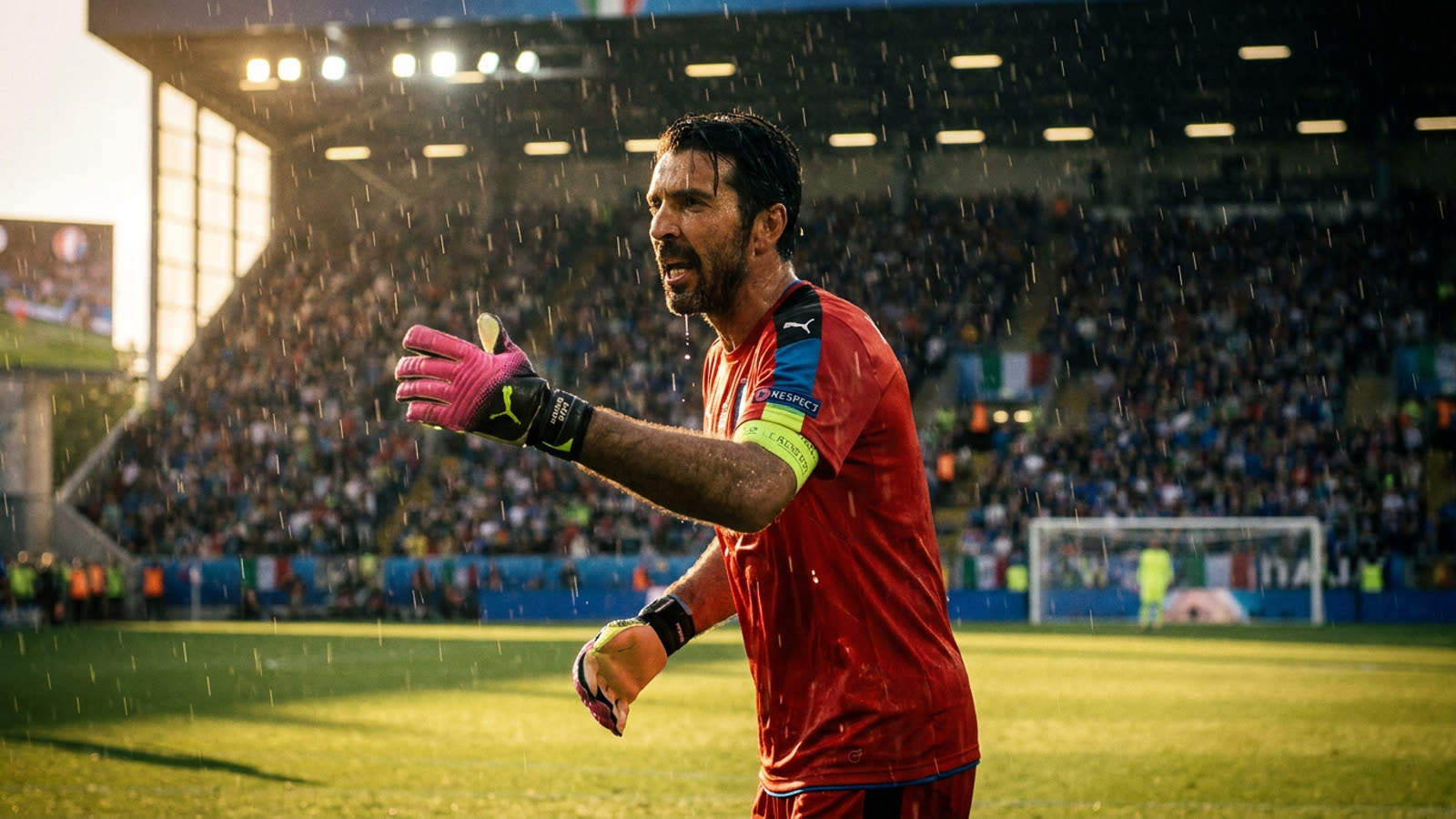
Most athletes fade gradually, their decline a slow erosion of gifts they once took for granted. Gianluigi Buffon simply refused to participate in that narrative. From his Serie A debut as a teenager in 1995 to his final bow with Parma in 2023, the Italian goalkeeper maintained a level of performance that made mockery of actuarial tables and conventional wisdom about athletic shelf life.
The longevity itself is remarkable enough—28 seasons at the top, a World Cup winner's medal, ten Serie A titles, and a reputation as perhaps the greatest goalkeeper in the sport's history. But what makes Buffon genuinely fascinating is not the duration of his career but the intellectual framework that sustained it.
The architecture of anticipation
Buffon was never the most physically imposing goalkeeper, nor did he possess the most spectacular reflexes. What he developed instead was an almost preternatural ability to read the game, to position himself so precisely that saves appeared routine when they were anything but. He described his approach as "reducing the goalkeeper's job to geometry," understanding angles and probabilities so thoroughly that he eliminated the need for desperate athleticism.
This cerebral approach allowed him to compensate as his physical tools inevitably dulled. Where younger keepers relied on explosive dives, Buffon relied on being exactly where the ball was going before the striker had fully decided to put it there. The mental game didn't just supplement his physical abilities; it eventually replaced them almost entirely.
The weight of the jersey
Italian goalkeeping carries a particular cultural burden. The position has produced a lineage of excellence—Zoff, Zenga, Pagliuca, Peruzzi—that creates expectations bordering on the unreasonable. Buffon inherited this tradition at Juventus in 2001 for a then-world-record fee for a goalkeeper, and rather than buckling under the pressure, he seemed to draw sustenance from it.
His relationship with the Juventus faithful survived even the Calciopoli scandal that saw the club relegated to Serie B in 2006. Buffon stayed when he could have left, a decision that cemented his status as something more than an employee. When he finally departed in 2018, only to return briefly before his ultimate farewell, the tears were genuine on both sides.
Our take
Buffon's career offers a rebuke to the cult of youth that dominates modern football. The sport's obsession with pace, pressing, and physical intensity has created an environment where players are considered past their prime by thirty. Buffon demonstrated that wisdom, preparation, and psychological resilience can extend a career far beyond what biology would seem to permit. He didn't just play goalkeeper; he thought his way through the position for nearly three decades, proving that the space between the posts is as much mental real estate as physical territory.