Cristian Mungiu has spent two decades making films about systems that crush individuals with the best of intentions. In 4 Months, 3 Weeks and 2 Days, it was Communist-era Romania's abortion ban. In Graduation, a father's moral compromises to secure his daughter's future. Now, with Fjord, the Palme d'Or winner turns his unsparing lens on one of Scandinavia's most contentious institutions: Norway's Barnevernet, the child protection service that has faced repeated challenges at the European Court of Human Rights for removing children from immigrant families on grounds critics call culturally biased.
The result is a film that has divided Cannes audiences in the most productive way possible—not along political lines, but along the fault line of certainty itself.
The setup
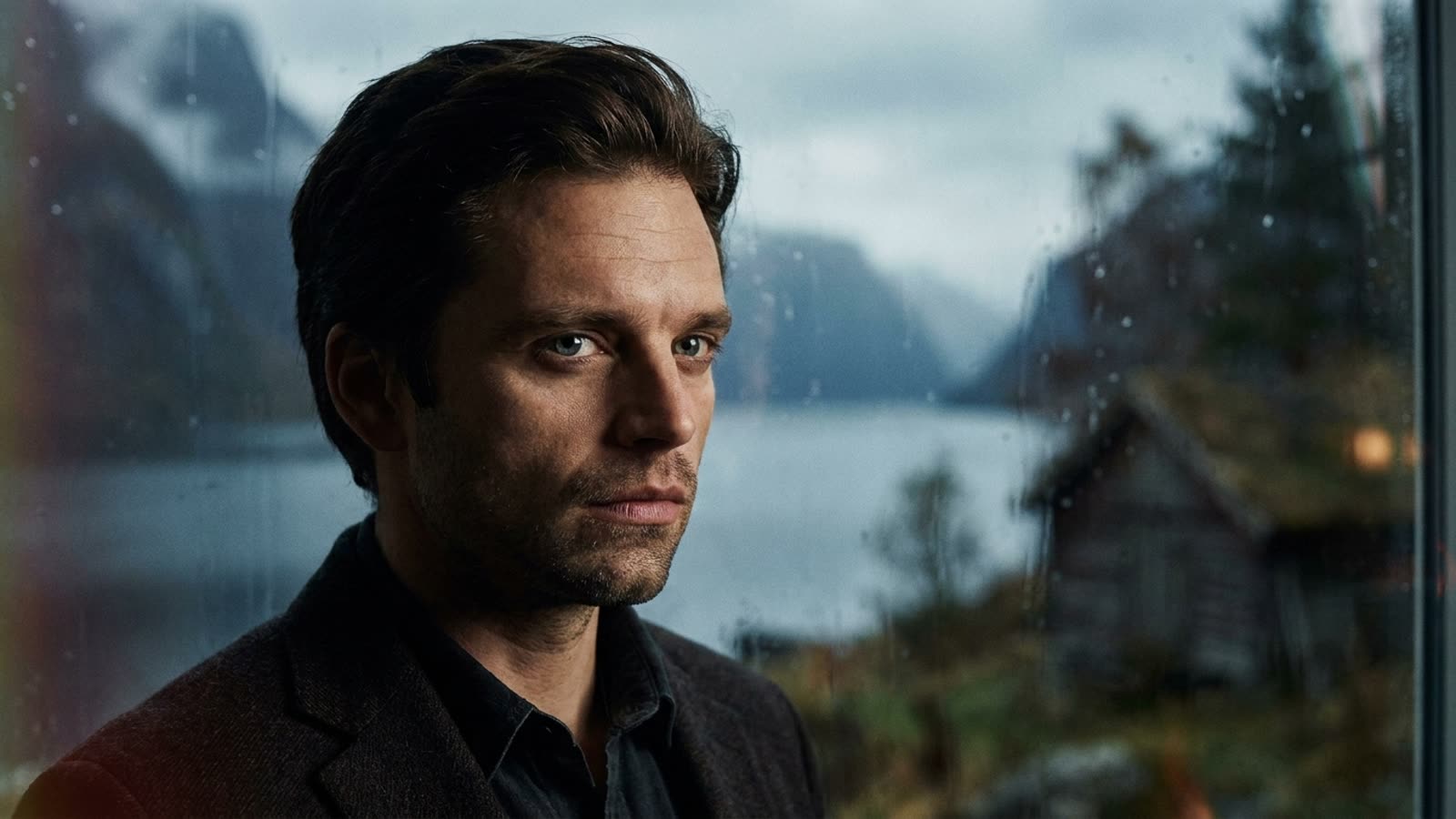
Sebastian Stan and Renate Reinsve play a Romanian-Norwegian couple living in a small fjord town when a routine school report triggers a welfare investigation. What follows is not a polemic but a procedural nightmare rendered in Mungiu's signature long takes, where bureaucratic language becomes its own form of violence. Stan, speaking Romanian and halting Norwegian, gives his most textured performance since The Brutalist—a man whose Old World parenting instincts (a raised voice, a grabbed arm) read as pathology in a system designed to detect harm at its earliest whisper. Reinsve, meanwhile, embodies the impossible position of the cultural translator, caught between defending her husband and recognizing that the system's concerns are not entirely invented.
Why it stings
Mungiu's genius is structural. He gives the Norwegian caseworkers their due: they are not villains but professionals following protocols designed after genuine tragedies. The film's most devastating scene is a case meeting where every participant believes they are acting in a child's best interest, and every participant is, in some irreducible way, correct. The horror is not malice but the collision of incommensurable value systems—Nordic child-centric welfare versus Mediterranean family-centric authority—each internally coherent, each capable of causing profound harm when imposed on the other.
This is not a film that will satisfy anyone looking for confirmation. Conservative audiences hoping for an indictment of progressive overreach will find the Romanian father's behavior genuinely troubling. Progressive viewers expecting a defense of institutional safeguards will watch those safeguards metastasize into something indistinguishable from persecution. Mungiu offers no exit, only the discomfort of genuine moral complexity.
The performances
Stan has never been better. His physicality—compact, coiled, increasingly desperate—tells the story his limited Norwegian cannot. There is a scene where he attempts to explain, through a translator, the difference between discipline and abuse, and the camera holds on his face as he realizes the translation is not merely linguistic but civilizational. Reinsve, an actress capable of enormous warmth, plays against type as a woman whose love for her husband slowly curdles into something more protective: she begins to see him, at moments, through the caseworkers' eyes.
Our take
Cannes needed this film, even if it didn't want it. In a festival year heavy on autofiction and gentle coming-of-age reveries, Fjord is a cold bath—a reminder that Mungiu remains one of cinema's great moral provocateurs precisely because he refuses to provoke cheaply. The film will be called anti-Norwegian by some and anti-immigrant by others, which is the surest sign that it has done its job. Art that makes everyone uncomfortable is art that has touched something true.