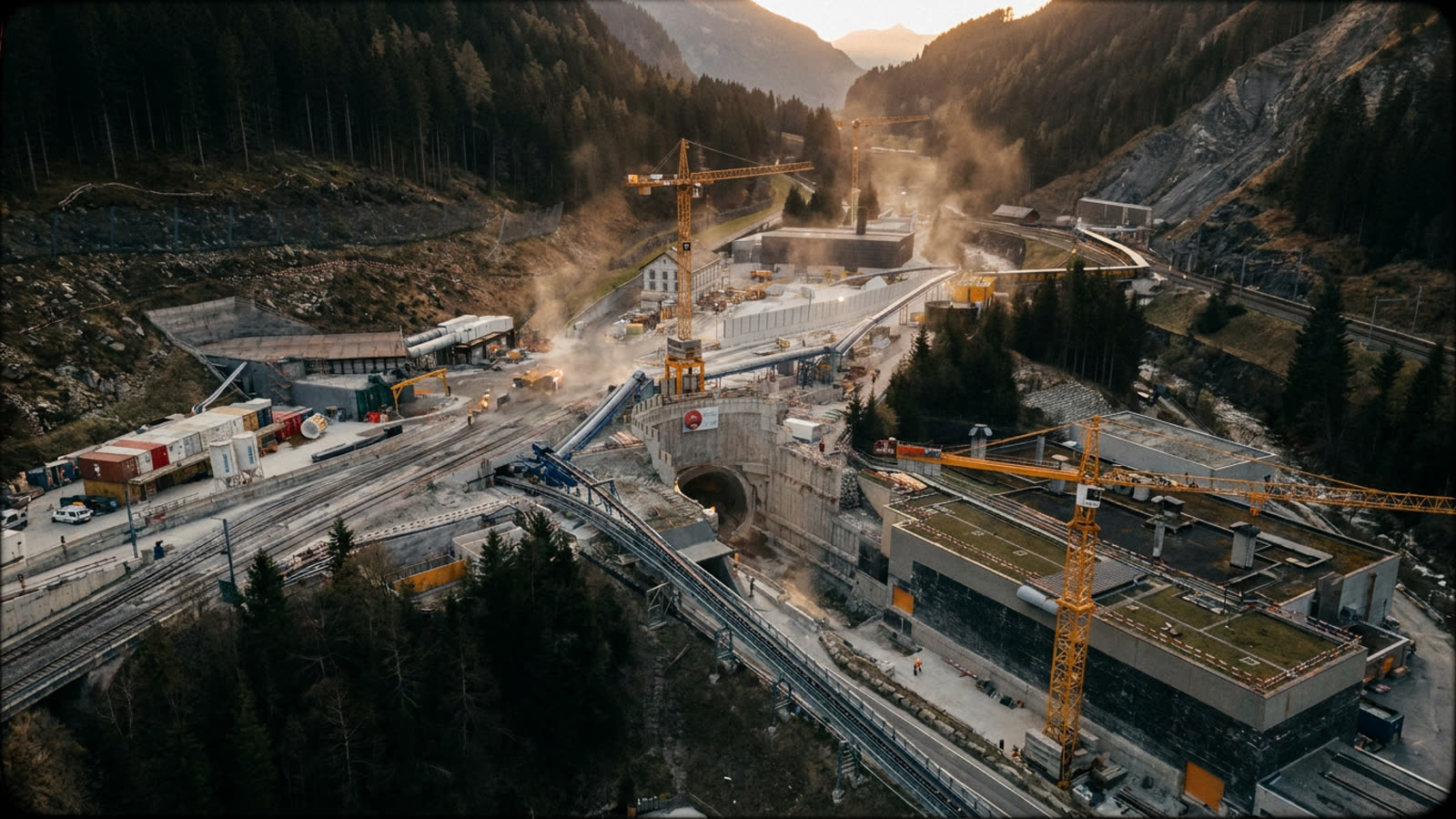
The Brenner Base Tunnel, when it opens in the early 2030s, will stretch 64 kilometers beneath the Austrian-Italian Alps—the longest underground rail link on Earth. It is not alone. From the Lyon-Turin corridor to the proposed second Gotthard tube, Europe is in the midst of a tunnel-building spree that would have seemed fantastical a generation ago. The ambition is genuine. So is the question: can infrastructure investments measured in tens of billions of euros ever pencil out?
The logic beneath the rock
The strategic case is straightforward. Alpine crossings by road are environmentally brutal, capacity-constrained, and vulnerable to weather. Rail tunnels running at base elevation—rather than climbing to high passes—allow heavier freight trains to move faster with less energy. The Gotthard Base Tunnel, operational since 2016, has already demonstrated the model: transit times between Zurich and Milan dropped by nearly an hour, and freight volumes have climbed steadily.
For the European Union, these corridors are about more than convenience. They are the physical backbone of the single market, connecting Mediterranean ports to northern manufacturing hubs. Brussels has co-financed major projects through the TEN-T program, treating them as strategic assets rather than national vanities.
The price of patience
Yet the economics remain sobering. The Brenner project's budget has swelled past €10 billion, with final costs likely higher. Lyon-Turin, mired in political controversy for years, carries a comparable price tag and has faced protests from locals who see it as an expensive gift to freight operators. Construction timelines measured in decades mean that the politicians who break ground rarely attend ribbon-cuttings—a dynamic that complicates democratic accountability.
Critics argue that the same capital could electrify existing surface rail, expand renewable energy grids, or fund housing. Proponents counter that surface upgrades cannot overcome the fundamental geometry of the Alps, and that the tunnels' useful lives will extend a century or more, amortizing costs across generations.
Our take
Mega-tunnels are the rare infrastructure projects that genuinely reshape economic geography—but only if governments resist the temptation to treat them as monuments rather than utilities. Europe's bet is that decarbonizing freight and binding the continent together is worth the wait. The jury will deliberate for another fifty years.