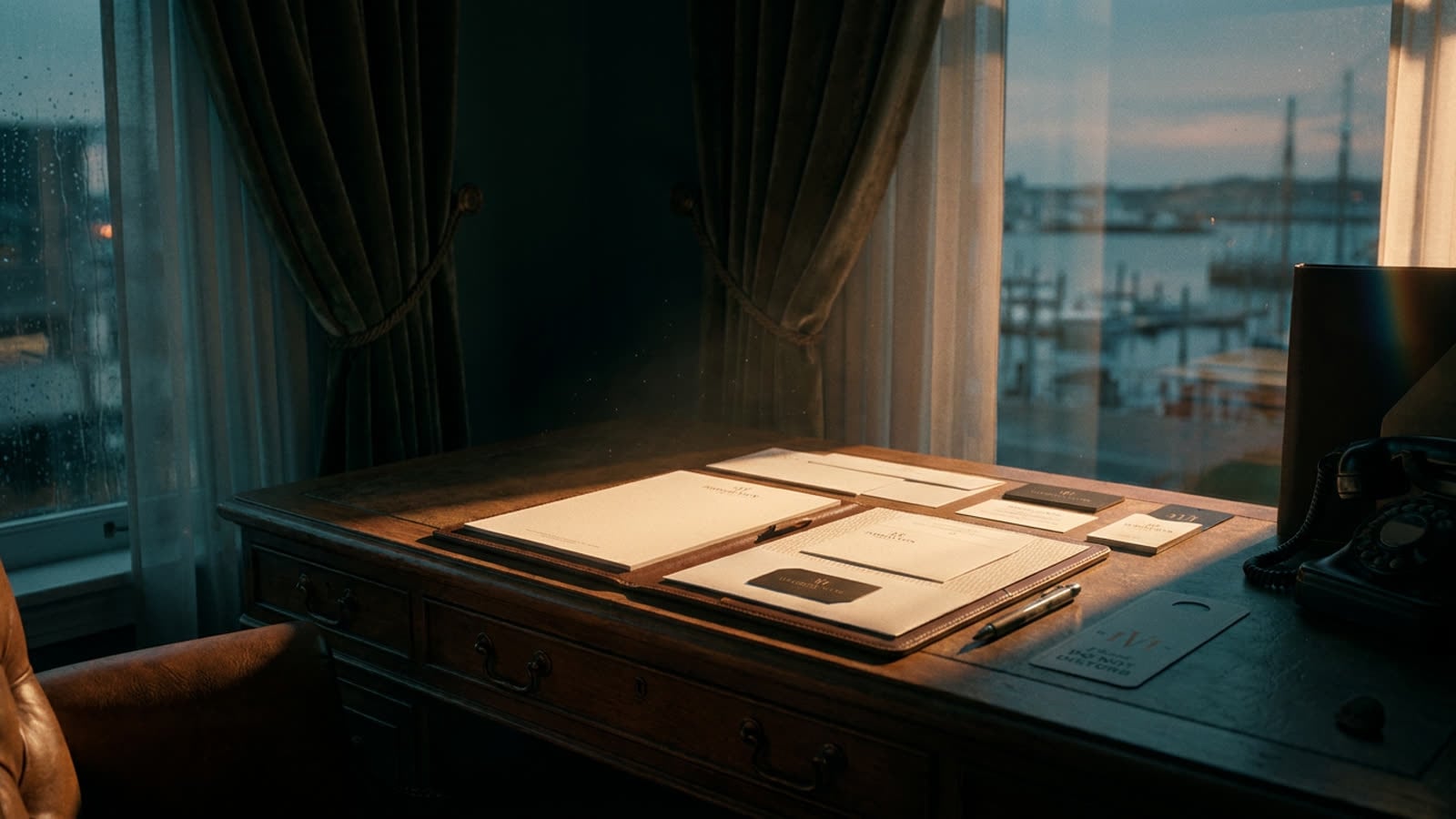
The notepad sits where it has always sat: beside a telephone that rarely rings, next to a pen embossed with a name you will forget by Tuesday. You will not write on it. The hotel knows you will not write on it. And yet there it remains, replaced fresh each day by housekeeping, a small monument to a communication ritual that effectively ended sometime around the introduction of the BlackBerry.
This is the peculiar logic of luxury hospitality—that certain gestures persist not despite their uselessness but because of it. The hotel notepad, the envelope tucked inside the leather folio, the postcard depicting the lobby in improbable golden light: these are not functional objects. They are signals, and what they signal is that someone has thought about you before you arrived.
The economics of the unnecessary
Custom stationery is not cheap. A proper letterpress job on cotton stock, with blind embossing and a watermark, can run several dollars per sheet at scale. Multiply that across hundreds of rooms refreshed daily, and the annual expense becomes meaningful. Yet the category has proven remarkably resistant to cost-cutting, even as hotels have quietly eliminated shoe-shine services, reduced turndown frequency, and replaced room-service menus with QR codes.
The reason is psychological rather than practical. Stationery belongs to a class of hospitality details that function as what behavioral economists call costly signals—expenditures that communicate commitment precisely because they serve no immediate purpose. A hotel that stocks beautiful paper is a hotel that sweats details you will never consciously notice, which implies it also sweats details that matter: the thread count, the water pressure, the silence of the hallway at midnight.
A brief golden age
Hotel stationery reached its aesthetic peak roughly between the wars, when grand hotels competed on the elegance of their crests and the weight of their correspondence cards. Travelers actually used them. Letters home, thank-you notes, the occasional telegram draft—the hotel room was a temporary office, and the stationery was its infrastructure. Some collectors now pay meaningful sums for vintage examples from the Ritz Paris or the original Waldorf-Astoria, less for the paper itself than for the typography and the social world it implies.
That world is gone, obviously. But the stationery endured, transitioning from utility to ritual to pure symbolism without anyone formally deciding it should. This is how traditions work: they outlast their reasons.
The collectors and the keepers
A small but devoted community treats hotel stationery as a legitimate collectible category, prizing unusual logos, defunct properties, and the occasional celebrity provenance. More common is the casual souvenir—the notepad slipped into a suitcase as a memento of a honeymoon or a deal closed. Hotels know this happens and do not mind. The paper that leaves the room is, in a sense, doing its job: carrying the brand into the world, sitting in a desk drawer for years, surfacing occasionally to trigger a memory of a good trip.
This may be the notepad's final function in the digital age. Not communication but commemoration. A physical trace of a stay that otherwise exists only in confirmation emails and credit-card statements.
Our take
The hotel notepad is a small absurdity that reveals something true about hospitality: that comfort is often a matter of implication rather than utility. No one needs the paper. Everyone registers, at some level, that it is there. The best hotels understand that luxury is less about what guests use than about what guests sense has been considered on their behalf. The notepad will outlast the room phone, the alarm clock, probably the television. It costs almost nothing and communicates almost everything.