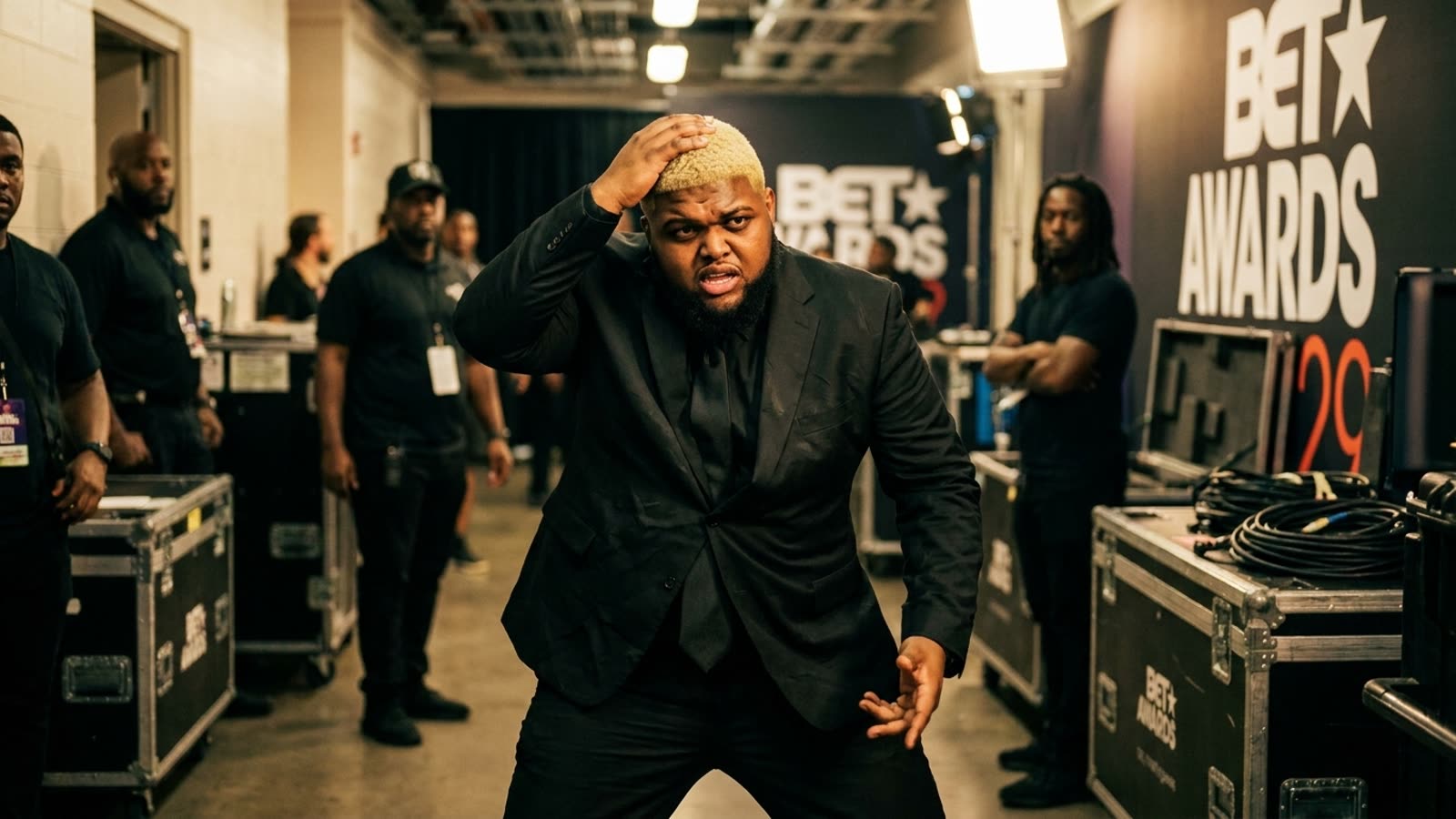
The formula for a successful awards-show host has remained unchanged for decades: keep the show moving, land a few jokes that will trend the next morning, and above all, never become the story. Druski, the comedian whose Instagram skits have made him one of the most bankable names in digital comedy, violated that last rule so spectacularly at Sunday's BET Awards that his name is now synonymous with the evening's lowlight rather than its laughs.
The controversy centers on what should have been a routine bit of stage management. When SZA's acceptance speech ran long, Druski began playing walk-off music—a time-honored awards-show tradition. The problem was the execution: rather than a gentle orchestral swell, the comedian reportedly made the moment feel like a punchline, complete with comedic timing that read as dismissive rather than professional. When Doechii later received similar treatment, the pattern became impossible to ignore. Two of R&B and hip-hop's most celebrated women, both at career peaks, both seemingly rushed off their own stage.
The optics problem
Awards shows have always struggled with the tension between runtime and recognition. The Oscars famously play off winners mid-sentence; the Grammys have turned the acceptance-speech interruption into an annual controversy. But BET occupies a different cultural space—a ceremony explicitly designed to honor Black excellence in an industry that has historically undervalued it. The sight of a male comedian appearing to hurry Black women artists off stage landed with particular weight.
Social media's response was immediate and unforgiving. Within hours, clips of both incidents had accumulated millions of views, with commentary ranging from disappointed to genuinely furious. The criticism transcended the usual awards-show discourse; this became a conversation about respect, about who gets to take up space, and about whether Druski understood the room he was in.
A career inflection point
Druski's rise has been meteoric by any measure. His Coulda Been Records parody series turned him into a genuine crossover star, leading to a Netflix special and increasingly high-profile hosting opportunities. The BET gig was meant to cement his status as a mainstream entertainment figure capable of commanding a major live broadcast. Instead, it exposed the gap between viral sketch comedy—where the comedian controls every variable—and live television, where reading the room is everything.
The comedian has not yet issued a formal statement, though the silence itself is becoming part of the story. In the age of the Notes-app apology, the absence of one reads as either defiance or miscalculation.
Our take
Druski is genuinely funny, and his digital work has earned every bit of his success. But hosting an awards show is not a sketch—there is no edit button, no second take, no algorithm to reward the controversial clip. He treated a live ceremony honoring artists at the height of their powers like content to be mined for engagement. SZA and Doechii deserved their moments; Druski made himself the moment instead. It is a recoverable error, but only if he recognizes that the bit was never the bit at all.