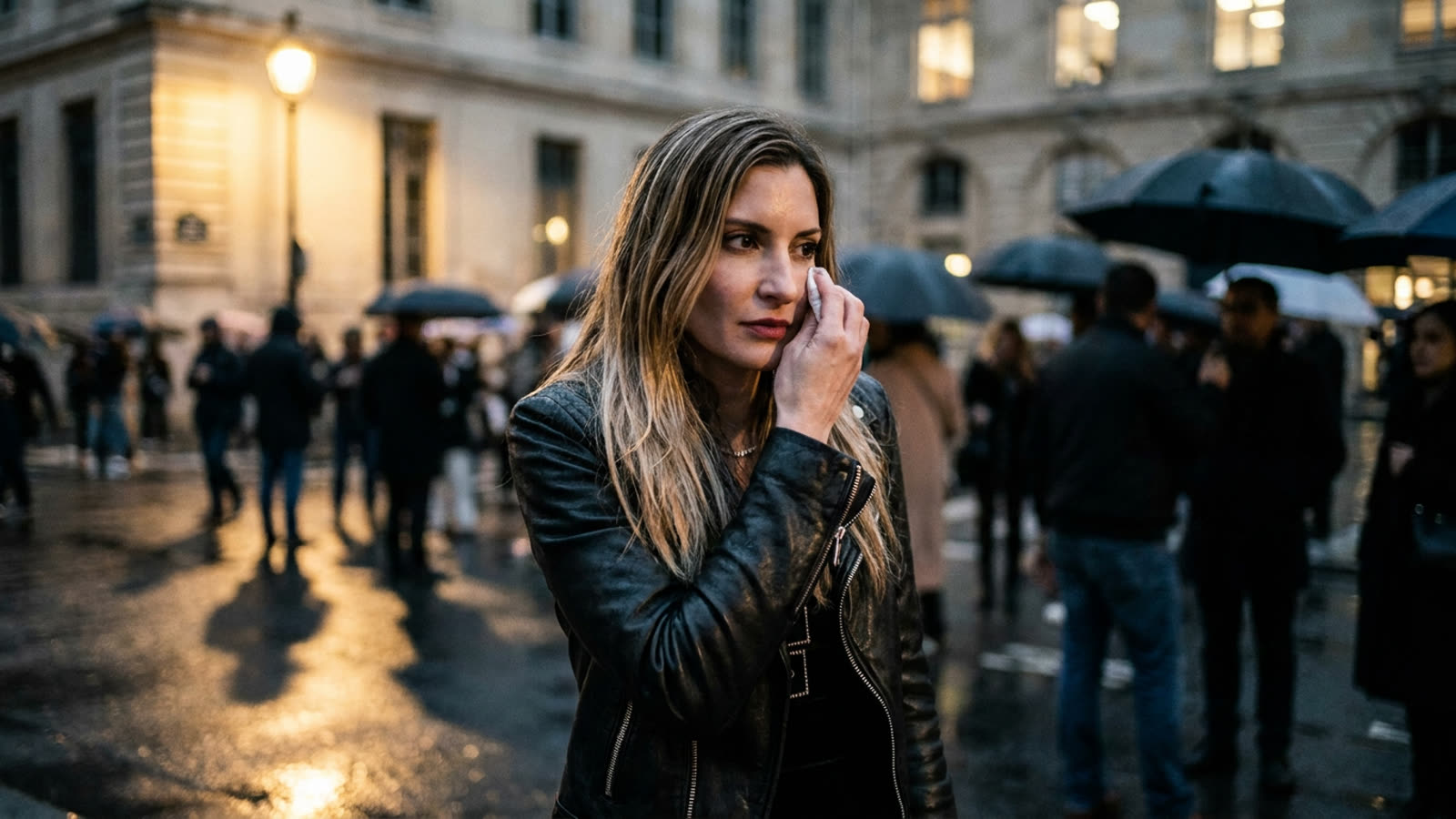
The formula is now so reliable it could be trademarked: take a closed religious community, add attractive young women with complicated marriages, film them doing anything other than what their faith prescribes, and watch the numbers climb. Layla Taylor, the 28-year-old influencer who emerged as the most polarizing figure from Hulu's "The Secret Lives of Mormon Wives," has spent the past week dominating entertainment news cycles with revelations that would have been unthinkable content a generation ago.
What began as a docuseries about "MomTok" — the loose collective of young Mormon mothers who found fame on TikTok — has metastasized into something far more culturally significant. Taylor, who joined the cast after the initial soft-swinging scandal that launched the show, has become its gravitational center precisely because she embodies the contradictions the audience craves: devout presentation, messy reality, and an apparent willingness to let cameras capture both.
The economics of faith-based scandal
Hulu has not released official viewership figures, but industry analysts estimate the show's second season performed substantially better than its debut, which itself ranked among the streamer's most-watched unscripted offerings. The success has spawned imitators — Netflix is reportedly developing a similar series focused on evangelical communities in the South, while Peacock has been circling fundamentalist groups in the Midwest.
The appeal is not difficult to parse. Reality television has always thrived on the gap between how people present themselves and how they actually behave. Mormon communities, with their emphasis on modest living, traditional family structures, and public propriety, offer a wider gap than most. When that gap becomes visible, audiences experience the particular pleasure of watching facades crumble in high definition.
Taylor has proven especially adept at navigating this terrain. Her social media presence oscillates between testimony-style affirmations of faith and teasing glimpses of behavior that would scandalize her bishop. The cognitive dissonance is the content.
What the Church cannot control
The Church of Jesus Christ of Latter-day Saints has maintained a studied silence on the show, a strategic choice that reflects institutional learning. Previous attempts to distance the Church from unflattering portrayals — from "Big Love" to "Under the Banner of Heaven" — only amplified attention. The current approach appears to be weathering the storm while hoping younger members distinguish between entertainment and doctrine.
This may be optimistic. The show's audience skews heavily toward women aged 18-34, precisely the demographic the Church has struggled to retain. Whether "The Secret Lives of Mormon Wives" functions as a pressure valve or an exit ramp for questioning members remains an open question, but the Church's inability to control the narrative is itself a kind of answer.
Our take
There is something faintly uncomfortable about the enthusiasm with which secular audiences consume Mormon scandal content. The genre operates on a kind of soft bigotry — the assumption that religious people are either hypocrites to be exposed or naifs to be pitied. Layla Taylor is neither, which is what makes her interesting. She is a young woman navigating impossible expectations with a camera crew in tow, and if she has figured out how to monetize the contradiction, that says as much about us as it does about her. The appetite for watching faith communities stumble is not new. What is new is the industrial scale at which we have learned to feed it.