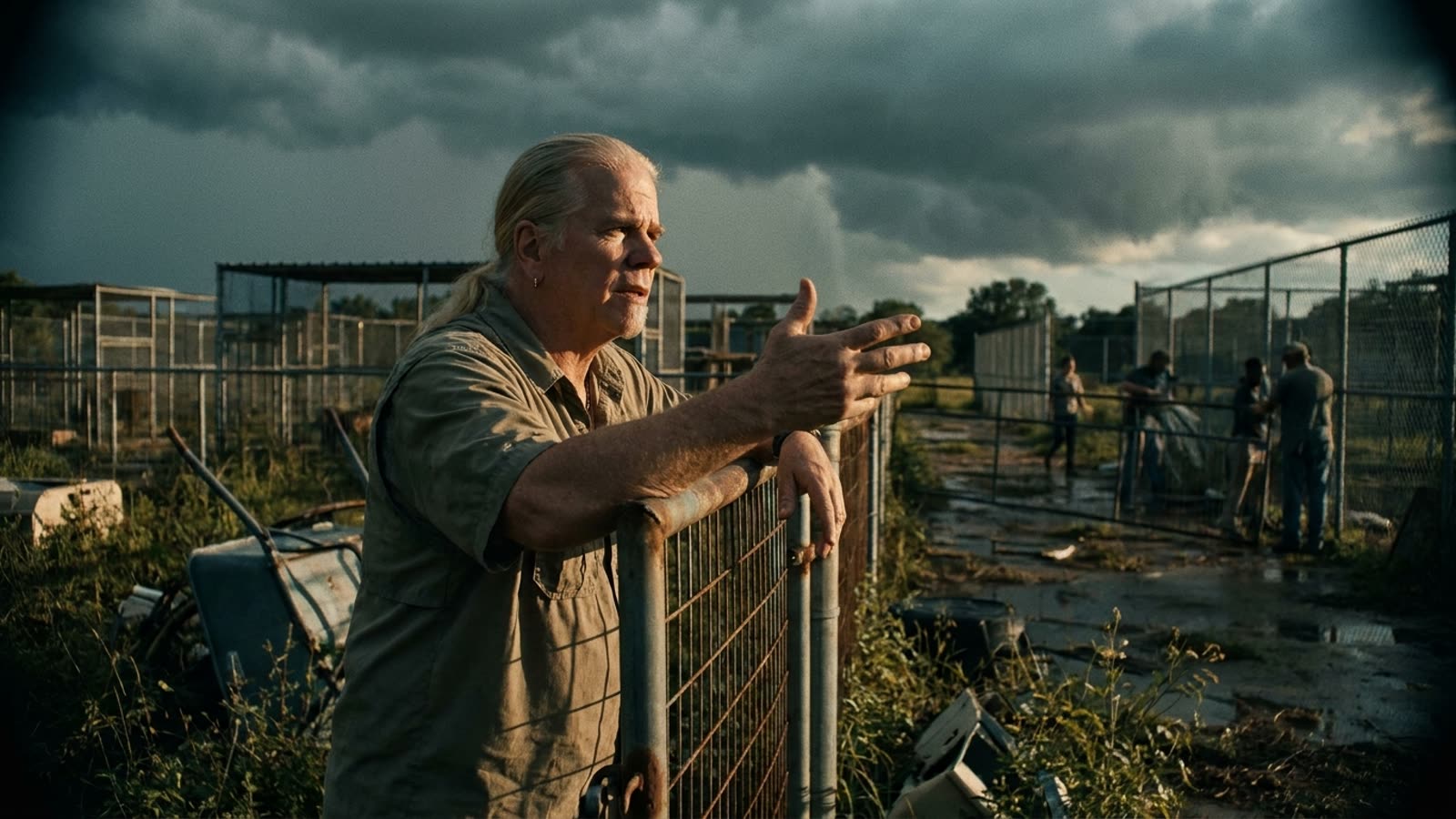
Six years after Netflix turned Bhagavan "Doc" Antle into an unlikely household name, the flamboyant proprietor of Myrtle Beach Safari is watching his carefully constructed world come apart at the seams. The latest developments suggest that the legal and regulatory machinery that seemed perpetually stalled has finally found its gears.
Antle, now in his mid-sixties, built something genuinely unusual over four decades: a hybrid of zoo, cult, and celebrity petting service that attracted everyone from Britney Spears to Floyd Mayweather. His operation survived decades of PETA complaints, USDA citations, and whispered allegations about everything from animal welfare to the treatment of young women who worked at his compound. Then came Tiger King, which introduced 64 million households to his ponytail, his multiple "wives," and his suspiciously convenient cub-breeding operation.
The slow grind of accountability
What's striking about Antle's current predicament is how mundane the mechanisms of his undoing have proven to be. No dramatic FBI raid, no tearful confession on a streaming documentary sequel. Instead, it's been a grinding accumulation of wildlife trafficking charges, state-level animal cruelty citations, and the quiet revocation of permits that once seemed permanently grandfathered.
The contrast with his Tiger King co-star Joe Exotic—currently serving a lengthy federal sentence—is instructive. Exotic's downfall was operatic, involving murder-for-hire plots and country music videos. Antle's is bureaucratic, a death by a thousand regulatory paper cuts. Both men exploited the same legal gray zones in exotic animal ownership, but only one had the sophistication to avoid the most obvious tripwires.
The celebrity industrial complex moves on
Perhaps the most telling indicator of Antle's diminished status is the silence from the celebrity world that once beat a path to his door. A decade ago, having a photo op with one of his tiger cubs was a reliable Instagram moment for reality stars and athletes. Today, the reputational calculus has shifted entirely. Animal rights consciousness, whatever its inconsistencies, has made exotic animal encounters toxic for personal brands.
The influencer economy that once sustained operations like Myrtle Beach Safari has developed new sensitivities—or at least new fears about being called out. Antle's client list reads like a time capsule from a less scrutinized era of celebrity image management.
Our take
There's something unsatisfying about watching Antle's operation wind down through permit denials and court dates rather than some decisive moral reckoning. But perhaps that's the more honest ending. The exotic animal trade in America was never really about charismatic villains—it was about regulatory capture, inconsistent enforcement, and a public appetite for wildlife encounters that nobody wanted to examine too closely. Antle didn't create that system; he simply exploited it more flamboyantly than most. His slow-motion fall says less about justice than about how cultural winds shift, leaving yesterday's eccentric entrepreneurs stranded on the wrong side of acceptable.