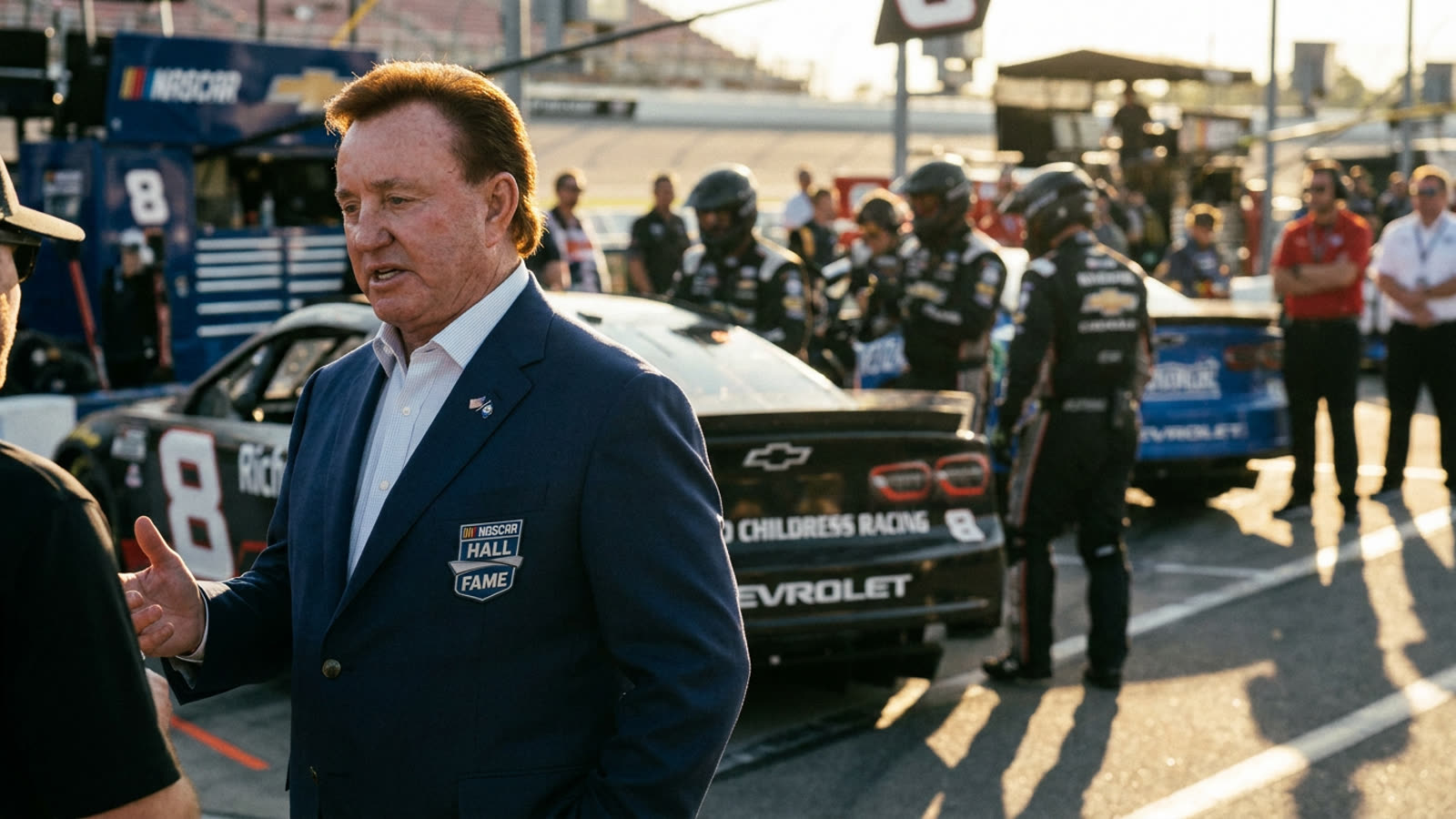
Richard Childress is doing something increasingly rare in professional motorsport: standing by his man.
The legendary NASCAR team owner, who built Richard Childress Racing into a powerhouse alongside the late Dale Earnhardt, has publicly reaffirmed his commitment to Kyle Busch despite what can only be described as a catastrophic 2026 season. Busch, a two-time Cup Series champion who arrived at RCR in 2023 with considerable fanfare after his acrimonious departure from Joe Gibbs Racing, has delivered results that would test any owner's patience—and checkbook.
The numbers don't lie
Busch's statistical decline has been precipitous. The driver who accumulated 63 Cup Series wins and two championships now finds himself mired in the bottom half of the standings, with finishes that would have been unthinkable during his prime years at JGR. For a team paying premium dollar for a premium name, the return on investment has been, charitably, disappointing.
Yet Childress, now 75 and with nothing left to prove in a sport he's inhabited for over five decades, appears unmoved by the spreadsheet logic that governs most modern racing operations. His defense of Busch carries the tone of a man who has seen enough boom-and-bust cycles to know that performance slumps, however painful, are not permanent conditions.
The economics of patience
What makes Childress's loyalty notable is how thoroughly it contradicts contemporary motorsport's hire-and-fire culture. NASCAR teams increasingly operate like their Formula 1 counterparts—ruthlessly performance-driven, with driver contracts that read more like quarterly employment agreements than long-term partnerships. The sport's declining television ratings and sponsorship challenges have only accelerated this trend.
Childress, however, built his empire in a different era, one where handshake deals meant something and driver-owner relationships were measured in decades rather than seasons. His six championships with Earnhardt weren't won overnight; they required the kind of mutual investment that modern racing's attention-deficit economics rarely permits.
Our take
There's something both touching and slightly anachronistic about Childress's stance. Whether Busch can rediscover his former brilliance at 41 remains genuinely uncertain—age comes for all drivers eventually, and the reflexes required for 200-mph competition are unforgiving. But Childress's willingness to absorb short-term pain for a driver he believes in represents a philosophy of team-building that motorsport has largely abandoned. It may prove foolish. It may prove prescient. Either way, it's refreshingly human in a sport increasingly dominated by data-driven decision-making and sponsor appeasement.