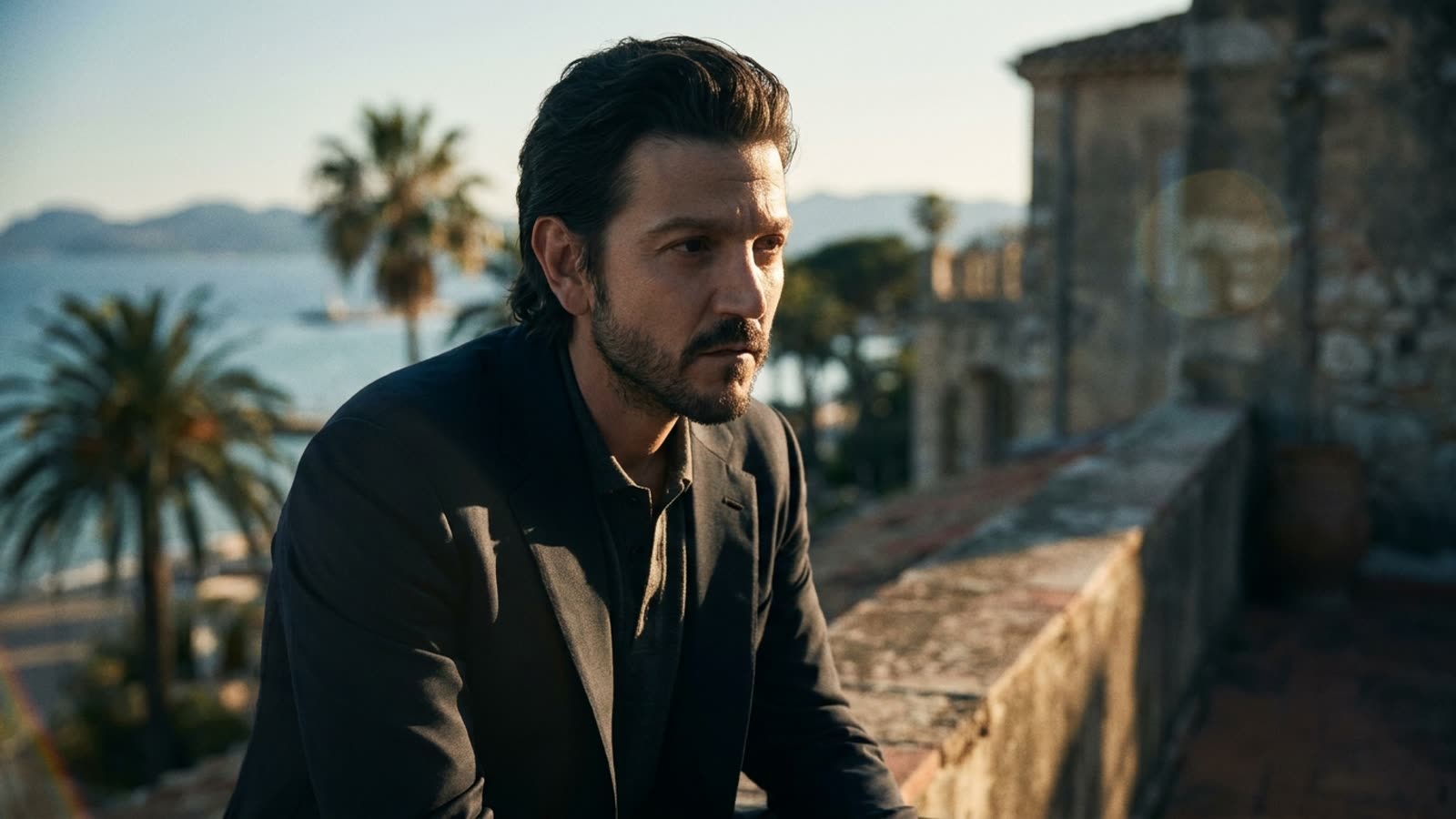
When actors become directors, they stop dressing like actors. This is the unspoken sartorial rule of the film industry, and Diego Luna has embraced it with the convert's zeal at this year's Cannes Film Festival, where he's presenting his directorial work in head-to-toe Zegna.
The Mexican star, best known for Y Tu Mamá También and his role as Cassian Andor in the Star Wars universe, has maintained a partnership with the Italian luxury house for years. But watching him navigate the Croisette this week, the collaboration reads differently. Gone is the youthful energy of his early red carpet appearances; in its place, a studied restraint that signals creative authority rather than celebrity availability.
The director's uniform
There's a specific look that male directors cultivate at major festivals: soft-shouldered jackets in muted tones, trousers that suggest comfort during long editing sessions, fabrics that photograph well without demanding attention. It's a visual language that says "I'm here for the work" while still acknowledging that film is, fundamentally, a business conducted through appearances.
Luna's Zegna selections fit this template precisely. The brand's Oasi Cashmere line—designed for what the house calls "quiet luxury"—provides exactly the kind of understated sophistication that a first-time director needs when he wants to be taken seriously by critics and financiers alike. It's fashion as professional credential.
The economics of the pivot
Long-term fashion partnerships with actors typically depend on visibility: red carpets, premieres, magazine covers. When an actor transitions behind the camera, that visibility calculus shifts dramatically. Directors appear at far fewer events, and when they do, they're competing for attention with their own casts.
That Luna has maintained his Zegna relationship through this transition suggests both parties understand something about the changing nature of celebrity in film. The director-as-brand has become increasingly valuable as streaming platforms seek recognizable names to cut through content noise. A well-dressed director signals a certain kind of production—tasteful, considered, worth the subscription.
Our take
Luna's sartorial evolution is ultimately less about clothes than about the peculiar way Hollywood metabolizes its talent. The industry has always required actors to perform their profession even when they're not on camera, and that performance shifts register when the job title changes. That he looks genuinely comfortable in his new uniform—neither costumed nor self-conscious—suggests the directorial ambitions are real. The Zegna is just the costume change that makes it legible.