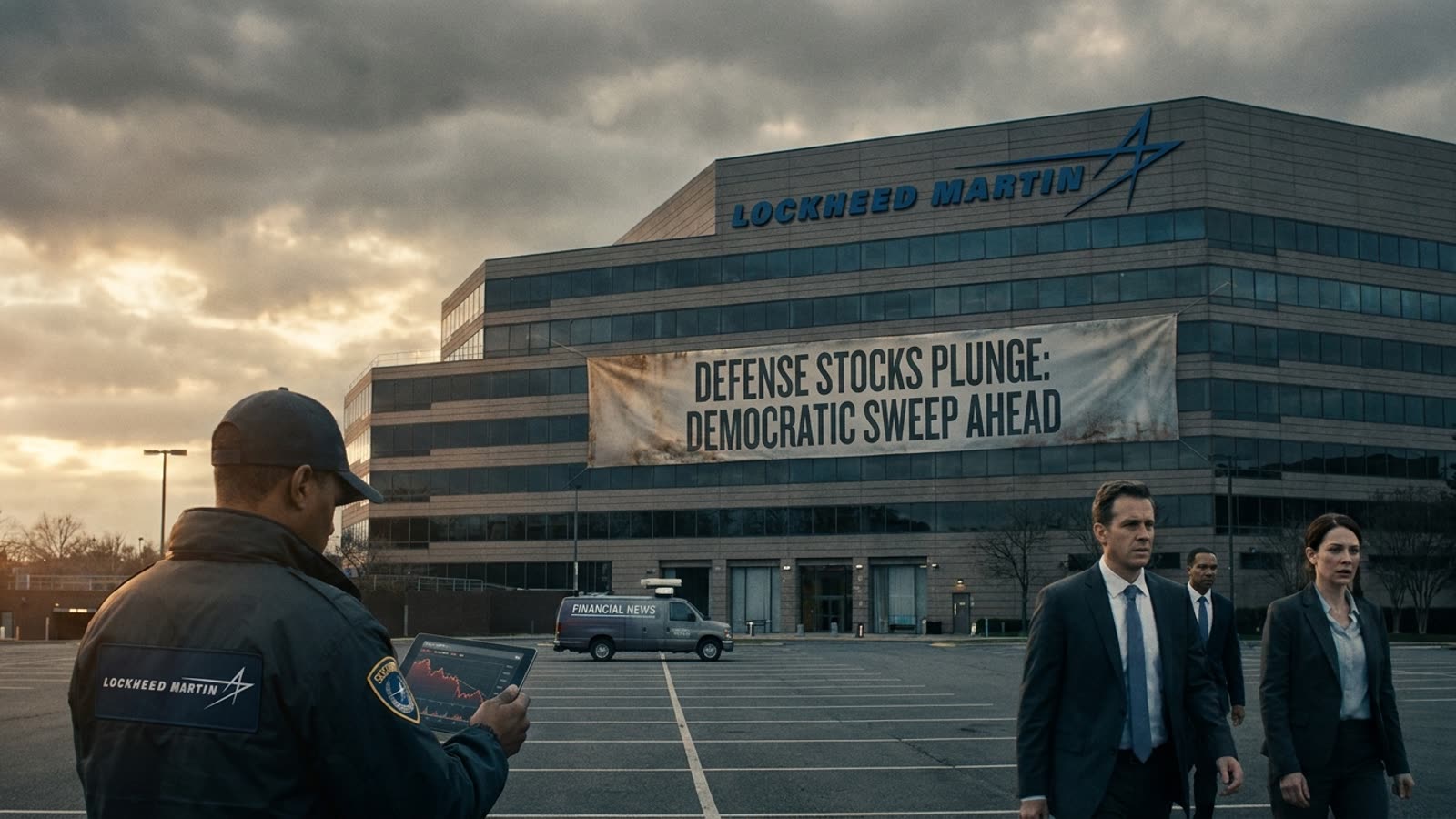
The American defense sector has spent the better part of two years trading as though Donald Trump's return to the White House was a foregone conclusion. That trade is unwinding at speed.
Lockheed Martin, Northrop Grumman, and RTX have collectively shed more than $40 billion in market capitalization over the past fortnight, with the S&P Aerospace & Defense index posting its steepest weekly decline since the early days of the pandemic. The catalyst is not geopolitical calm — if anything, tensions from the Taiwan Strait to the Baltic are elevated — but a sudden repricing of American electoral risk. Investors who had banked on Trump's proposed half-trillion-dollar boost to the Pentagon are now hedging against a Democratic trifecta that would redirect those dollars elsewhere.
The Trump premium evaporates
For much of 2025 and 2026, defense equities carried what analysts called the "Trump premium" — an implicit assumption that his campaign pledge to raise military spending to 5% of GDP would translate into a procurement bonanza. The logic was straightforward: more ships, more jets, more missiles, more margin. Prime contractors staffed up their investor-relations teams accordingly.
But polling momentum has shifted. The generic congressional ballot now favors Democrats by a margin wide enough to suggest they could hold the Senate and flip the House, while the presidential race has tightened in Sun Belt battlegrounds. A unified Democratic government would almost certainly prioritize domestic spending — climate infrastructure, healthcare subsidies, housing — over a military buildup that even some Republicans now question.
Bipartisan hawkishness frays
The deeper issue is that the post-Ukraine consensus on defense spending is cracking. Progressive Democrats have revived arguments for a "peace dividend," while populist Republicans increasingly view the Pentagon as another bloated bureaucracy. The result is a narrowing coalition for higher budgets, regardless of who wins in November.
Defense CFOs are already telegraphing caution. On recent earnings calls, executives have emphasized backlog visibility and international sales — code for "we can survive a domestic spending freeze." But international orders cannot fully offset a stalled American procurement cycle, and allies are themselves facing fiscal constraints.
Our take
Markets are not predicting a Democratic landslide; they are pricing in uncertainty after months of complacency. The defense selloff is less a verdict on who will win than an acknowledgment that the Trump trade was never as safe as it looked. For investors, the lesson is familiar: political bets are binary, and the house edge belongs to volatility.