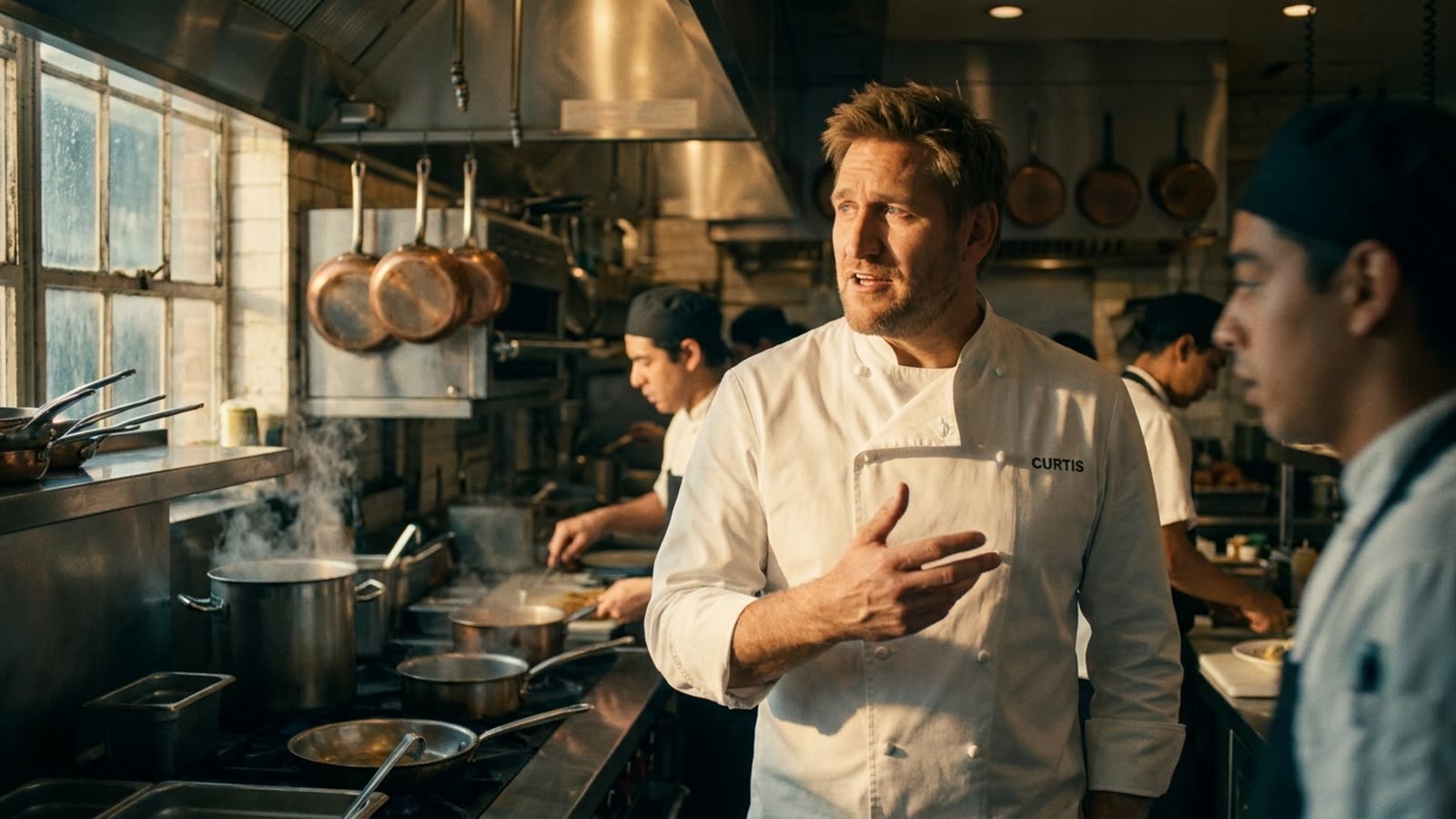
The celebrity chef industrial complex has always rewarded volume over depth: more restaurants, more licensing deals, more television appearances, more branded air fryers gathering dust in suburban garages. Curtis Stone took a different path, and it's increasingly clear he understood something his peers missed.
The Australian-born chef, who first gained American recognition through Bravo's cooking competitions in the late 2000s, has spent the past decade building what might be the most sustainable celebrity-chef business model in the industry. His approach is almost contrarian in its restraint.
The anti-expansion expansion
Stone operates just two restaurants — Maude and Gwen, both in Beverly Hills — rather than the dozen-plus outposts that define empires like those of Wolfgang Puck or Gordon Ramsay. Maude, his tasting-menu flagship, seats roughly two dozen guests. Gwen combines a steakhouse with a full-service butcher shop, a hybrid concept that seemed eccentric when it opened in 2016 but now looks prescient.
The butcher shop component isn't a vanity project. It generates consistent revenue regardless of reservation patterns, builds community relationships that translate into dining-room loyalty, and provides a quality-control mechanism for the restaurant's protein program. It's the kind of operationally boring, margin-healthy business that celebrity chefs typically outsource or ignore entirely.
The grocery gambit
Stone's partnership with Australian supermarket chain Coles — where he's served as brand ambassador for over a decade — has drawn occasional snark from food-media purists. But the arrangement has funded his creative independence in ways that restaurant margins alone never could. He's not hawking frozen dinners; he's doing recipe development and sourcing consultation for a major retailer, work that's invisible to American audiences but financially significant.
This diversification strategy — prestigious but small restaurants, plus steady corporate consulting — inverts the typical celebrity-chef formula of prestigious restaurants subsidizing mass-market product lines. Stone's restaurants don't need to be profit centers because his corporate work already is.
Our take
The celebrity-chef bubble of the 2010s produced a lot of overextended empires now quietly contracting. Stone's refusal to chase scale looks less like modesty and more like foresight. He built a career that doesn't require him to open his fourteenth airport outpost or slap his name on a meal-kit service to stay relevant. In an industry that treats expansion as the only metric of success, he's made a compelling case for staying small and staying solvent.