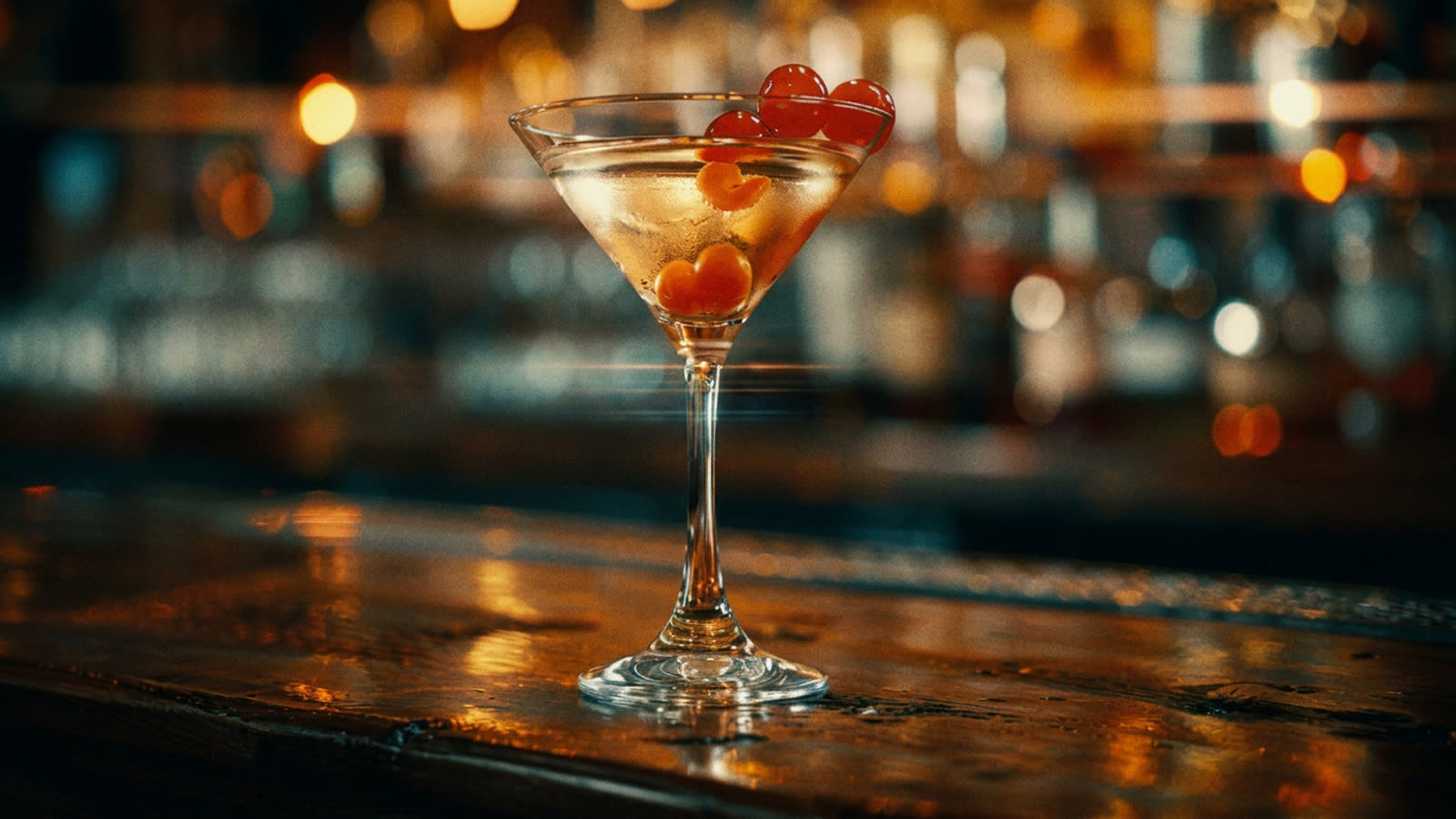
The martini is not a particularly good drink. It is cold, astringent, and—if made to contemporary specifications—essentially neat gin with a rumor of vermouth. Yet it has survived Prohibition, the three-martini lunch, the vodka hijacking of the 1970s, the Cosmopolitan era, and the craft-cocktail revival that should have rendered it a museum piece. No other cocktail has this résumé. The reason is not flavor but semiotics: the martini is less a beverage than a costume, and the role it lets you play never goes out of style.
The invention of sophistication
The drink's origins are disputed and, frankly, boring—some combination of vermouth, gin, and bitters coalesced in San Francisco or New York saloons in the late nineteenth century. What matters is what happened next. By the 1930s, the martini had become the official drink of American aspiration. It was what Nick and Nora Charles drank in The Thin Man, what executives ordered to signal they had arrived. The glass itself—that fragile, stemmed V—was impractical by design; you cannot gulp from it, you cannot set it down carelessly, you cannot pretend you are anywhere but a place with tablecloths. The martini announced that you had time, taste, and a tolerance for strong spirits.
The dryness arms race
Somewhere between Hemingway and James Bond, the martini became a theater of machismo. The ratio of gin to vermouth, once roughly equal, began its long slide toward homeopathy. Winston Churchill allegedly glanced at a bottle of vermouth across the room. Bond demanded his shaken, a heresy that dilutes the drink but sounds more violent. By the 1990s, bartenders were rinsing glasses with vermouth and discarding it, a ritual as performative as a Japanese tea ceremony and considerably less nourishing. The point was never balance; the point was to demonstrate that you could handle your liquor and your life.
Why it keeps coming back
The craft-cocktail movement of the 2000s and 2010s rehabilitated nearly every forgotten aperitif and pre-Prohibition recipe, yet the martini—so simple it barely qualifies as a recipe—remained on menus, often at the highest price point. This is because the martini offers something no Negroni or Old Fashioned can: blankness. It has no tropical associations, no whiskey-and-fireplace coziness, no specific nationality beyond a vague mid-Atlantic elegance. It is a screen onto which the drinker projects competence, control, and a certain indifference to pleasure. In an age of hyper-personalized consumption, that neutrality is paradoxically distinctive.
Our take
The martini endures not because it tastes good—most people, if honest, would prefer something sweeter or more complex—but because it makes the drinker feel like a protagonist. It is the drink you order when you want to be watched ordering a drink. That is a shallow reason to choose a cocktail, but shallowness, properly executed, has its own integrity. The martini is honest about its vanity, and that honesty is why it will outlive whatever replaces the Espresso Martini.