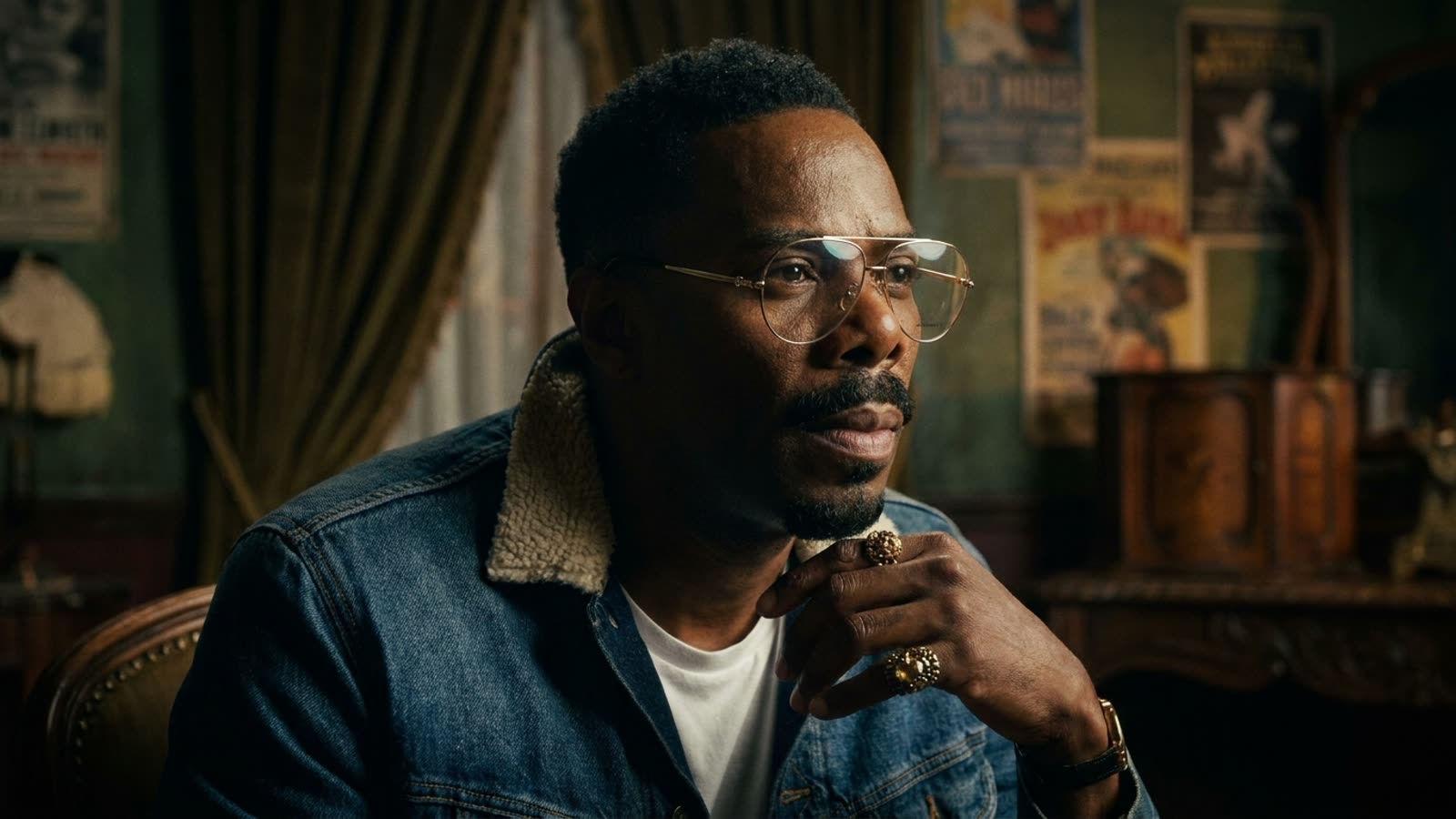
At 56, Colman Domingo is experiencing the kind of industry saturation typically reserved for actors half his age—and he appears entirely unsurprised by it. With roles in Michael, Disclosure Day, and The Four Seasons arriving in quick succession, the Euphoria star has become inescapable in the best possible sense: a character actor who refused to remain in the margins now occupying the frame's dead center.
What distinguishes Domingo's ascent from the standard "finally getting his due" narrative is his evident control over its terms. This is not a performer being swept along by sudden recognition; it is someone who spent three decades building the technical and emotional range necessary to handle exactly this moment.
The long apprenticeship
Domingo's path wound through Broadway (The Scottsboro Boys, Passing Strange), television (Fear the Walking Dead), and supporting film work that showcased his ability to disappear into wildly different registers. His Oscar-nominated turn as Bayard Rustin last year functioned less as a breakthrough than as a public acknowledgment of capacities the industry had been borrowing without fully crediting. The current wave of leading roles suggests studios are now willing to build projects around him rather than slot him into supporting architecture.
Spirituality as professional framework
In discussing his career trajectory, Domingo has invoked the late Chadwick Boseman as a guiding presence "from the other side"—a framing that could scan as awards-season sentimentality but lands differently from an actor who has consistently spoken about craft in quasi-spiritual terms. For Domingo, acting appears to be a practice in the religious sense: something requiring daily discipline, community, and faith that the work itself matters independent of recognition. That this philosophy has now been rewarded with recognition feels almost incidental to its core logic.
The economics of late stardom
Domingo's emergence also illuminates shifting industry calculations. Streaming platforms and prestige cable have expanded the market for complex adult drama, creating space for performers whose appeal lies in depth rather than demographic targeting. An actor who can anchor a biopic, elevate an ensemble drama, and bring gravitas to genre television represents genuine economic value in an era when franchise fatigue has made studios newly interested in actor-driven projects.
Our take
There is something quietly radical about an artist who spent decades perfecting his instrument and then, when the spotlight finally arrived, treated it as confirmation rather than transformation. Domingo's current ubiquity feels earned in a way that transcends the usual discourse about overlooked talent—he is not being discovered so much as finally being deployed at scale. The industry's gain is also its mild embarrassment: what took so long?