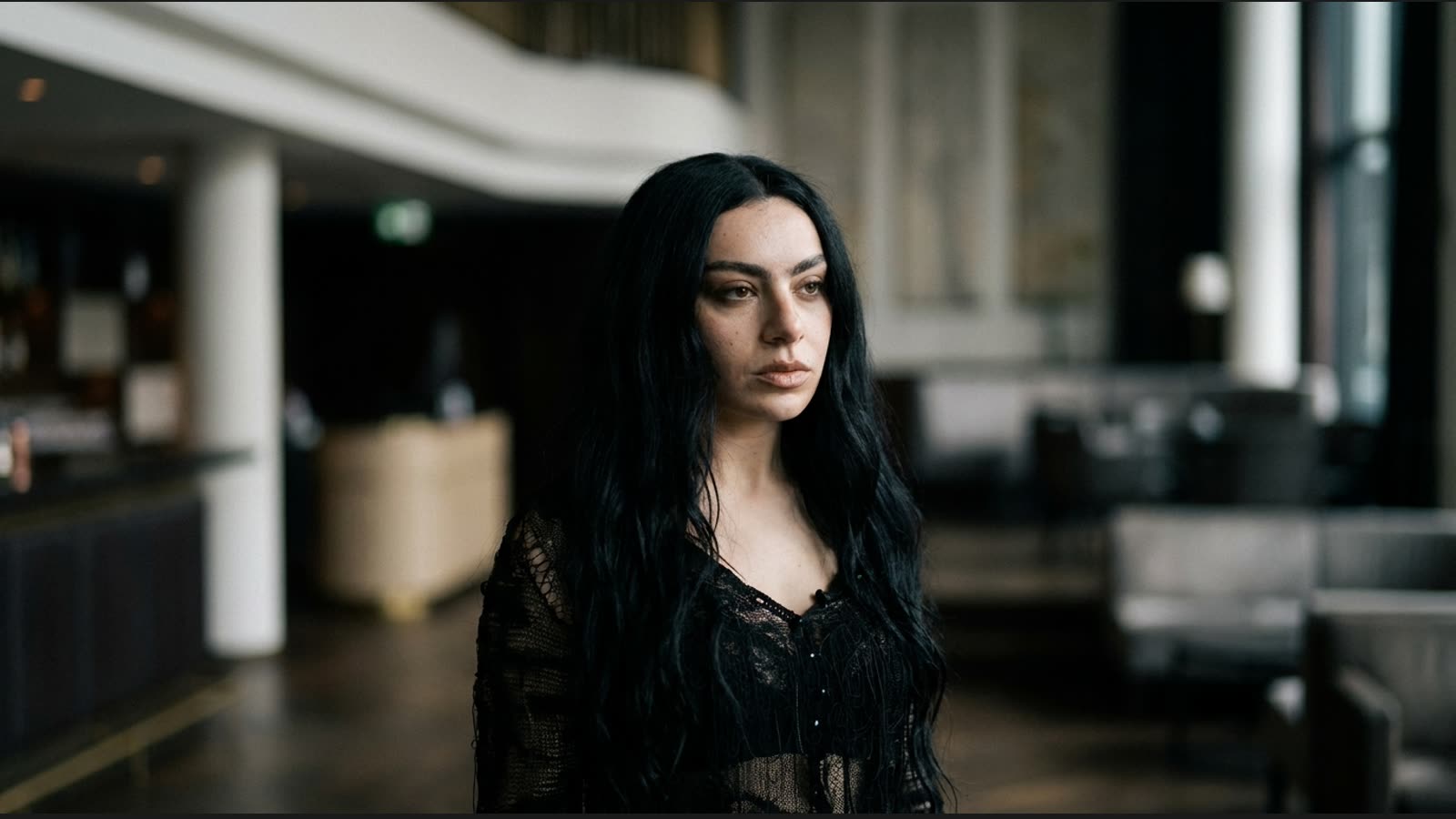
Less than a year after Brat turned lime green into a generational signifier and made hyperpop synonymous with a certain kind of chaotic summer, Charli XCX has already moved on. Her new single, "Rock Music," opens with a line that functions as both thesis statement and troll: "I think the dance floor is dead, so now we're making rock music."
The track itself reportedly leans into distorted guitars and a heavier sonic palette, marking a departure from the synth-drenched club anthems that defined her recent imperial phase. Whether this represents a genuine artistic pivot or an elaborate bit of performance art remains unclear—and that ambiguity is precisely the point.
The post-Brat problem
Charli has always understood that pop stardom in the streaming age requires constant reinvention. After Brat became the unlikely soundtrack to a political moment and spawned a thousand think pieces about "brat summer," the commercial instinct would be to replicate the formula. Instead, she's doing what she's always done: zigging when the market expects a zag.
The declaration that dance music is finished carries a certain irony given that electronic and club sounds have dominated pop production for the better part of a decade. But Charli's provocation isn't really about genre taxonomy—it's about the exhaustion of a particular cultural moment. The post-pandemic dance floor revival, with its emphasis on hedonism and physical presence, may have already peaked.
A genre in flux
There's supporting evidence for her thesis, if you squint. Guitar-driven music has been creeping back into the mainstream consciousness, from Olivia Rodrigo's pop-punk inflections to the continued dominance of Morgan Wallen's arena country. TikTok's algorithm, which once seemed engineered to surface four-on-the-floor beats, has increasingly favored acoustic intimacy and raw vocals.
More tellingly, the festival circuit—long the proving ground for dance music's commercial viability—has seen declining attendance at several major electronic-focused events while rock-adjacent lineups draw stronger numbers. The kids who discovered clubbing through Brat may be ready for something louder and more cathartic.
Our take
Charli XCX has built a career on being approximately eighteen months ahead of the cultural curve. Her declaration of dance music's demise should be understood not as obituary but as forecast—a bet that the pendulum is swinging and she intends to be waiting on the other side. Whether "Rock Music" actually sounds like rock music matters less than the statement of intent. In an industry that rewards consistency, she's once again choosing chaos. It's worked before.