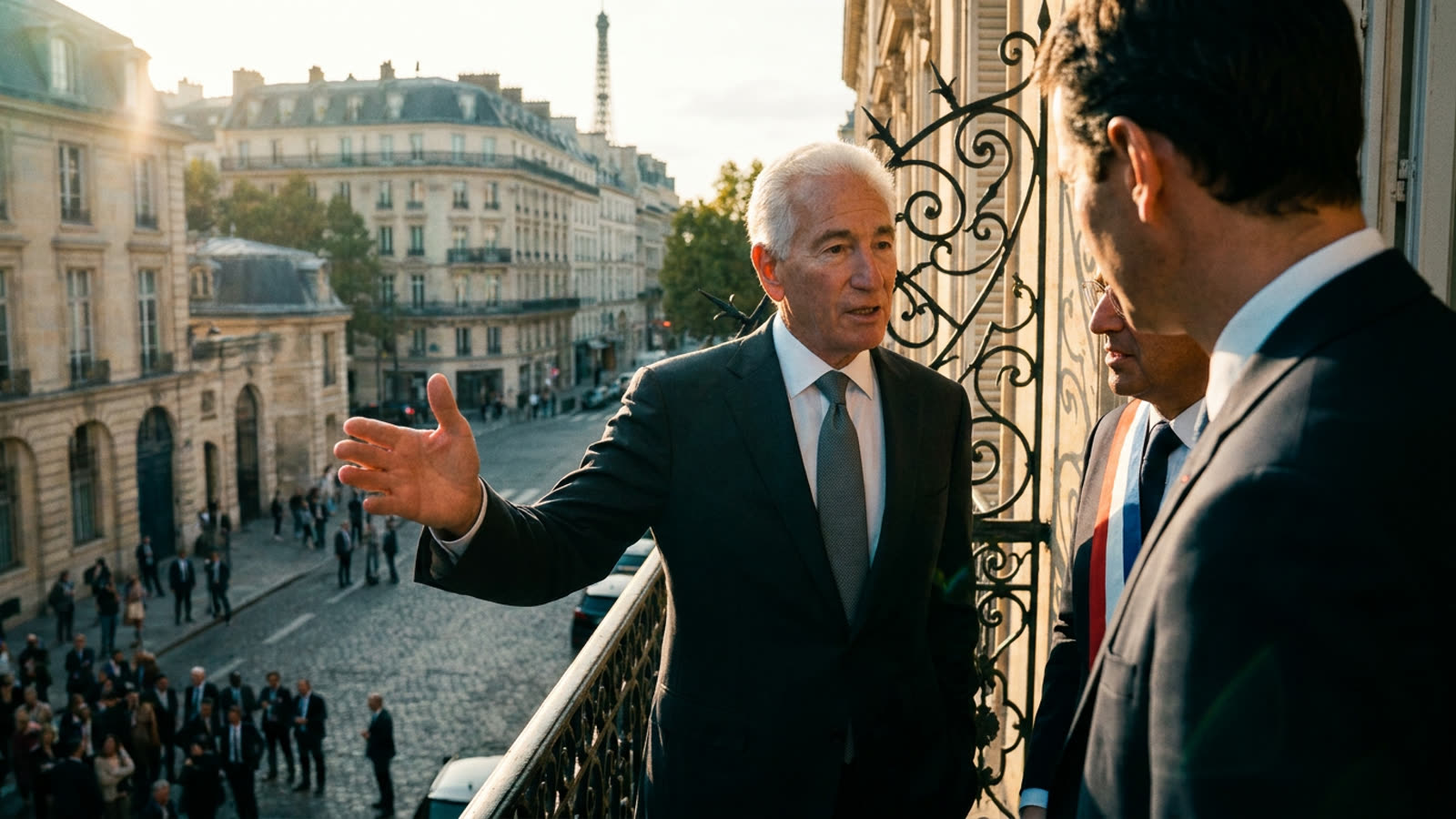
The United States ambassador to France is supposed to be a ceremonial plum—a reward for major donors who can host elegant dinners and avoid diplomatic incidents. Charles Kushner, father of Jared and a real-estate developer whose federal conviction was pardoned by Donald Trump in 2020, appears to have missed that memo entirely.
Kushner has transformed the historic Hôtel de Pontalba on the Place de la Concorde into something closer to a deal room than a diplomatic mission. His approach—direct, commercial, uninterested in the elaborate courtesies that define French political culture—has generated friction with the Élysée Palace and open grumbling from the Quai d'Orsay.
The transactional turn
Traditional ambassadors to France spend years cultivating relationships with the French establishment, attending cultural events, and speaking the language of shared values. Kushner has instead prioritized trade discussions, pressed French officials on defense spending, and reportedly suggested that American support comes with expectations of reciprocity. This is not inherently unreasonable—alliances do involve mutual obligations—but the delivery has struck French officials as gratuitously blunt.
The ambassador's family ties compound the awkwardness. His son Jared remains a senior advisor to President Trump, creating a direct channel that bypasses normal State Department protocols. French diplomats reportedly find themselves uncertain whether they are negotiating with an ambassador or with the president's family.
Why Paris matters now
The timing could hardly be worse. The Trump administration is simultaneously pursuing delicate Iran negotiations, managing NATO tensions, and navigating European skepticism about American reliability. France, as a permanent UN Security Council member and the EU's leading military power, is essential to any coherent Western strategy. President Macron, already bruised by Trump's trade rhetoric, has little incentive to smooth over diplomatic slights.
The Franco-American relationship has survived worse—de Gaulle's withdrawal from NATO command, the Iraq War recriminations—but those ruptures occurred between governments that shared basic assumptions about alliance management. The current friction reflects something more fundamental: a collision between French diplomatic culture, which prizes form as substance, and an American administration that views form as obstacle.
Our take
Ambassadors are not required to be beloved, and some friction in alliances is healthy. But Kushner's approach conflates directness with effectiveness. The French will not suddenly become more cooperative because an American ambassador dispenses with pleasantries; they will simply route important conversations around him. The real cost is not hurt feelings in Paris but reduced American influence at a moment when Europe is recalibrating its security arrangements. Trump may want transactional diplomacy, but transactions require counterparties willing to deal.