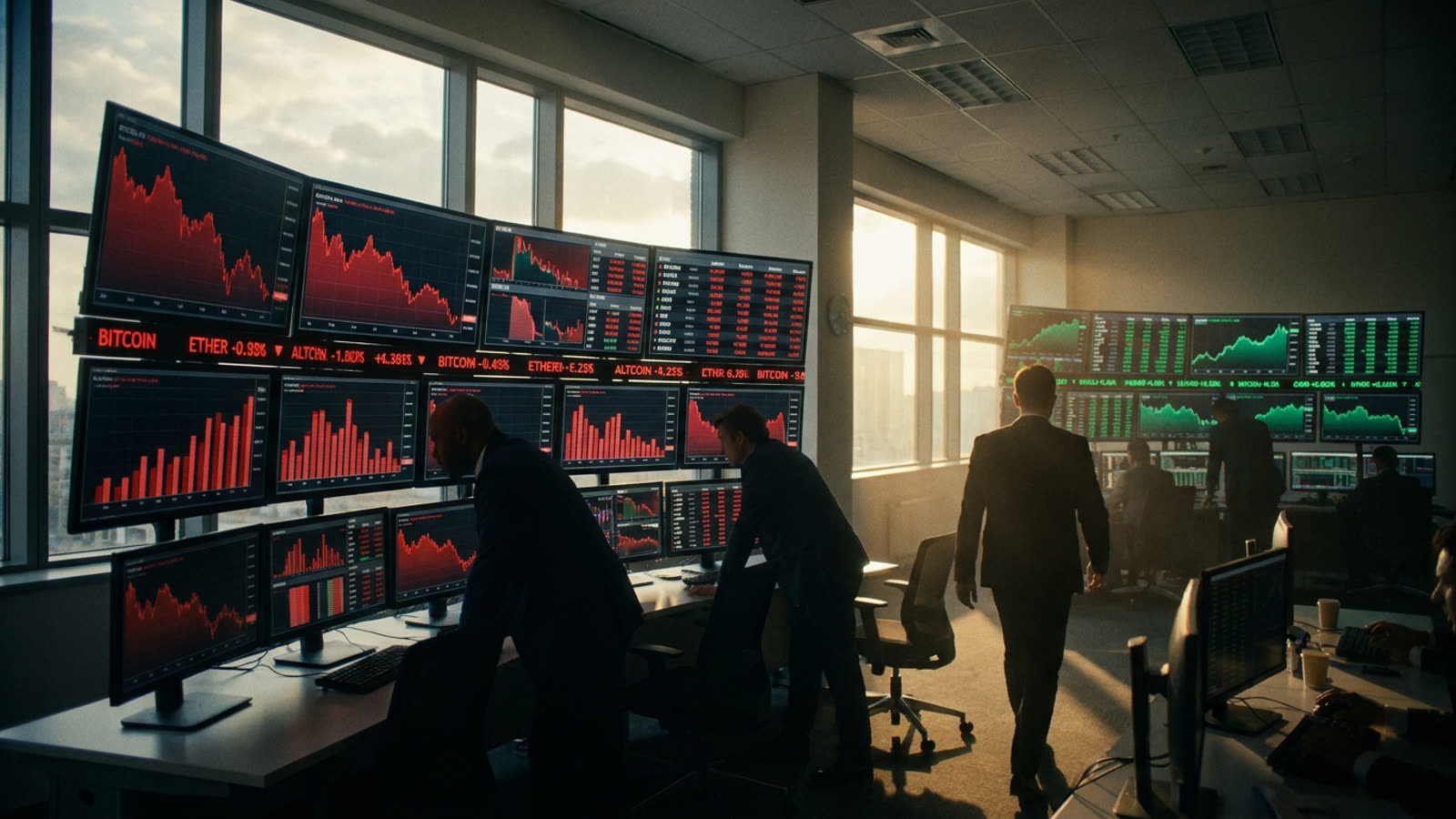
The divergence is now impossible to ignore. While the S&P 500 has strung together nine consecutive weeks of gains—its longest winning streak since 2017—Bitcoin has drifted sideways, Ether has underperformed, and Dogecoin has quietly shed double digits. The narrative that crypto moves in lockstep with risk assets, or that it serves as a leveraged bet on tech optimism, is being stress-tested in real time. So far, it's failing.
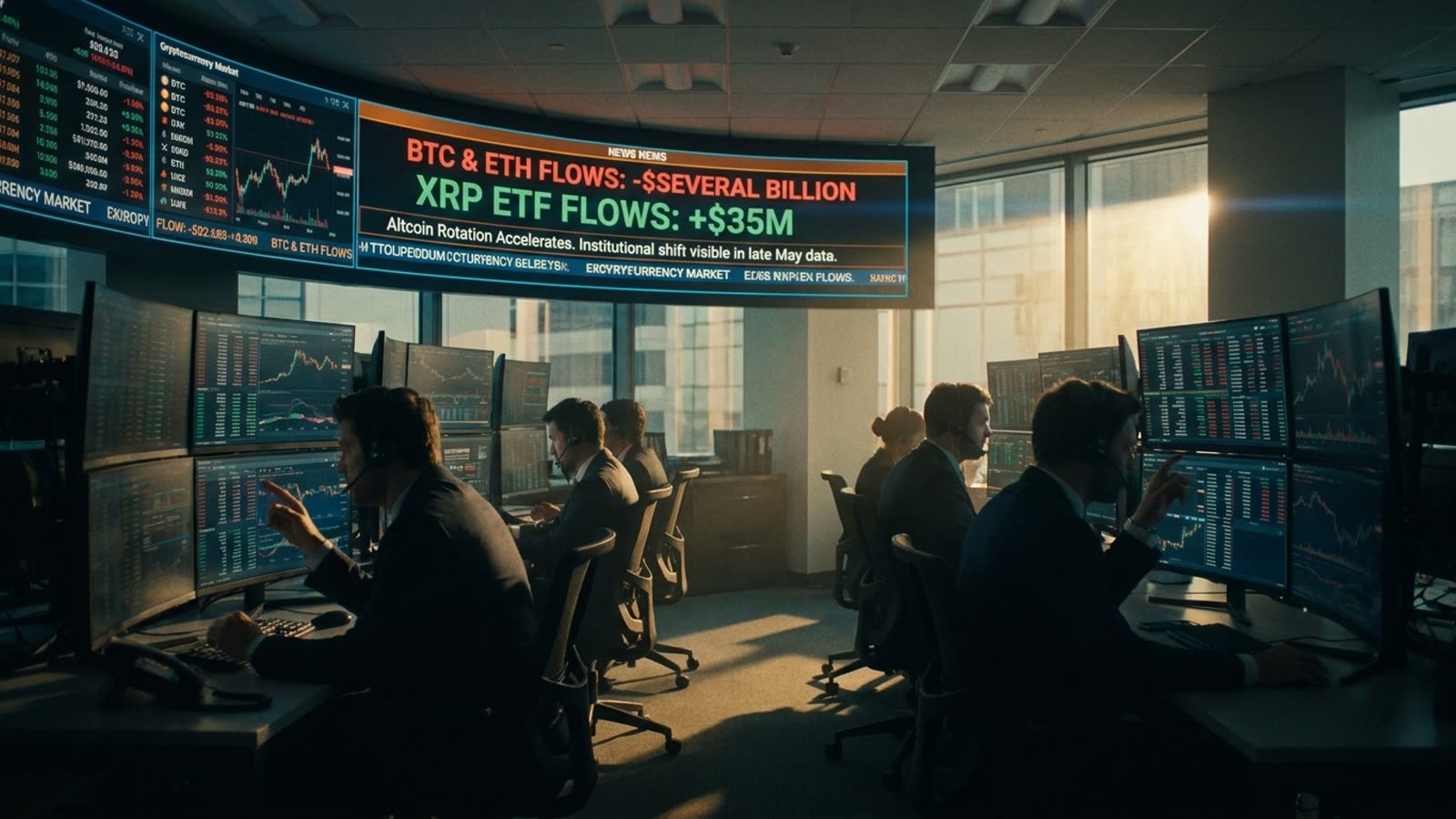
The numbers are stark. Bitcoin ETFs, which absorbed billions during the first quarter, have seen roughly $2 billion in net outflows over the final weeks of May. Ether products have fared worse. XRP, buoyed by its own ETF launches, has been the lone bright spot, adding $35 million—a rounding error in the context of the broader retreat. The institutional bid that powered crypto's post-election rally appears to have rotated elsewhere, chasing AI equities and cyclical recovery plays rather than digital gold.
The retail fade
Perhaps more telling than the ETF data is the silence from retail. Meme coins, which serve as a reliable barometer of speculative appetite, have gone quiet. Dogecoin is down meaningfully from its spring highs. The perpetual-futures approval from the CFTC, which would have sparked a frenzy eighteen months ago, landed with a shrug. Search interest in "Bitcoin" on Google Trends has flatlined. The casino is open, but the gamblers are elsewhere—perhaps at actual casinos, or in Nvidia calls.
What the market is saying
One interpretation is mechanical: crypto rallied hard into the halving and the ETF launches, and is now digesting those gains while equities catch up. Another is more structural. The correlation between Bitcoin and the Nasdaq, which spiked above 0.8 in 2022, has been falling. Crypto may be decoupling, but not in the direction its advocates hoped. Rather than emerging as an uncorrelated store of value, it's behaving like a risk asset that investors simply like less than stocks right now.
The macro backdrop doesn't help. With the Fed signaling patience on rate cuts and equity markets pricing in a soft landing, the urgency to hold non-yielding assets has diminished. Bitcoin's inflation-hedge narrative, always tenuous, is harder to sell when CPI is trending toward target and Treasury yields remain attractive.
Our take
Crypto's lag isn't a crisis—Bitcoin is still up meaningfully year-over-year, and the infrastructure buildout continues apace. But it is a reality check. The asset class spent years arguing it deserved a seat at the institutional table. It got one. Now it has to compete for attention with everything else on the menu, and right now, the market is ordering the steak, not the speculative appetizer. The next catalyst—whether regulatory clarity, a genuine use-case breakthrough, or simply the return of animal spirits—will determine whether this is a pause or something more permanent.