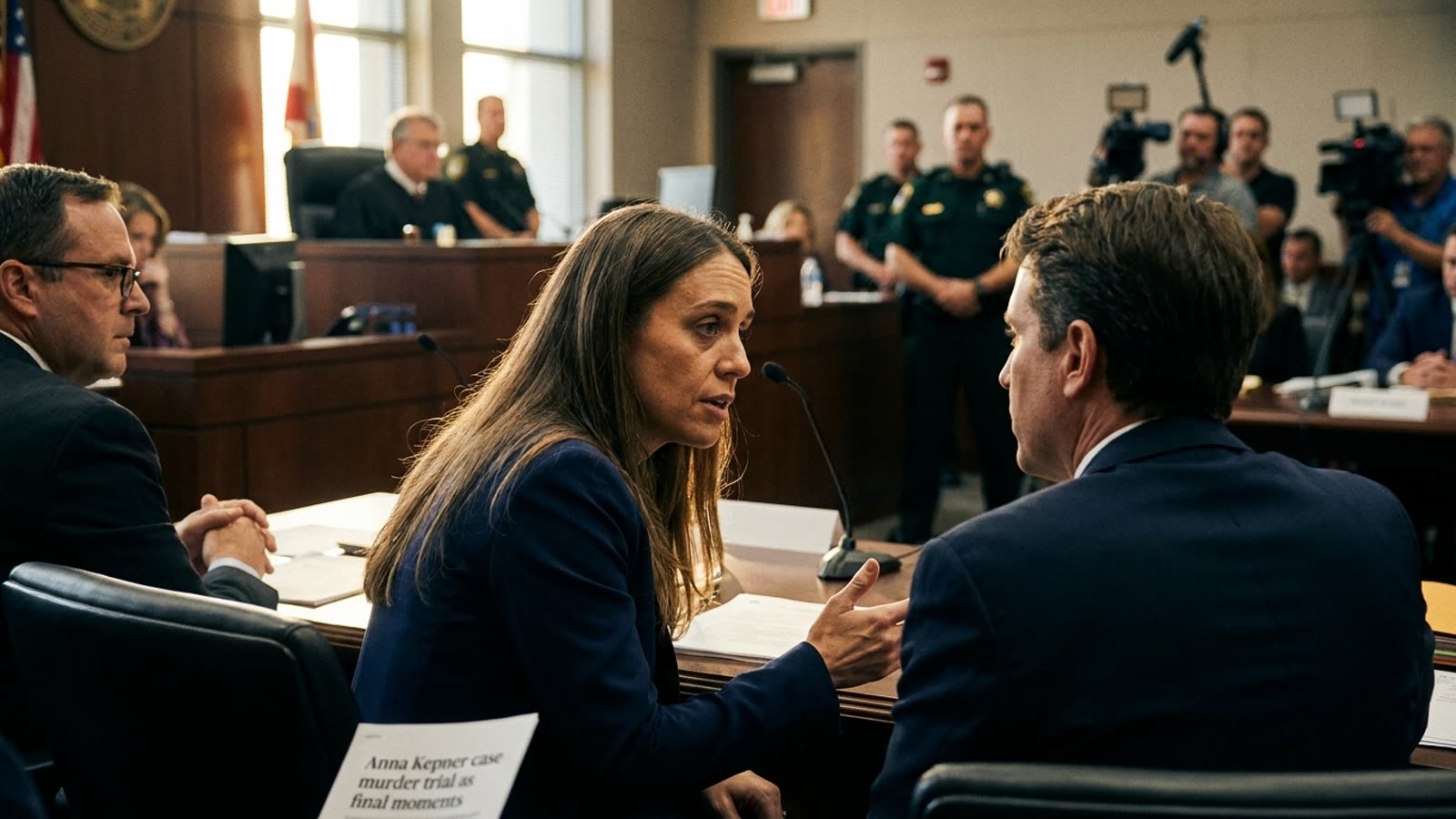
The murder trial of Anna Kepner's stepbrother has reached its prosecutorial crescendo, and the state's language has abandoned all restraint. In newly filed court documents, prosecutors describe the final act of the 22-year-old's killing as "barbaric" — a word chosen, one suspects, for its medieval connotations in an age when legal briefs tend toward the antiseptic.
Kepner, a Pennsylvania woman whose disappearance in late 2025 sparked a months-long search before her remains were discovered, has become the center of a case that has gripped true-crime observers and raised uncomfortable questions about familial violence. Her stepbrother stands accused of her murder, and the prosecution is now laying bare the evidence it believes will secure conviction.
The prosecution's final argument
The new filings, obtained this week, detail what prosecutors allege were the circumstances of Kepner's death with a specificity that leaves little to interpretation. The word "barbaric" appears multiple times, a rhetorical strategy designed to preempt any defense narrative of accident or diminished capacity. Prosecutors are painting a portrait of deliberate cruelty, the kind that demands the maximum penalty available under Pennsylvania law.
The documents also reveal previously undisclosed forensic evidence, though the full scope remains partially sealed pending trial proceedings. What has emerged suggests a timeline that contradicts the defendant's initial statements to investigators — discrepancies the prosecution will surely exploit.
A family fractured beyond repair
The Kepner case has illuminated the particular horror of intrafamilial violence, where the perpetrator is not a stranger but someone who shared holiday dinners and childhood memories. Anna's biological family has been forced to navigate the impossible terrain of grieving a daughter while watching another family member stand trial for her death.
Victims' advocates have pointed to the case as emblematic of how domestic violence often hides in plain sight, shielded by the assumption that family bonds preclude the worst human impulses. The prosecution's aggressive language in these filings suggests an awareness that juries sometimes struggle to believe that someone could commit such acts against a person they ostensibly loved.
The true-crime attention economy
Kepner's case has, inevitably, become content. Podcasts have devoted multi-episode arcs to her story; amateur sleuths have dissected every public document. This attention economy surrounding violent death raises its own ethical questions — does the spotlight pressure prosecutors toward justice, or does it merely commodify tragedy?
The trial's next phase will determine whether the prosecution's rhetorical intensity translates into a conviction, or whether the defense can construct reasonable doubt from the same evidence.
Our take
The word "barbaric" does a lot of work in a legal filing. It signals that prosecutors believe they have an airtight case and want to foreclose any sympathy for the defendant before the jury is even seated. Whether this confidence is warranted remains to be seen, but the Kepner family deserves a resolution that matches the gravity of what was taken from them. The true-crime industrial complex will move on to its next obsession regardless; the courts, at least, must take their time.