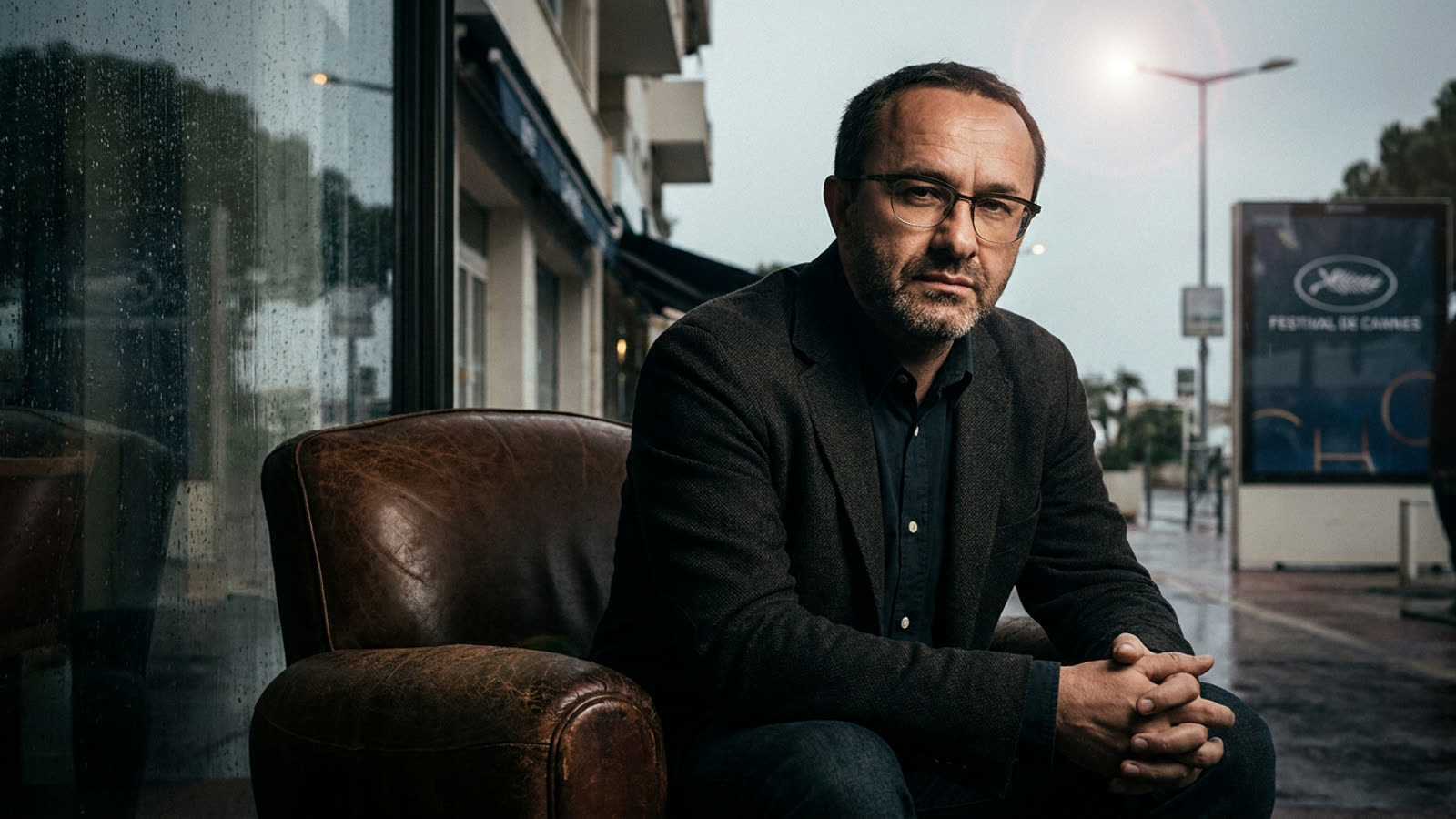
When a filmmaker of Andrey Zvyagintsev's stature disappears for nearly a decade, the industry assumes retirement, creative exhaustion, or the slow fade that claims even the most decorated auteurs. The truth was far grimmer: the director of Leviathan and Loveless—two of the most celebrated European films of the past fifteen years—was fighting for his life, paralyzed by a long Covid infection so severe that he could not move for an entire year.
That Minotaur exists at all is, as Zvyagintsev himself describes it, "a complete and utter miracle." That it premieres at Cannes, where he won the Jury Prize twice, transforms a medical recovery into something approaching artistic resurrection.
The lost years
Zvyagintsev contracted Covid in 2021, during the pandemic's deadliest phase. What followed was not the brief illness most survivors experienced but a catastrophic systemic collapse. For twelve months, the director—known for films that move with the deliberate patience of Russian winters—could not move at all. The irony was not lost on him: a filmmaker whose work dissects the paralysis of Russian society, rendered literally immobile.
The recovery was measured in the smallest increments. Walking. Speaking. Eventually, the cognitive clarity required to construct the intricate long takes that define his visual grammar. By the time he could work again, the world had changed—and so had Russia.
A war, a response
Zvyagintsev has long been the conscience of Russian cinema, crafting allegories of corruption and moral decay that earned him both international acclaim and domestic suspicion. Leviathan was nominated for an Oscar; it was also effectively banned in Russia. When Putin invaded Ukraine in 2022, Zvyagintsev was still recovering—but he felt, as he told interviewers this week, "determined to respond."
Minotaur is that response, though early reports suggest it operates in his characteristic mode: oblique, mythological, more interested in the labyrinth than the monster. Zvyagintsev has never been a polemicist. His politics emerge through atmosphere, through the weight of silence in a frame, through characters trapped in systems they cannot name.
The Cannes factor
The festival has always understood Zvyagintsev's value. His Cannes history—The Return won the Golden Lion at Venice, but Elena, Leviathan, and Loveless all premiered on the Croisette—represents one of the most consistent director-festival relationships in contemporary cinema. His return carries symbolic weight beyond the competition: proof that long Covid's most severe cases can end somewhere other than permanent disability, and that artistic vision can survive even when the body fails.
Our take
Zvyagintsev's comeback matters because his absence mattered. In an era of content abundance, we have forgotten how to miss filmmakers—how the years between projects can sharpen anticipation rather than diminish relevance. That he returns with a film responding to the war, made by a Russian director who cannot safely return to Russia, adds moral urgency to an already extraordinary narrative. Whether Minotaur matches his previous work is almost beside the point. The miracle is that it exists.