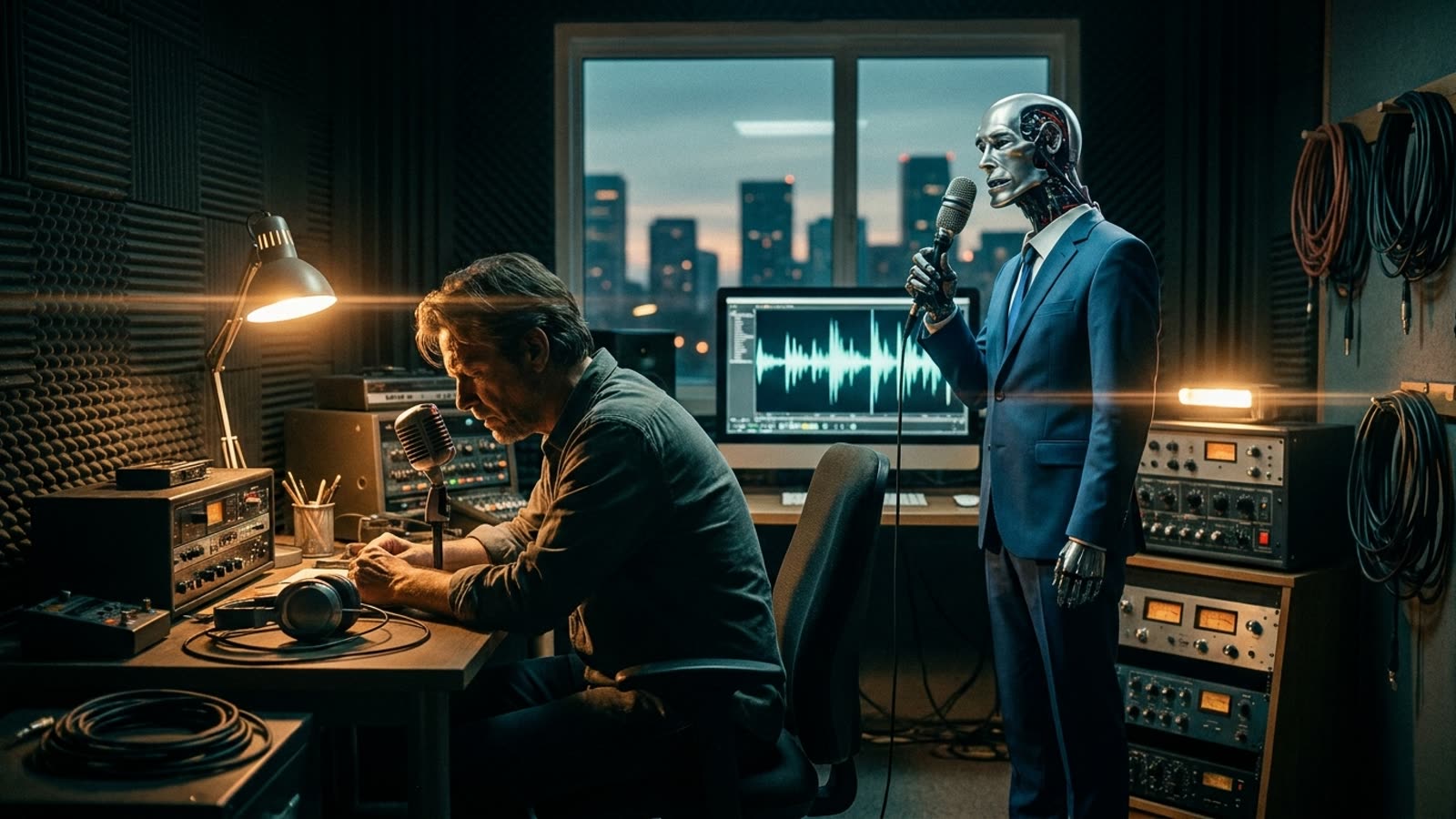
The booth used to be sacred. A voice actor would step into a soundproofed room, adjust the microphone, receive direction from a producer on the other side of the glass, and deliver takes until everyone agreed the read was right. This ritual—part craft, part collaboration—defined commercial audio production for the better part of a century. It still happens, but increasingly, it happens alongside something else: a client opening a browser tab, typing a script, selecting a voice from a dropdown menu, and clicking generate.
The shift didn't arrive with a single announcement or a dramatic industry upheaval. It crept in through the side door of corporate e-learning modules, explainer videos, and phone system hold messages—the unglamorous work that paid many voice actors' mortgages. One by one, these gigs started disappearing from the casting sites. The clients weren't hostile; they were simply economizing. Why pay several hundred dollars for a human read when a synthetic voice costs a fraction and delivers in seconds?
The economics of good enough
The fundamental challenge facing voice actors isn't that AI voices are better. By most artistic measures, they aren't. A skilled human can convey subtext, adjust pacing for emotional beats, and collaborate with directors to find unexpected interpretations. What AI voices are, increasingly, is good enough—and good enough at scale changes everything.
Consider the corporate training video. A company producing onboarding content for a global workforce might need the same script read in dozens of languages. Hiring voice talent for each language, managing sessions across time zones, and coordinating revisions would once have consumed weeks and substantial budget. Now a single producer can generate all versions in an afternoon. The quality ceiling is lower, but the floor is remarkably high, and for content that employees will half-watch while eating lunch, the ceiling never mattered much.
This dynamic has created a bifurcated market. Premium work—animation, video games, audiobooks, national advertising campaigns—still demands human performers. The nuance matters, the stakes are higher, and audiences can tell the difference. But that premium tier represents a shrinking fraction of total voice work. The vast middle market of competent, professional, unremarkable narration is where synthetic voices have established dominance.
Adaptation and its discontents
Voice actors have responded with a mixture of resistance and pragmatism. Some have joined advocacy efforts pushing for disclosure requirements and consent protections, arguing that their recorded performances shouldn't be used to train AI systems without permission or compensation. Others have licensed their voices to synthesis platforms, accepting upfront payments in exchange for digital clones that will compete with them indefinitely.
The licensing route presents its own complications. An actor who sells their voice to a platform may find that voice appearing in content they'd never personally endorse. The synthetic version doesn't get tired, doesn't age, doesn't have scheduling conflicts, and doesn't negotiate rates. It's a strange form of immortality—your instrument continuing to work long after you've stopped being paid for it.
Meanwhile, the most successful voice actors are leaning harder into what machines can't replicate: live direction, improvisational ability, and the ineffable quality of genuine human presence. They're positioning themselves not as interchangeable audio generators but as collaborators who bring interpretation and spontaneity to a performance. Whether this positioning will sustain careers as synthesis technology improves remains uncertain.
Our take
The voice acting profession isn't dying, but it is contracting—and the contraction is following a pattern we'll likely see repeated across creative fields. AI doesn't eliminate the top tier; it eliminates the middle. The stars will keep working, perhaps even commanding higher premiums as human performance becomes a luxury signifier. The journeymen who built steady careers on volume and reliability are the ones finding their phone has stopped ringing. This isn't a tragedy of replacement so much as a tragedy of economics: when adequate becomes cheap, excellence becomes niche, and a lot of good-enough professionals discover that good enough was their entire value proposition.