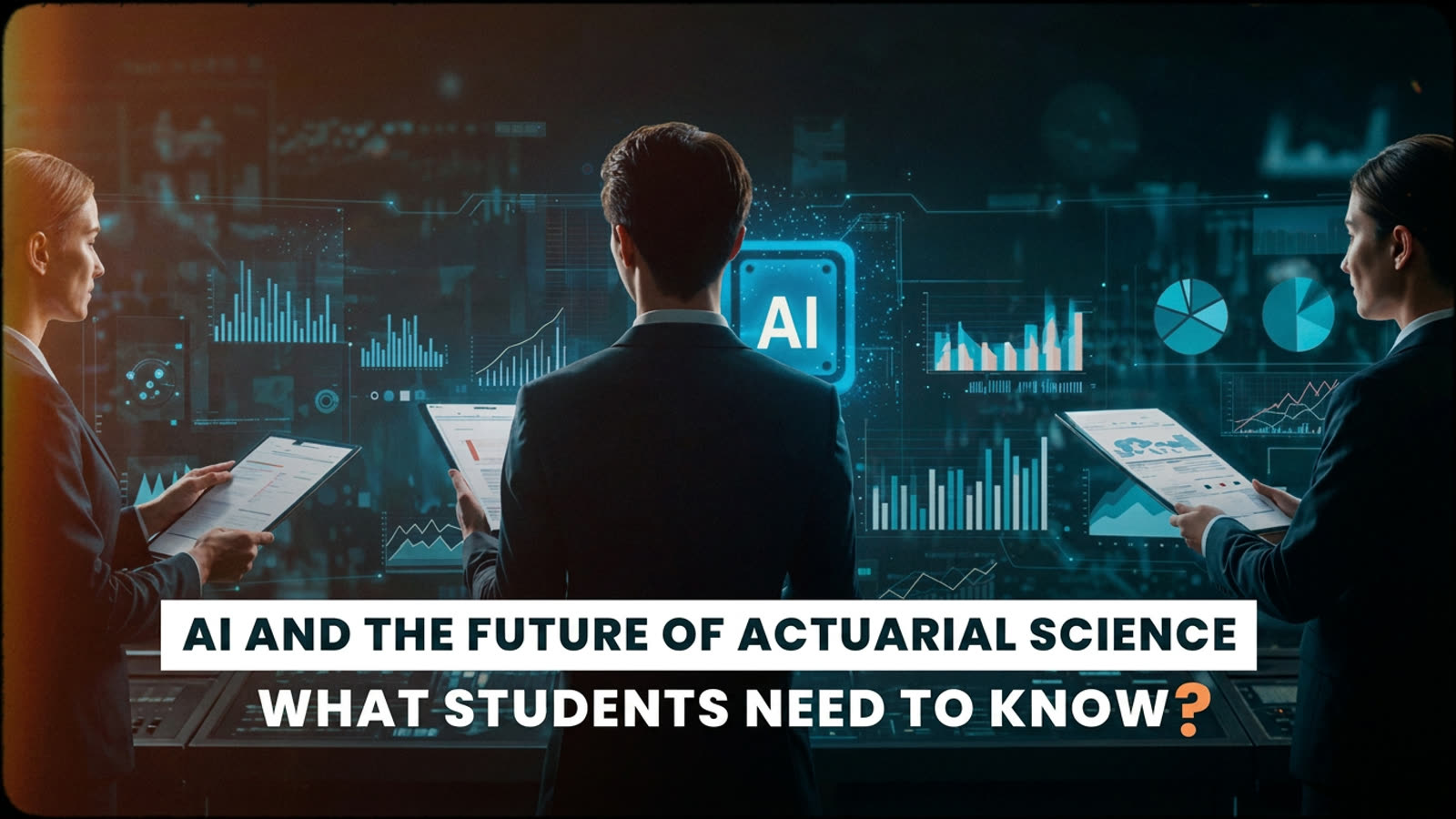
For two centuries, actuaries have occupied a peculiar position in the economy: they are the people paid to quantify uncertainty. Insurance companies, pension funds, and governments rely on their mortality tables and risk models to price everything from life insurance to catastrophe bonds. The work has always been mathematical, tedious, and lucrative. Now it is being automated at a pace that would have seemed implausible a decade ago, and the actuaries who survive are discovering that their job has fundamentally changed.
The shift is not hypothetical. Major insurers across North America and Europe have deployed machine learning systems that can underwrite individual policies in seconds, a process that once required hours of human analysis. These systems ingest thousands of variables—medical records, purchasing behavior, geographic data, even the cadence of how someone types on a keyboard—and produce risk assessments that often outperform traditional actuarial models. The humans who built those models are now being asked to audit the machines.
From calculator to curator
The traditional actuarial exam system, a brutal gauntlet of tests that can take a decade to complete, was designed to produce experts in mortality statistics and financial mathematics. What it did not prepare actuaries for was the interpretive work that now dominates their days. When a neural network flags a policyholder as high-risk, someone must explain why to regulators, to customers, and sometimes to courts. That someone is increasingly an actuary—not because they built the model, but because they understand the domain well enough to translate its outputs into human terms.
This is a subtle but profound change in professional identity. The actuary was once the person who knew the answer. Now they are often the person who knows which questions to ask about the answer the machine has given. The skillset is less about computation and more about judgment: understanding when the model is extrapolating beyond its training data, recognizing when a correlation is spurious, sensing when a risk factor that the algorithm has surfaced would be illegal or unethical to use.
The bias problem insurance cannot ignore
Machine learning models are excellent at finding patterns. They are indifferent to whether those patterns are socially acceptable. Early deployments of AI in insurance pricing discovered that certain proxy variables—neighborhood, purchasing habits, even the time of day someone applied for coverage—correlated strongly with race and income in ways that traditional actuarial factors did not. Regulators noticed.
The result has been a new subspecialty within the profession: actuarial fairness. Practitioners in this area spend their time testing models for disparate impact, designing constraints that prevent algorithms from effectively discriminating, and documenting their methods for regulators who are still developing the rules. It is unglamorous work, but it has become essential. The actuary who can demonstrate that an AI pricing model is both accurate and defensible is suddenly very valuable.
What the machines still cannot do
For all their power, current AI systems struggle with the long-tail risks that have always been the actuary's most important domain. Pandemics, climate catastrophes, financial crises—these are events with limited historical data and complex causal structures that do not yield easily to pattern recognition. When an insurer must decide whether to offer coverage for a novel risk, or how to price a product that has never existed before, the work remains stubbornly human.
This is the refuge of the modern actuary: the problems that are too weird, too unprecedented, or too politically sensitive for the algorithm. It is a smaller territory than it once was, but it is defensible. The profession is not disappearing so much as contracting to its essential core.
Our take
The actuarial profession is undergoing the same transformation that has already reshaped legal research, medical diagnostics, and financial analysis. The pattern is consistent: AI handles the volume, humans handle the exceptions and the explanations. What makes the actuarial case instructive is how clearly it reveals the new division of labor. The machine is better at prediction. The human is better at accountability. Whether that arrangement is stable, or merely a transitional phase before the machines learn to explain themselves, remains the profession's open question.