The most consequential AI disruption in architecture isn't the headline-grabbing renders of impossible buildings that flood social media. It's the mundane work that nobody sees: the code compliance checks, the energy modeling, the endless iterations of window placement that once consumed junior architects' nights and weekends. That invisible labor is vanishing, and with it, the traditional apprenticeship that shaped generations of designers.
Architecture has always been a profession of brutal attrition. Young graduates spend years on repetitive tasks—redlining drawings, coordinating specifications, running clash detection between structural and mechanical systems—before earning the creative latitude that drew them to the field. This hazing ritual served a purpose: it taught spatial thinking through repetition, built intuition about materials and tolerances, and filtered out those without the stamina for a notoriously demanding career.
The new division of labor
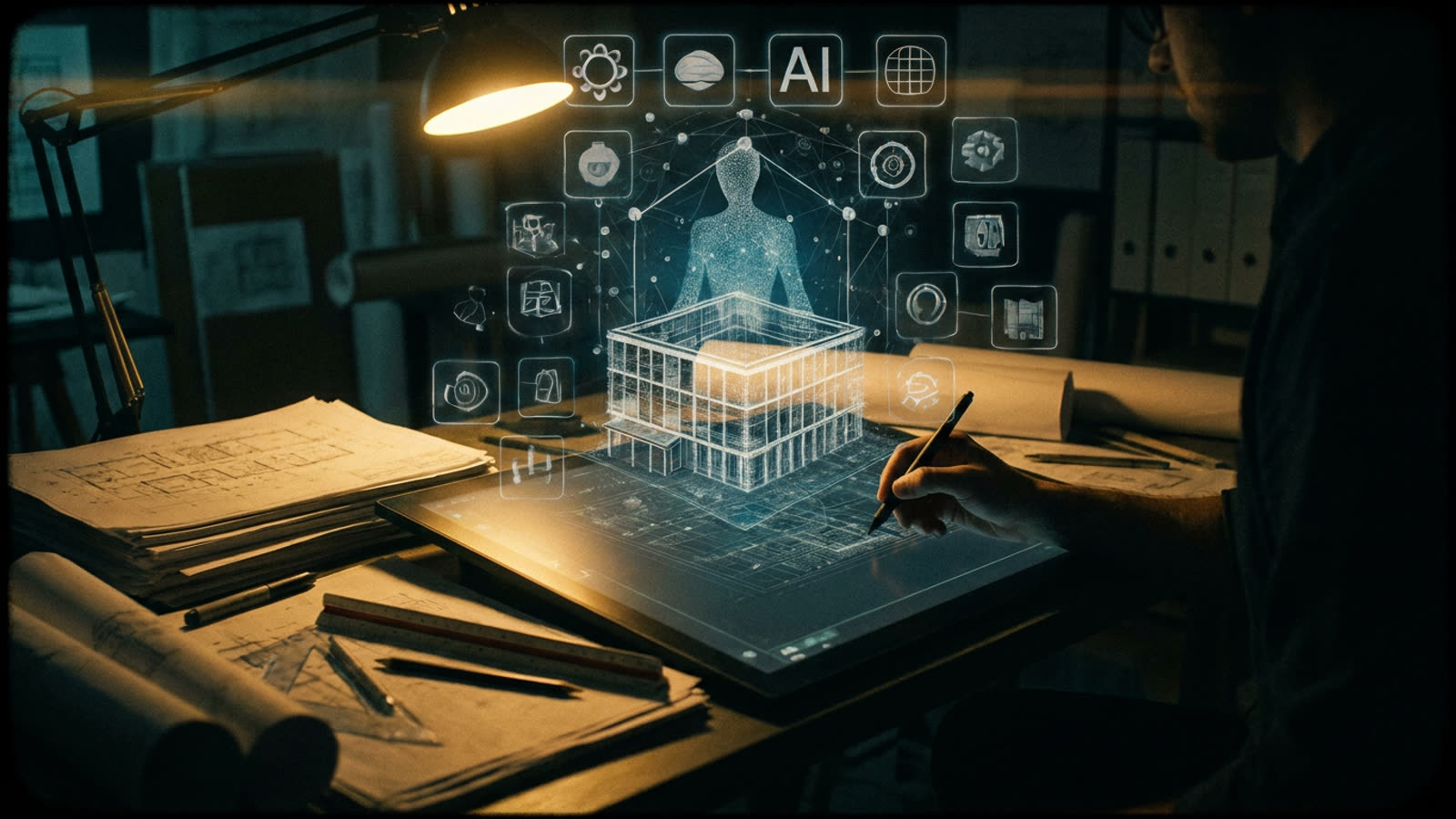
AI tools have collapsed this timeline in ways that would have seemed fantastical a decade ago. Generative design software can now produce thousands of building massing options optimized for daylight, views, and structural efficiency in hours rather than months. Machine learning models trained on building codes can flag compliance issues that once required senior architects to catch. Energy simulation that previously demanded specialized consultants now runs in real-time as designers sketch.
The result is a profession bifurcating along unfamiliar lines. Firms increasingly need architects who can prompt, curate, and refine AI-generated options—a skillset closer to film direction than traditional draftsmanship. Meanwhile, the demand for pure production labor is cratering. Some mid-sized firms report reducing their technical staff by a third while maintaining the same project volume.
What machines still cannot do
Yet the limits of current AI in architecture are instructive. These systems excel at optimization within defined parameters but struggle with the ambiguity that defines great design. They cannot sense that a client's stated brief conceals deeper anxieties about status or mortality. They cannot read the political dynamics of a community meeting or intuit which compromises will satisfy a planning board. They cannot walk a site and feel the quality of afternoon light filtering through existing trees.
The irreducibly human work of architecture—understanding what people actually need versus what they say they want, navigating the social complexity of construction, making judgment calls about beauty and meaning—remains beyond algorithmic reach. The architects thriving in this transition are those who have stopped competing with machines on speed and precision and instead doubled down on these distinctly human capacities.
The apprenticeship problem
The deeper concern is developmental. If junior architects no longer spend years on production work, how do they develop the intuition that once emerged from that repetition? The profession has not yet answered this question. Some firms are experimenting with accelerated mentorship programs; others worry they are training a generation of architects who can direct AI but cannot evaluate whether its outputs make physical sense.
Architectural education, notoriously slow to adapt, is only beginning to grapple with the implications. Schools still teach hand drafting as a foundational skill while their graduates enter firms where such skills are nearly irrelevant.
Our take
Architecture may be the canary in the creative professions' coal mine. It combines enough technical constraint to make AI genuinely useful with enough artistic ambiguity to reveal the technology's limits. The architects who will define the next era are not those who resist these tools or those who surrender to them, but those who understand precisely where human judgment remains essential—and who guard that territory fiercely while letting machines handle the rest.