Ask any leading AI chatbot how many times the letter 'r' appears in the word 'strawberry,' and there is a reasonable chance it will confidently answer two. The correct answer is three. This trivial error — which became something of an internet parlor trick — illuminates a profound architectural reality that most users never consider: large language models do not see words the way humans do.
The strawberry problem is not a bug awaiting a patch. It is a window into the alien cognition of systems that have become, almost overnight, central to how millions of people work, write, and think.
The tokenization gap
When you type a word, you see letters. When a language model receives that same word, it sees tokens — chunks of text that the system has learned to treat as atomic units. The word 'strawberry' might be split into 'straw' and 'berry,' or 'str,' 'aw,' and 'berry,' depending on the tokenizer. The model never encounters individual letters as discrete objects to count. It encounters statistical patterns learned from billions of text fragments.
This is why letter-counting fails: the model is essentially being asked to perform arithmetic on entities it cannot directly perceive. It must reason about sub-components of its own inputs, a task for which it has no native machinery. The confident wrong answer emerges because the model has seen countless examples of humans discussing letter counts, and it pattern-matches to produce plausible-sounding responses — plausibility being its only compass.
What the models actually do
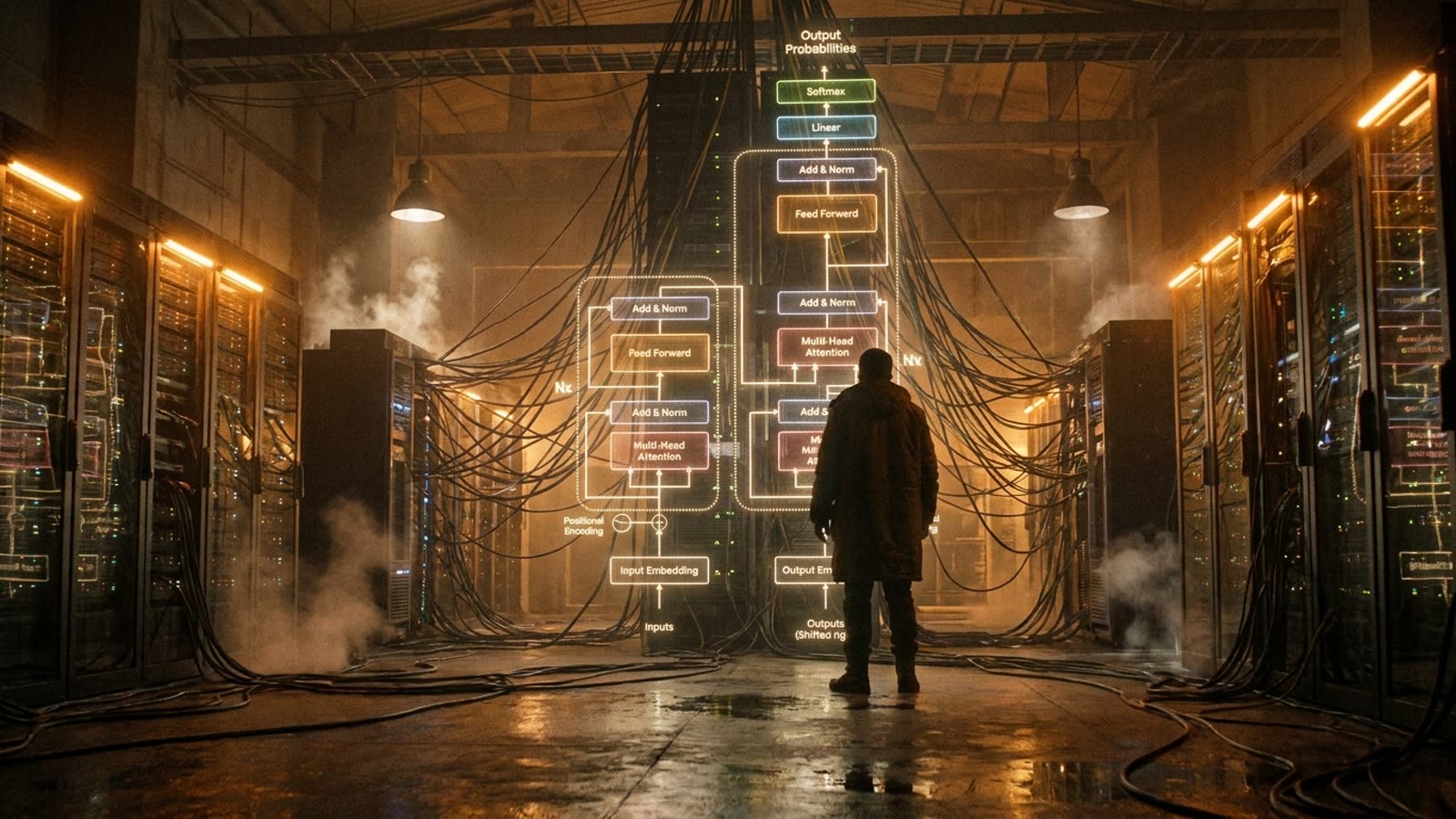
Language models are, at their core, sophisticated prediction engines. Given a sequence of tokens, they calculate probability distributions over what token should come next. Through training on vast corpora, they develop internal representations that capture grammar, facts, reasoning patterns, and stylistic conventions. But these representations are statistical shadows, not the things themselves.
The models have no persistent memory between conversations, no stable model of the physical world, no capacity to verify their outputs against external reality. When a language model writes a paragraph about quantum mechanics, it is not consulting a physics textbook in real time. It is generating text that resembles the kind of text that tends to follow prompts about quantum mechanics. The distinction sounds academic until you realize it explains why these systems can produce elegant prose about a topic while embedding subtle factual errors — errors that look exactly like correct statements.
The confidence problem
Perhaps the most consequential feature of current language models is their inability to signal uncertainty in proportion to their actual reliability. A model will answer a question about Renaissance painting with the same syntactic confidence it brings to fabricating a citation that does not exist. It has no internal mechanism for distinguishing 'I know this' from 'this sounds right.'
For users, this creates a treacherous landscape. The outputs that are most dangerously wrong are often indistinguishable in tone from outputs that are impeccably correct. The burden of verification falls entirely on the human, yet the fluency of the text actively discourages verification. We are pattern-matching creatures too, and confident prose triggers our trust heuristics.
Our take
The strawberry test is not a gotcha meant to embarrass AI companies. It is a diagnostic that reveals the nature of the tool. Language models are extraordinary at tasks that reward fluent pattern completion: drafting, summarizing, brainstorming, translating tone. They are unreliable at tasks requiring precise symbolic manipulation, factual accuracy without external grounding, or genuine uncertainty quantification. The companies building these systems know this; the millions now using them daily often do not. Understanding what a tool cannot do is the beginning of using it well.