Ukraine's president has finally said what Kyiv's diplomats have been too polite to articulate: the European Union's offer of associate membership is an insult dressed up as a favour.
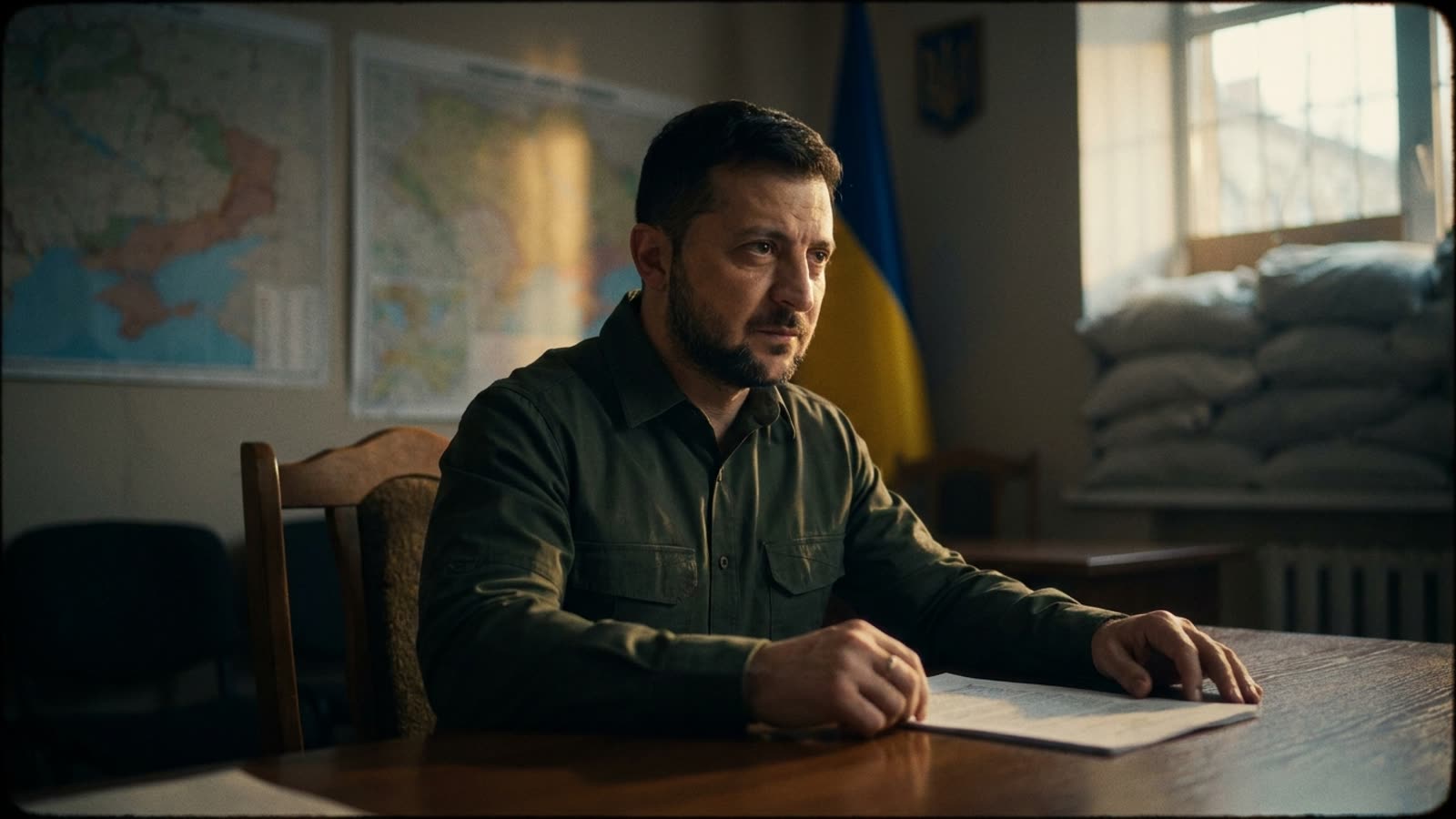
In an exclusive interview, Volodymyr Zelenskyy rejected the emerging consensus in Brussels that Ukraine should accept a halfway-house status—something less than candidate membership, something more than a trade deal, something that allows European leaders to claim progress while deferring the hard decisions indefinitely. "This is unfair," Zelenskyy said, a diplomatic understatement that barely conceals the fury building in Kyiv.
The Brussels two-step
The associate membership proposal has been floating around EU corridors for months, championed by member states nervous about enlargement but eager to appear supportive of Ukraine. The logic, such as it is, runs like this: full membership requires years of reforms, unanimous approval from existing members, and would strain EU budgets and institutions. Associate status would give Ukraine access to some single-market benefits while parking the accession question somewhere over the horizon.
What this ignores is context. Ukraine was granted formal candidate status in June 2022, four months after Russia's full-scale invasion began. That decision was explicitly framed as recognition of Ukrainian sacrifice and European solidarity. To now suggest that candidate status was merely ceremonial—that the real offer is something lesser—is a bait-and-switch that Zelenskyy is right to reject.
The credibility problem
The EU's hesitation is understandable in narrow institutional terms. Hungary's Viktor Orbán has made clear he will obstruct Ukrainian accession at every turn. Several Western European economies worry about competition from Ukrainian agriculture. The bloc's decision-making apparatus, already creaking under the weight of 27 members, would struggle to absorb a large, war-damaged country.
But these are arguments for reforming EU institutions, not for stringing Ukraine along. Every month that Brussels temporises, the implicit message to Kyiv—and to Moscow—is that European commitments are provisional, that solidarity has an expiration date, that Ukraine's European future is negotiable depending on who wins the next election in Paris or Berlin.
The American factor
Zelenskyy's frustration is compounded by the shifting transatlantic landscape. With Washington consumed by its own conflicts in the Middle East and a presidential administration that has shown inconsistent enthusiasm for Ukrainian support, Kyiv cannot assume American backing will compensate for European ambivalence. The EU was supposed to be the reliable partner, the institutional anchor that would outlast any single American administration's mood swings.
Associate membership would signal that even Europe's commitment is conditional—a message that strengthens Moscow's long-term strategy of waiting out Western resolve.
Our take
Zelenskyy is doing Brussels a favour by forcing this conversation into the open. The associate membership gambit was always a bureaucratic fiction, a way for EU leaders to manage domestic politics while avoiding hard choices. Ukraine deserves a clear answer: either Europe is serious about enlargement and will commit the resources and reforms necessary to make it happen, or it is not, and should say so honestly. The current middle path satisfies no one, reassures no one, and ultimately serves no one's interests except those who benefit from European division.