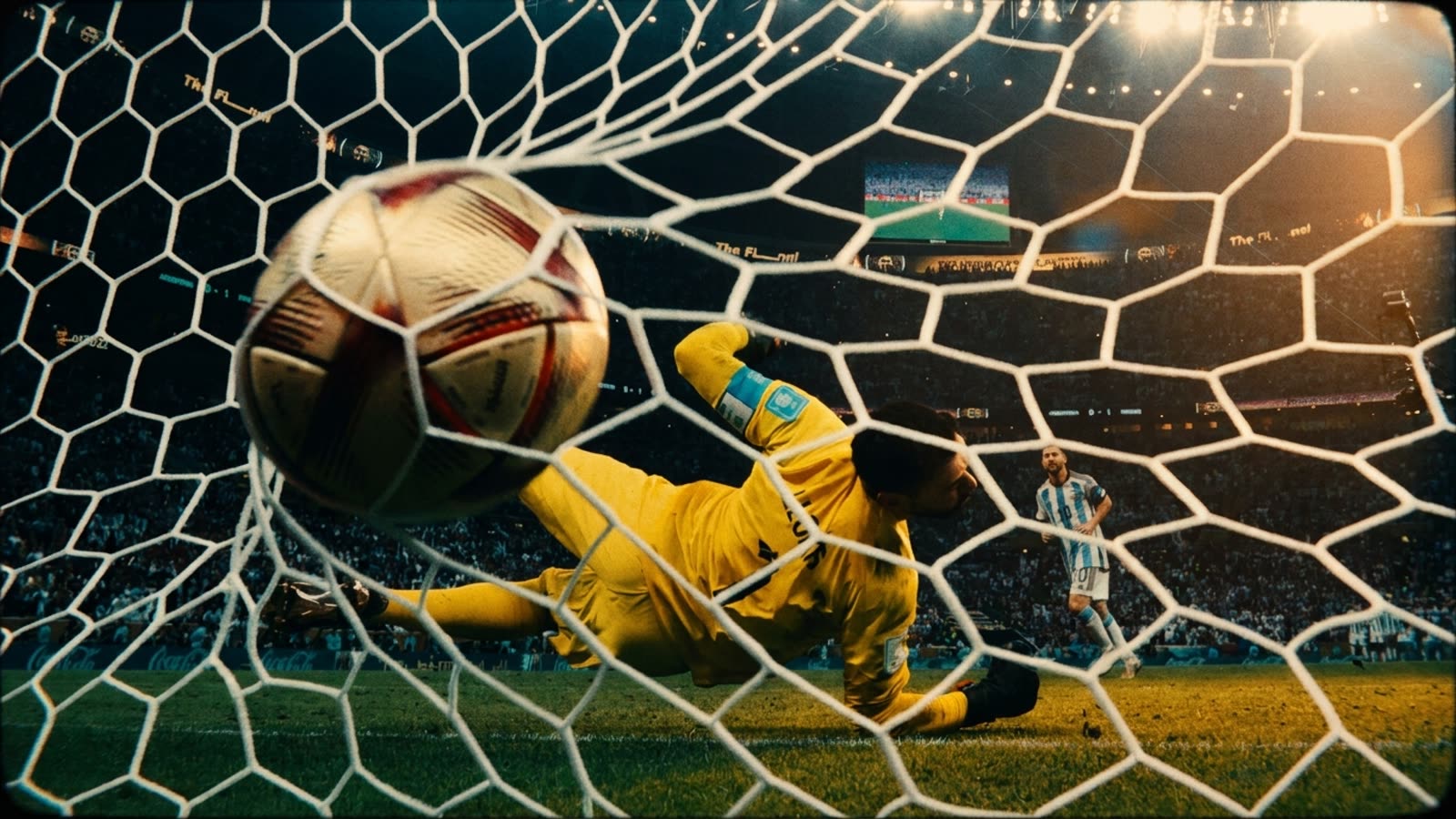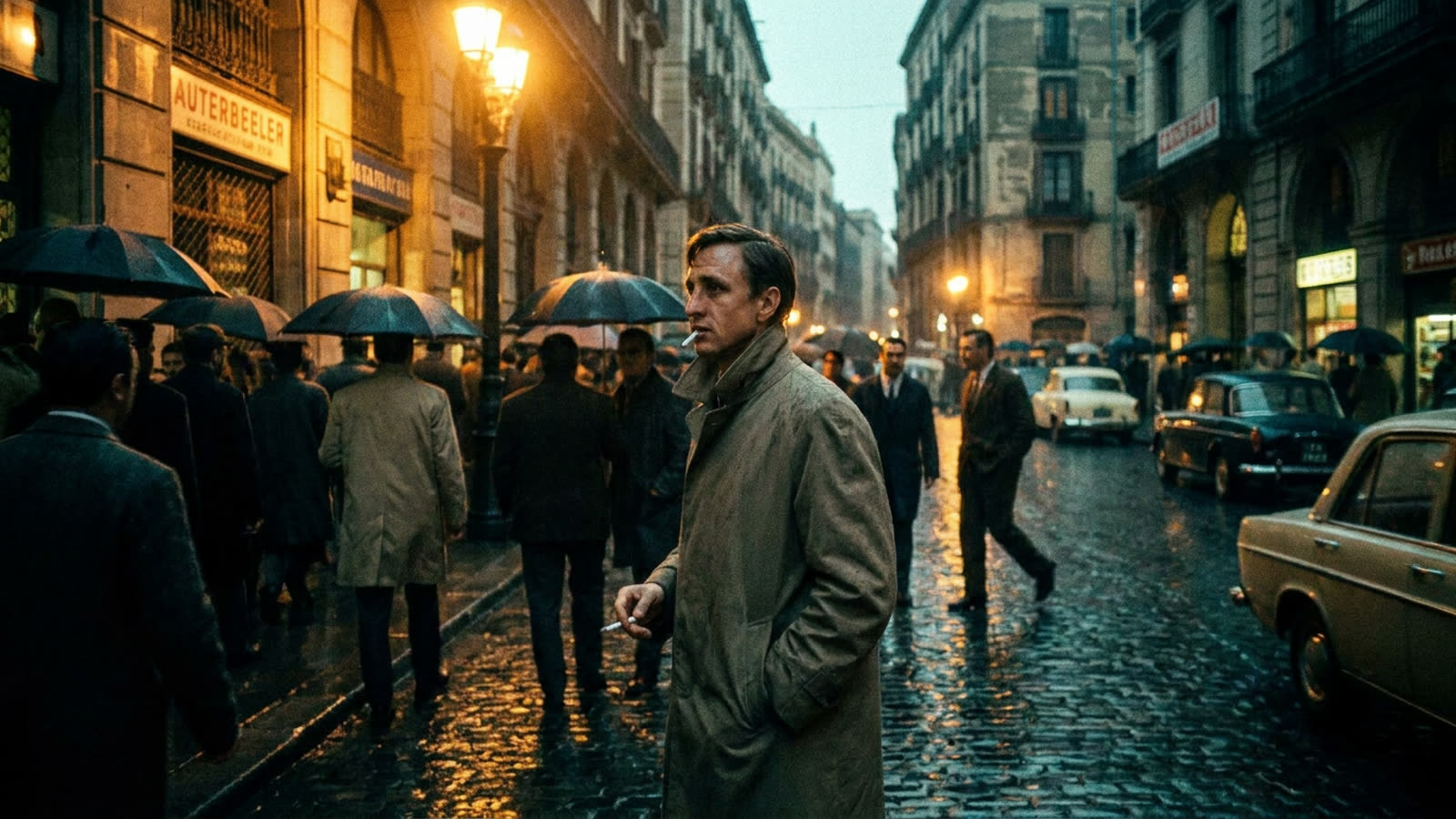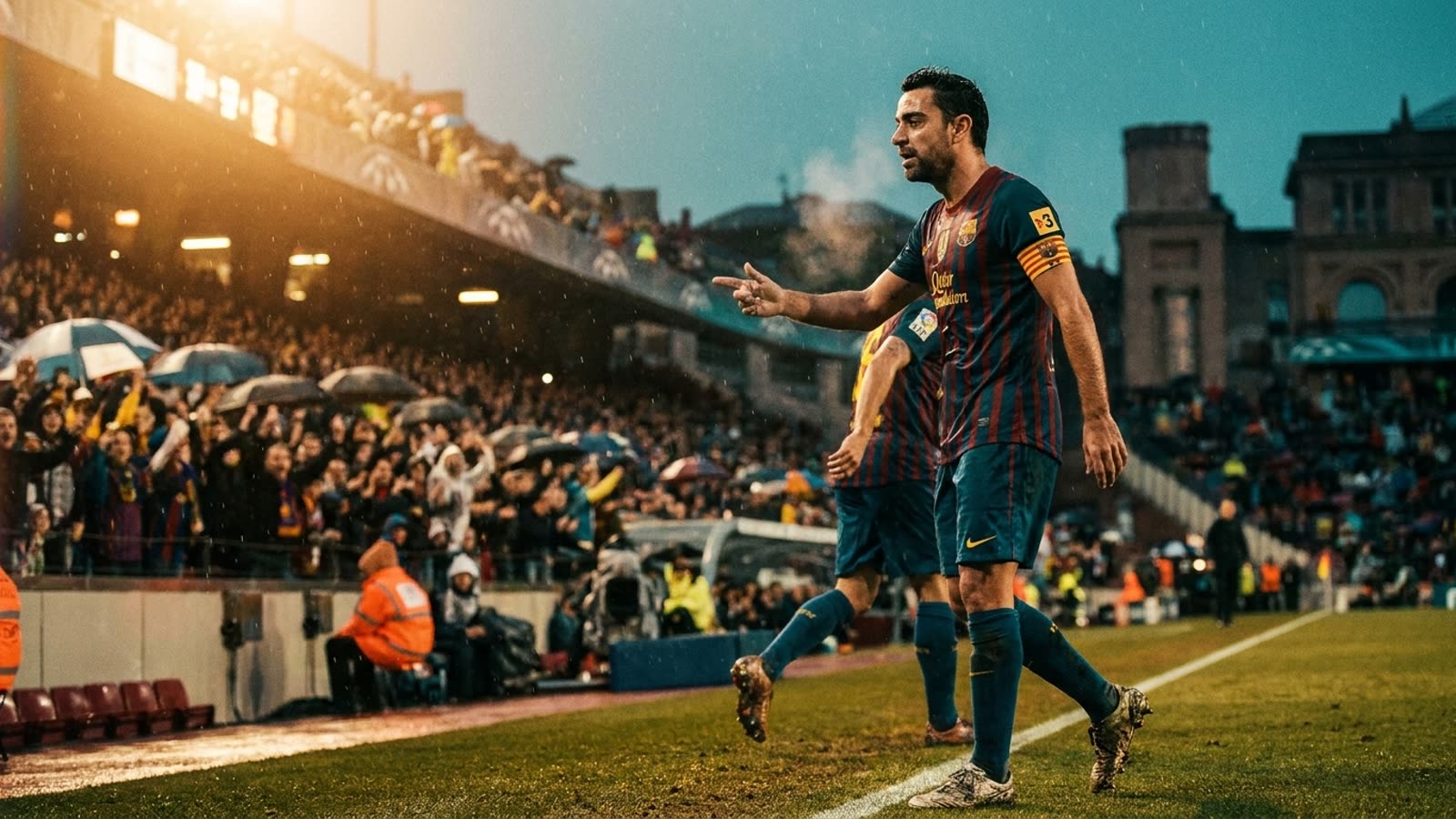
There is a particular kind of football intelligence that cannot be taught, only recognized. Xavi Hernández possessed it in such abundance that watching him play was like watching someone solve equations in real time while twenty-one other people chased variables around a field.
The numbers tell part of the story: more than 750 appearances for Barcelona, over 130 caps for Spain, a World Cup winner in 2010, a European Championship winner in 2008 and 2012, four Champions League titles. But statistics have always been inadequate instruments for measuring what Xavi actually did. His gift was making the complicated look inevitable.
The geometry of possession
Xavi operated in a footballing dimension that most players never access. Where others saw opponents, he saw passing lanes. Where others felt pressure, he felt space opening three moves ahead. His body would be oriented toward one direction while his eyes scanned another, and by the time defenders adjusted, the ball was already gone.
This was not athleticism in the conventional sense. Xavi was never particularly fast, never imposing, never the player who would beat you with a burst of acceleration. He beat you by making you irrelevant. The ball moved faster than any human could run, and Xavi understood that if you kept it moving intelligently, the game would eventually yield.
His partnership with Andrés Iniesta at Barcelona and with the Spanish national team created a midfield that opposing managers described in terms usually reserved for natural disasters—something to be endured rather than defeated. Together, they could keep possession for minutes at a stretch, not as an exercise in futility but as a form of strategic suffocation.
The tiki-taka paradox
The style of play that Xavi embodied became known as tiki-taka, though he reportedly disliked the term. It suggested something frivolous, possession for its own sake, when what he practiced was possession as a weapon. The distinction matters. Passing sideways without purpose is cowardice dressed as philosophy. Passing sideways to create an opening that will appear in fifteen seconds is something else entirely.
Pep Guardiola built his Barcelona dynasty around this understanding, with Xavi as its central processor. The team that won the Champions League in 2009 and 2011 played football that seemed to come from a different sport—one where the ball was a shared resource and individual brilliance emerged from collective movement. Xavi was both architect and executor, the player who set the tempo and then played within it.
What made Spain's 2010 World Cup triumph remarkable was how completely it validated this approach on the biggest stage. In a tournament often decided by defensive pragmatism and set-piece efficiency, Spain won by being more patient, more precise, and more certain of their method than anyone else. They scored just eight goals in seven matches. They conceded two. They were never behind in any knockout game.
Our take
Xavi Hernández proved something that football periodically forgets: that the most important distance on a pitch is not how far you can run but how far you can see. In an era increasingly obsessed with physical metrics and athletic freakishness, his career stands as a reminder that the game is ultimately played in the mind. The best players do not simply react faster; they process faster. Xavi processed faster than anyone, and the game bent around him like light around a star.