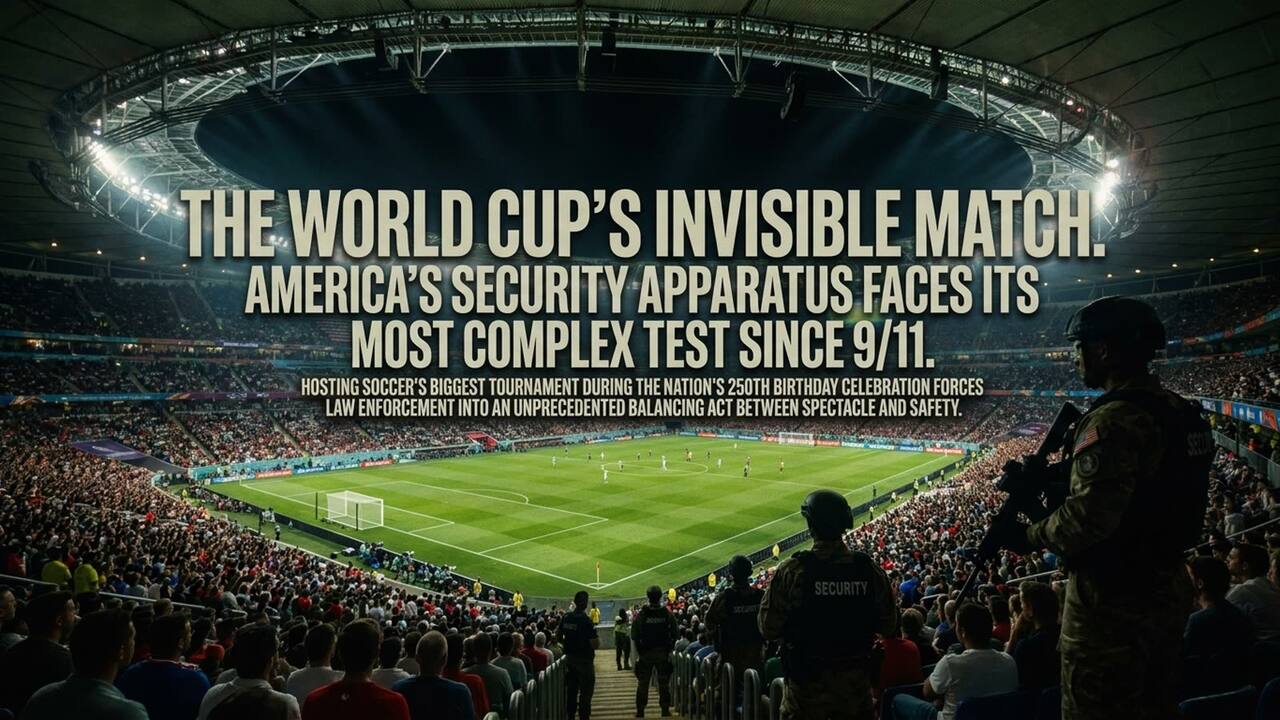
The United States has hosted Super Bowls, Olympics, and presidential inaugurations without catastrophe. But nothing in the security playbook quite prepares for what's unfolding this summer: a FIFA World Cup spanning sixteen cities across three time zones, overlapping with July Fourth celebrations and the country's semiquarter-millennial anniversary festivities.
The logistical challenge is staggering. Unlike a single-venue event, the World Cup creates simultaneous high-value targets from coast to coast, each requiring its own security perimeter, its own intelligence coordination, its own contingency protocols. Add the symbolic weight of America's 250th birthday—itself drawing massive crowds to monuments and public spaces—and you have a security matrix that makes previous mega-events look manageable.
The multi-agency maze
Federal, state, and local law enforcement agencies are operating under what officials describe as the most complex joint security framework ever deployed on American soil. The Secret Service, FBI, Department of Homeland Security, and local police departments must coordinate across jurisdictions that don't naturally share information or chain of command. Each host city maintains its own protocols; each venue presents unique vulnerabilities.
The challenge extends beyond traditional threats. Drone incursions, cyber attacks on stadium infrastructure, and the potential for coordinated disruptions across multiple cities simultaneously all factor into planning. Intelligence agencies are monitoring threat streams from sources ranging from organized terror networks to lone-wolf actors drawn to the global spotlight.
Shifting plans in real time
What makes this summer particularly fraught is the fluidity of the threat landscape. Security plans drafted months ago must adapt to tournament results—a team's unexpected advancement changes crowd dynamics, travel patterns, and potential flashpoints. The U.S. team's strong performance has amplified domestic attention, meaning larger crowds and higher stakes at American venues.
Meanwhile, the July Fourth convergence creates resource competition. Officers who might otherwise reinforce World Cup security are needed at Independence Day events. The overlap isn't a planning failure—it was always baked into the calendar—but it forces difficult choices about deployment and coverage.
Our take
The absence of visible security incidents so far shouldn't breed complacency. The tournament's second half, culminating in a final that will draw the largest single-day television audience in American history, represents the peak vulnerability window. That law enforcement has managed this complexity without major disruption speaks to genuine competence. But the real test isn't preventing the probable—it's being prepared for the improbable. America's 250th birthday party has uninvited guests on every threat matrix, and the security apparatus must remain perfect while potential attackers need only succeed once.