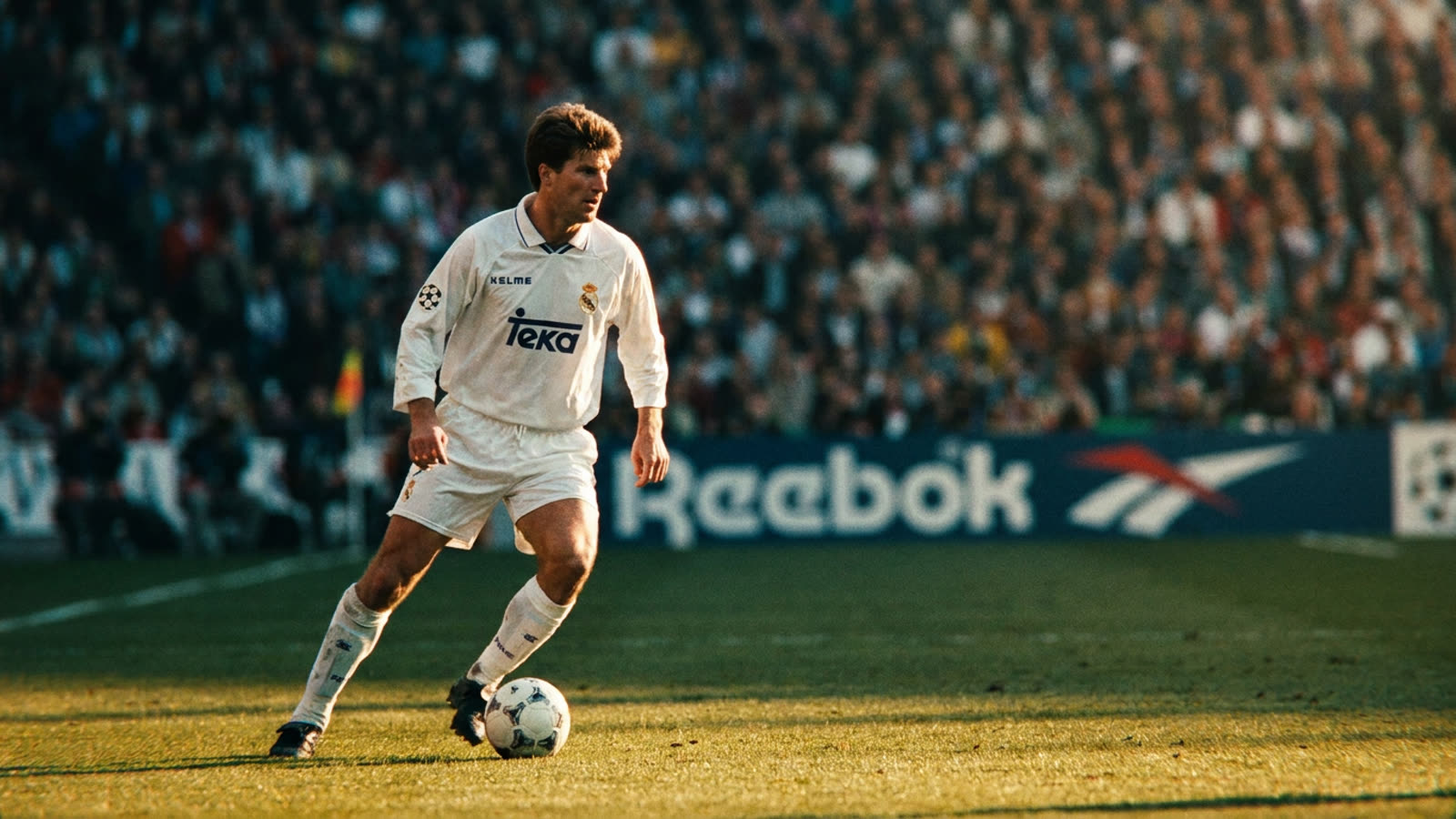
There is a particular cruelty in being the best at something unmeasurable. Michael Laudrup, who drifted through the 1980s and 1990s like a ghost in expensive boots, may have been the finest passer of a football ever to play the game. Johan Cruyff said so. Pep Guardiola said so. Romário, who scored goals the way other people breathe, called Laudrup the best player he ever played with. And yet the Dane never won a Ballon d'Or, never became a household name outside football's cognoscenti, never achieved the cultural saturation of contemporaries with half his talent.
This is not an injustice that requires correction. It is the point.
The geometry of generosity
Laudrup's gift was spatial. He saw football as a series of angles that other players could not perceive, and his passes did not merely find teammates—they arrived at the precise moment when the recipient had maximum time and minimum pressure. Watch footage of Barcelona's Dream Team, the side that won four consecutive La Liga titles between 1991 and 1994, and Laudrup is simultaneously everywhere and nowhere. He does not demand the ball; he receives it as if by accident. He does not sprint into space; he materializes there.
The technical term for what Laudrup did is "third-man running," but that phrase suggests effort, intention, sweat. Laudrup made it look like telepathy. His no-look passes were not showmanship but necessity—he had already processed where defenders would be and where they would not, and looking at his target would only give them information they could use.
The heresy of departure
In 1994, Laudrup did something that still confuses people. He left Barcelona at the peak of its powers and joined Real Madrid, the eternal rival. The Dream Team had just won its fourth straight title. Cruyff, his mentor, was building a dynasty. And Laudrup walked away.
The official explanation involved playing time and tactical disagreements. The deeper truth was more interesting: Laudrup was constitutionally incapable of staying anywhere comfortable. He had already left Juventus when they were dominant. He would later leave Real Madrid for a Japanese club, then Vissel Kobe for Ajax, then Ajax for retirement. Each departure seemed to cost him something—legacy, trophies, money—and each departure seemed to matter not at all to him.
At Real Madrid, he promptly helped end Barcelona's title streak. The Catalan press called him a traitor. The Madrid press called him a savior. Laudrup called it football.
Why the numbers lie
Modern analytics would struggle with Laudrup. His goal tallies were modest. His assist numbers, while respectable, do not capture the passes before the passes, the movements that created the space that created the chance. Expected goals models would see a player who underperformed his positions. The eye test saw something else entirely.
This is instructive for an era obsessed with quantification. Some things that matter cannot be counted. The way Laudrup changed a game's tempo by holding the ball an extra half-second. The way defenders began cheating toward him, opening channels for lesser players to exploit. The way his mere presence on the pitch altered the geometry of what was possible.
Our take
Laudrup's relative obscurity is not a failure of recognition but a feature of his art. He played football as if winning were a byproduct of beauty, and beauty were a byproduct of intelligence, and intelligence were something you demonstrated by knowing when to disappear. In an age when every teenager with quick feet is branded a generational talent, Laudrup remains the sport's most elegant reminder that greatness sometimes looks like restraint, and the best players are occasionally the ones you have to search for.