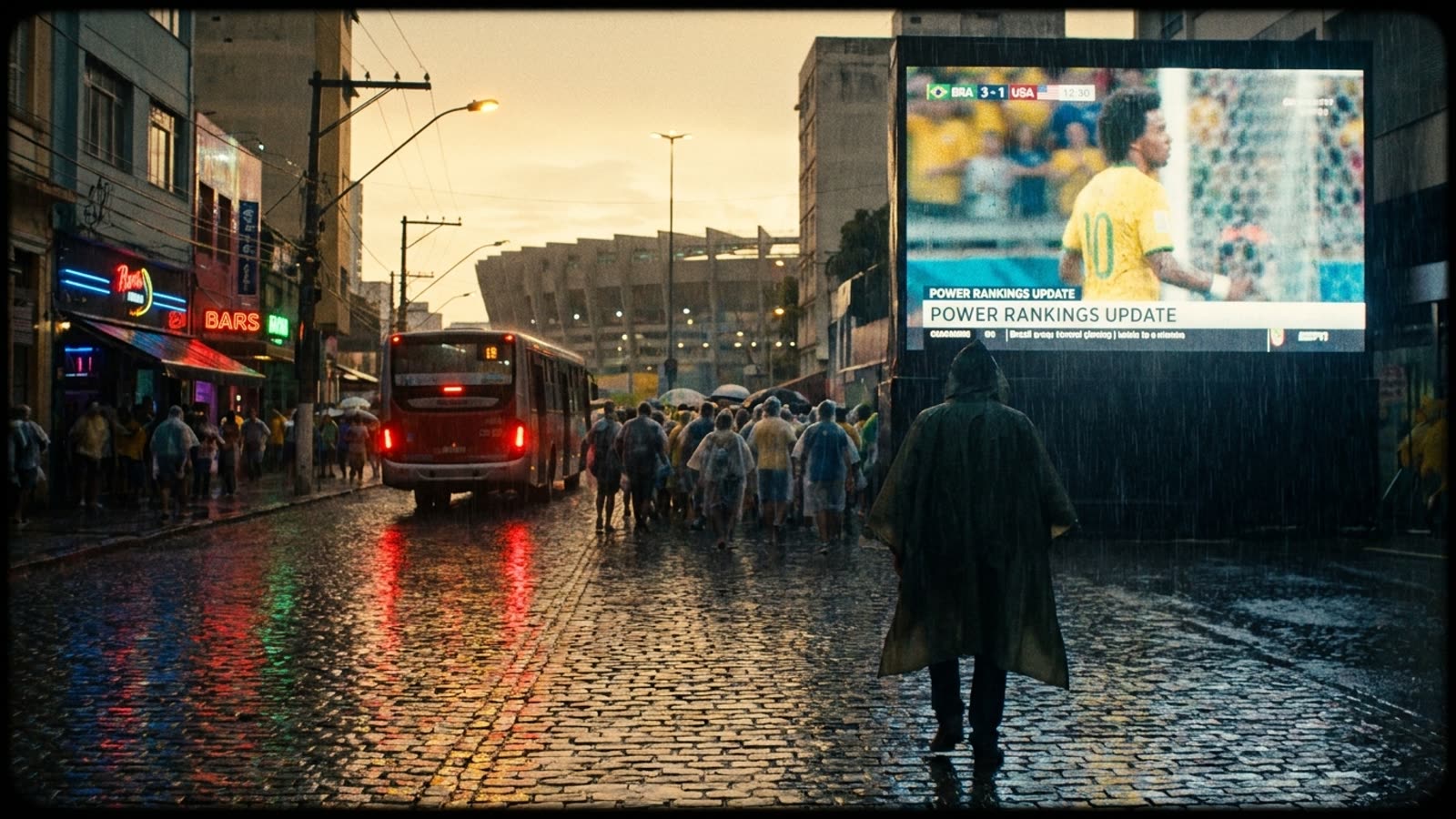
The first round of group-stage matches at the 2026 FIFA World Cup is complete, and the early returns suggest this tournament will deliver on its promise of chaos. Brazil sit atop the power rankings after a comprehensive opening victory, but the more interesting story may be happening in the middle of the table, where the United States have forced their way into the top ten with a performance that silenced — or at least quieted — their doubters.
Power rankings in football are inherently absurd exercises, attempting to quantify the unquantifiable based on sample sizes that would make a statistician weep. And yet they serve a purpose: they crystallize the narrative momentum of a tournament, capturing which teams look dangerous and which look vulnerable before the knockout rounds impose their brutal clarity.
The top tier holds steady
Brazil's position at the summit surprises no one. The Seleção entered as favorites and played like it, combining the technical brilliance that is their birthright with a defensive solidity that has sometimes eluded them in recent tournaments. France and Argentina lurk just behind, both having navigated tricky opening fixtures with the efficiency of sides that have been here before. England, perpetually promising and perpetually disappointing, showed enough to remain in the conversation.
The European contingent is well-represented in the upper reaches, with Germany and Spain both demonstrating the tactical sophistication that makes them perennial threats. But the gap between the elite and the merely good feels narrower than in previous World Cups — a function, perhaps, of the expanded 48-team format diluting the group-stage quality while simultaneously creating more opportunities for upsets.
The hosts make their case
The U.S. cracking the top ten after their 2-0 victory over Australia represents more than just three points. It represents a statement of intent from a program that has spent decades oscillating between genuine progress and embarrassing regression. The win was not pretty — American football rarely is — but it was controlled, professional, and ultimately comfortable.
What distinguished this performance from previous U.S. World Cup efforts was the absence of panic. When Australia pressed, the Americans absorbed it. When spaces opened, they exploited them. The home crowd helped, certainly, but the team looked like one that belonged at this level rather than one grateful simply to be present. Whether that composure survives a knockout-round penalty shootout remains to be seen, but the early evidence is encouraging.
Our take
Power rankings will fluctuate wildly over the next two weeks as group-stage permutations create their usual chaos. What matters is not where teams sit after one match but whether they are trending in the right direction. Brazil look imperious. The U.S. look competent, which for them counts as progress. And somewhere in the middle of the pack, a dark horse is preparing to ruin everyone's bracket. The World Cup, as always, rewards those who show up ready to be surprised.