The velvet rope has always been capitalism's most elegant fiction: the suggestion that what lies beyond it is worth the indignity of waiting. What's changed is not the rope itself but the story we tell about why we want to cross it.
For most of the twentieth century, the private club was an instrument of class consolidation, its membership rolls reading like a social register. The wood-paneled rooms of London's Pall Mall or Manhattan's Upper East Side existed to keep people out as much as to bring them in. Then came the supposed democratization of everything—the internet, the sharing economy, the WeWork fantasy that open floor plans could flatten hierarchies. The private club, we were told, was a relic.
It was nothing of the sort.
The Soho House model and its imitators
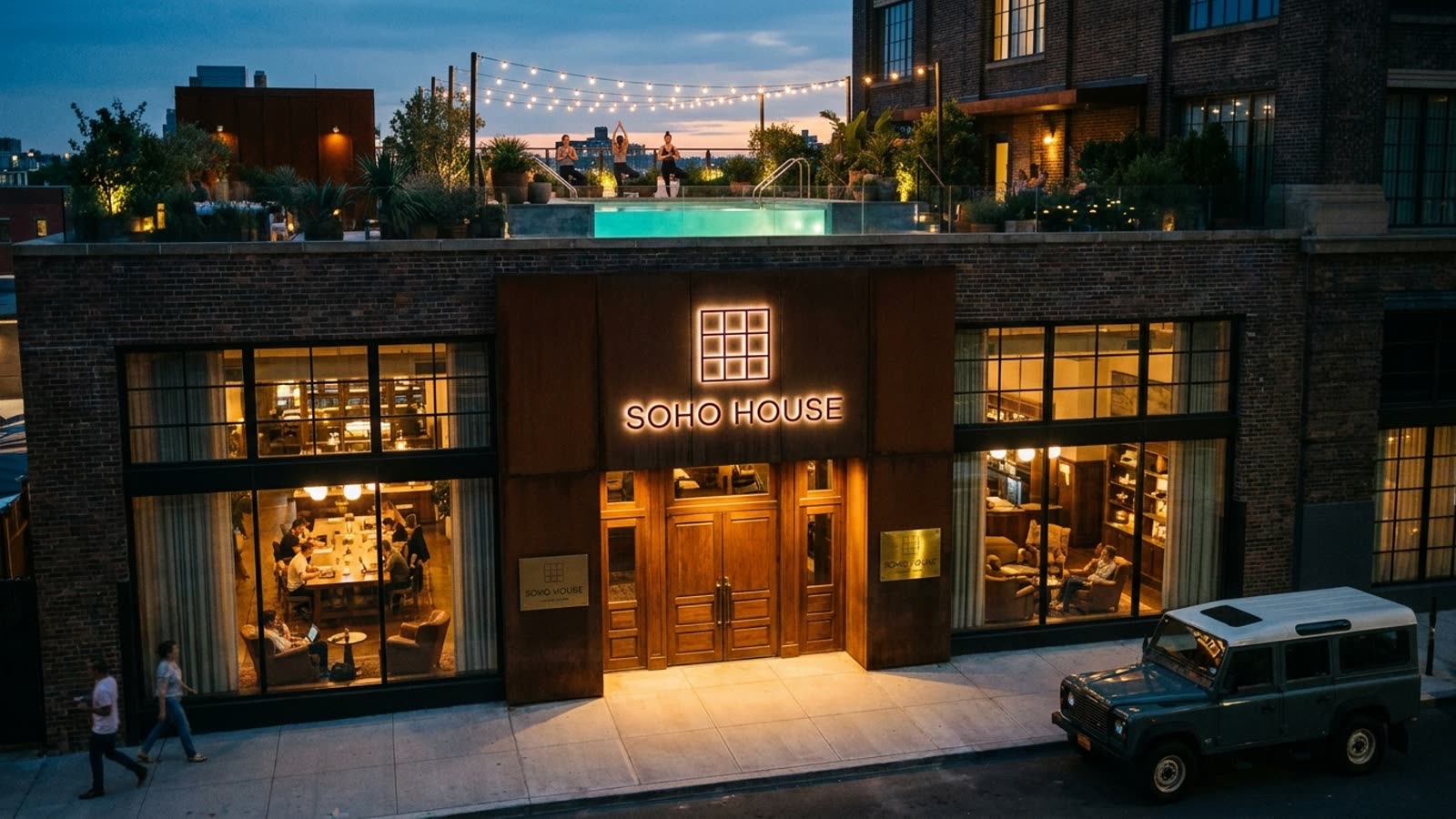
When Nick Jones opened the first Soho House in London's Greek Street in 1995, he wasn't reinventing the club—he was translating it. The stuffed leather chairs became slouchy sofas. The dress code relaxed. The membership criteria shifted from bloodlines to creative credentials, or at least the appearance of them. What remained unchanged was the core proposition: you are special, and here is a room that proves it.
The model proliferated. By the time Soho House had expanded across continents, it had spawned countless imitators—some pitched at tech founders, others at wellness devotees, still others at the vaguely defined "creative class." The Spring Place in New York, Neuehouse in Los Angeles, the Wing (before its troubles) for women in media and beyond. Each offered a variation on the same theme: community, but curated; networking, but tasteful; exclusivity, but without the taint of old money.
The economics of belonging
The business model is elegant in its simplicity. Annual dues—typically ranging from a few thousand to tens of thousands—create recurring revenue. The real margin, however, comes from the ancillary spending: the hotel rooms, the restaurants, the branded merchandise, the events. Members become a captive market, pre-qualified by their willingness to pay for admission.
More valuable still is what economists might call the network effect of status. Each desirable member makes the club more desirable to others. The challenge is maintaining the illusion of scarcity while scaling aggressively enough to satisfy investors. It's a tension that has undone more than one aspirational brand.
Why the appeal endures
The persistence of the private club speaks to something the sharing economy never quite understood: people don't actually want access to everything. They want access to things that feel rare. In an age of algorithmic feeds and infinite scroll, the bounded space—the room you cannot enter without credentials—becomes its own form of luxury.
There's also the matter of what sociologists call "third places," the spaces between home and work where social life happens. As remote work has fragmented the office and urban loneliness has become a public health concern, the club offers something increasingly scarce: a reason to leave the house and a guarantee that you'll find someone there when you do.
Our take
The private club's survival is neither surprising nor particularly noble. It endures because exclusivity is a human appetite that no amount of egalitarian rhetoric can extinguish. What's interesting is how each generation must rebrand the velvet rope to match its self-image—from gentlemen's refuge to creative sanctuary to wellness community. The door policy changes; the door remains.