The Negroni's genius lies in its refusal to please everyone. Equal parts gin, Campari, and sweet vermouth, stirred and served over ice with an orange peel — the formula has remained essentially unchanged since Count Camillo Negroni allegedly asked a Florence bartender to fortify his Americano sometime around 1919 or 1920. The resulting drink is bracingly bitter, almost medicinal on first sip, and completely indifferent to whether you like it. This is precisely why it has become the cocktail of choice for a certain kind of drinker: one who wants to signal taste without appearing to try.
The anatomy of an icon
The Negroni's construction is deceptively simple. Three ingredients in equal measure, stirred (never shaken) with ice, strained into a rocks glass over a large cube, finished with expressed orange oil. A competent bartender can produce one in under ninety seconds. Yet this simplicity conceals genuine complexity — the interplay between juniper-forward gin, the proprietary bitterness of Campari, and the herbal sweetness of Italian vermouth creates a drink that tastes different with every sip as the ice slowly dilutes the mixture.
The cocktail's rise tracks neatly with the premiumization of drinking culture. As consumers moved away from sugary mixed drinks toward spirits-forward compositions, the Negroni offered an accessible entry point to sophisticated drinking. Unlike a martini, which demands precision and punishes poor technique, the Negroni is forgiving — the bold flavors of its components mask minor variations in proportion or quality.
From Italian obscurity to global ubiquity
For decades, the Negroni remained a regional curiosity, ordered primarily by Italian nonnas and the occasional American tourist who had encountered it in Rome or Milan. Its transformation into a global phenomenon began in the early 2000s, when the craft cocktail revival sent bartenders hunting for forgotten recipes. The Negroni offered everything the movement prized: historical pedigree, bitter complexity, and a photogenic ruby-red presentation that practically demanded to be placed on a marble bar top.
The drink's Instagram moment arrived with the sbagliato variation — prosecco substituted for gin — which achieved viral fame and introduced millions to the Negroni family. Suddenly, ordering a Negroni became a form of cultural literacy, a way of announcing oneself as someone who had moved beyond vodka sodas and whiskey gingers.
The business of bitterness
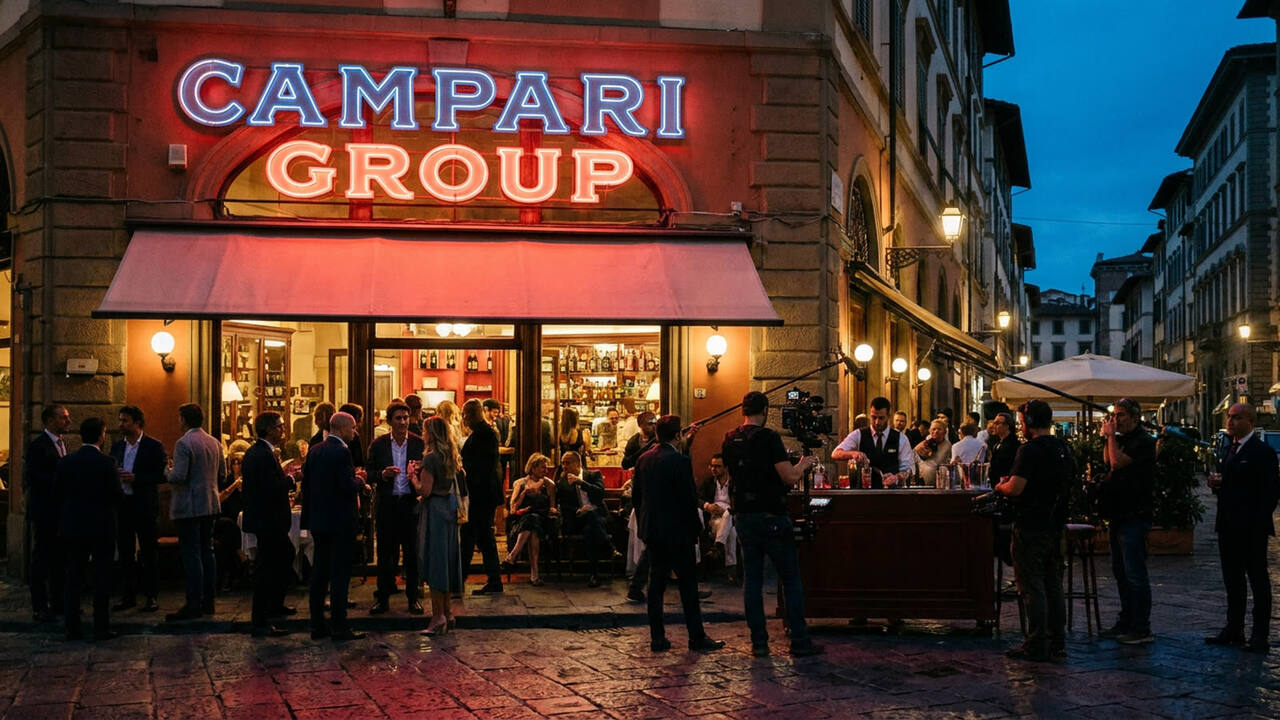
Campari, the Italian spirits conglomerate that owns the eponymous bitter liqueur, has watched its flagship product ride the Negroni wave to remarkable commercial success. The company has carefully cultivated the cocktail's association with Italian sophistication while expanding production to meet global demand. Annual Negroni Week, launched in partnership with a hospitality nonprofit, has transformed what was once a trade promotion into a genuine cultural event, with thousands of bars worldwide participating.
The Negroni's influence extends beyond its own glass. It has spawned countless variations — the Boulevardier substitutes bourbon for gin, the White Negroni swaps in gentian liqueur and blanc vermouth — and has rehabilitated the entire category of bitter Italian spirits. Bottles of amaro that once gathered dust now command premium shelf space.
Our take
The Negroni endures because it asks something of the drinker. Unlike crowd-pleasers engineered for universal appeal, it requires a small act of commitment — accepting that pleasure sometimes arrives wrapped in bitterness. In an era of algorithmic optimization and focus-grouped everything, there is something quietly radical about a drink that has spent a century refusing to smooth its edges. Order one, and you are participating in a tradition that values acquired taste over instant gratification. That the drink also happens to look magnificent is merely a bonus.