When central bankers announce that inflation has cooled to a manageable level, millions of people respond with a single, exasperated question: then why does everything still feel so expensive? The answer lies in a fundamental mismatch between how economists measure price changes and how individuals experience them. This is not a matter of statistical fraud or public ignorance. It is a structural feature of how we quantify economic reality, and understanding it clarifies much about contemporary political anger.
The consumer price index, the most widely cited inflation gauge in most developed economies, tracks a representative basket of goods and services weighted by average spending patterns. The operative word is average. If the typical household spends roughly a third of its budget on housing, that category receives about a third of the index's weight. But you are not the typical household. A retiree on a fixed income spends proportionally more on healthcare and utilities. A young family with children spends more on childcare and groceries. A city-dwelling professional without a car spends nothing on gasoline but a great deal on rent. Each of these people experiences a different inflation rate, even in the same month, in the same city.
The grocery store problem
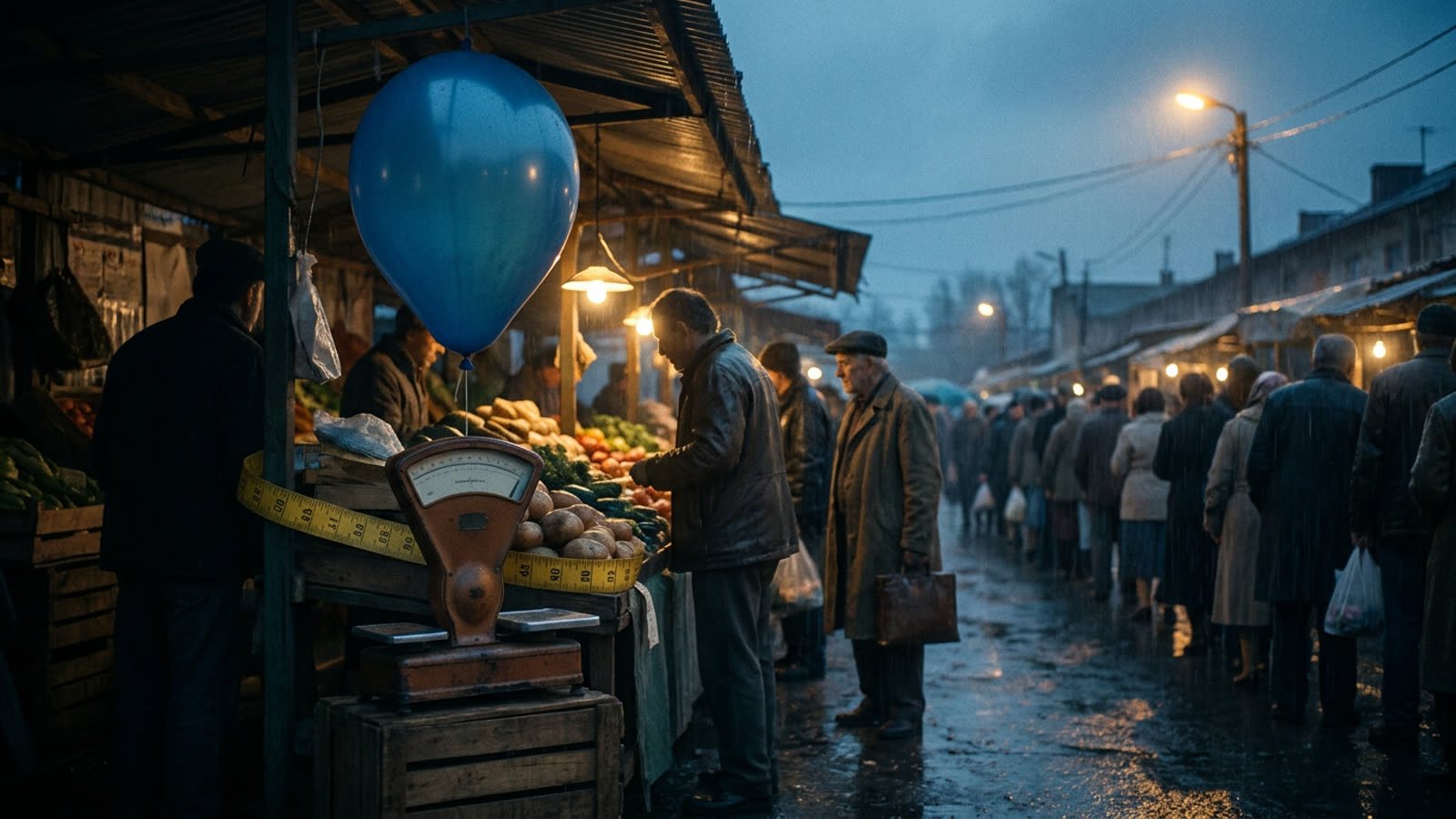
Nowhere is this divergence more visceral than at the supermarket. Food prices tend to be volatile, spiking with droughts, supply chain disruptions, and energy costs. For lower-income households, groceries consume a larger share of the budget, which means food inflation hits them harder in both absolute and psychological terms. Meanwhile, the official index might show modest overall inflation because prices for electronics or airfares have declined. The retiree buying eggs and bread does not care that televisions are cheaper.
This is compounded by what behavioural economists call loss aversion. Humans feel the sting of price increases more acutely than they appreciate price decreases. A twenty percent rise in the cost of coffee registers as an outrage; a twenty percent drop in the cost of streaming subscriptions barely registers at all. The emotional ledger is asymmetric, and official statistics do not account for it.
Housing's lagging shadow
Shelter costs present a different measurement puzzle. Most price indices use a concept called owners' equivalent rent — essentially, what homeowners would pay to rent their own homes. This methodology smooths out the wild swings of actual housing markets but also lags reality by many months. When rents surge, the index catches up slowly. When they stabilise, the index keeps climbing for a while. The result is that official inflation often tells you what housing cost six months ago, not what it costs today. For anyone signing a new lease or shopping for a mortgage, the disconnect can feel like gaslighting.
The politics of perception
This measurement gap has become a fault line in democratic politics. When leaders cite improving inflation data while voters insist their lives are getting harder, both sides are telling a version of the truth. The data reflects a macroeconomic reality; the voters reflect a lived one. Neither is lying, but they are speaking different languages. Populist movements have exploited this dissonance effectively, framing official statistics as elite obfuscation rather than imperfect but honest accounting.
The solution is not to abandon aggregate measures — policymakers need them to set interest rates and fiscal policy. But a more sophisticated public conversation would acknowledge that your inflation is not the inflation, and that the gap between them is not a conspiracy but a consequence of averaging across a wildly heterogeneous economy.
Our take
The next time a central banker declares victory over inflation, remember that they are describing an average that may have little to do with your checkout receipt. This is not cynicism; it is statistical literacy. The anger people feel about prices is real and rational, even when the numbers say otherwise. A healthy democracy requires both rigorous measurement and the humility to admit what measurement cannot capture.