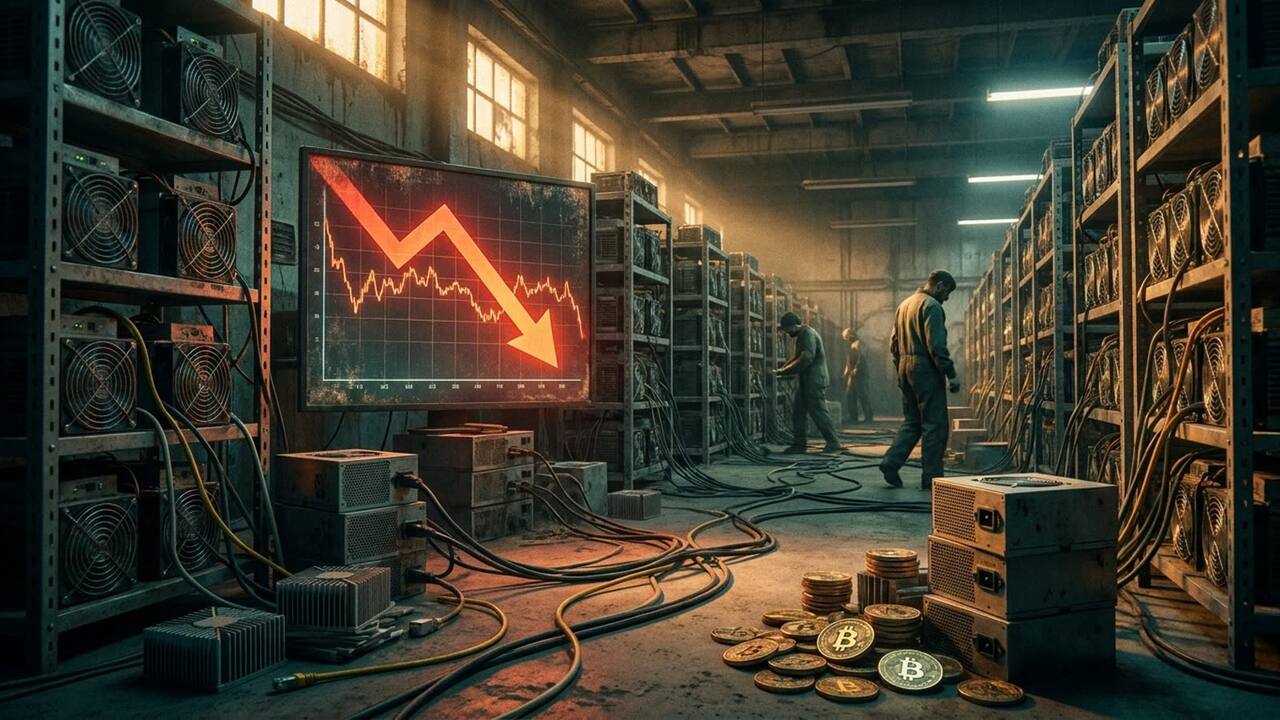
The mathematics of Bitcoin mining have turned hostile. For a growing number of operators, the cost of producing a single Bitcoin now exceeds what the market will pay for it — a situation that cannot persist and will not.
This is not a temporary dip or a buying opportunity dressed up in distress. It is the structural consequence of April 2024's halving event finally working through the system, compounded by Bitcoin's failure to sustain the price levels that miners' business models required. The industry built capacity for a world where Bitcoin traded consistently above $70,000. That world has not materialized.
The arithmetic of unsustainability
Mining economics are brutally simple: electricity costs plus equipment depreciation plus overhead must be less than the value of coins produced. When the halving cut block rewards from 6.25 to 3.125 BTC, it immediately doubled the effective cost of production. Miners bet that price appreciation would compensate. For many, that bet has failed.
The operators feeling the most pain are those who expanded aggressively during 2021's bull run, financing new facilities with debt that now requires servicing regardless of Bitcoin's spot price. They face a grim choice: sell coins immediately upon mining (eliminating any upside from price recovery), draw down reserves accumulated in better times, or simply shut down machines and wait.
Who survives the squeeze
The industry will consolidate around three types of survivors. First, operators with access to genuinely cheap power — typically stranded natural gas, hydroelectric surplus, or sweetheart deals with utilities desperate for baseload demand. Second, publicly traded miners with access to equity markets who can dilute shareholders rather than liquidate operations. Third, vertically integrated players who manufacture their own ASICs and can therefore control their cost structure in ways pure-play miners cannot.
Everyone else faces a slow bleed or a quick exit. The hashrate will eventually adjust downward, difficulty will recalibrate, and equilibrium will return — but not before significant capacity is destroyed and significant capital is lost.
Our take
This is how commodities work. Bitcoin miners spent years insisting they were building critical infrastructure for a new financial system; they are now discovering they are simply commodity producers subject to the same boom-bust cycles as copper miners and oil drillers. The halving was always going to be a stress test. The test is now being graded, and many operators will fail it. The survivors will be leaner, more disciplined, and considerably less romantic about what they do for a living.