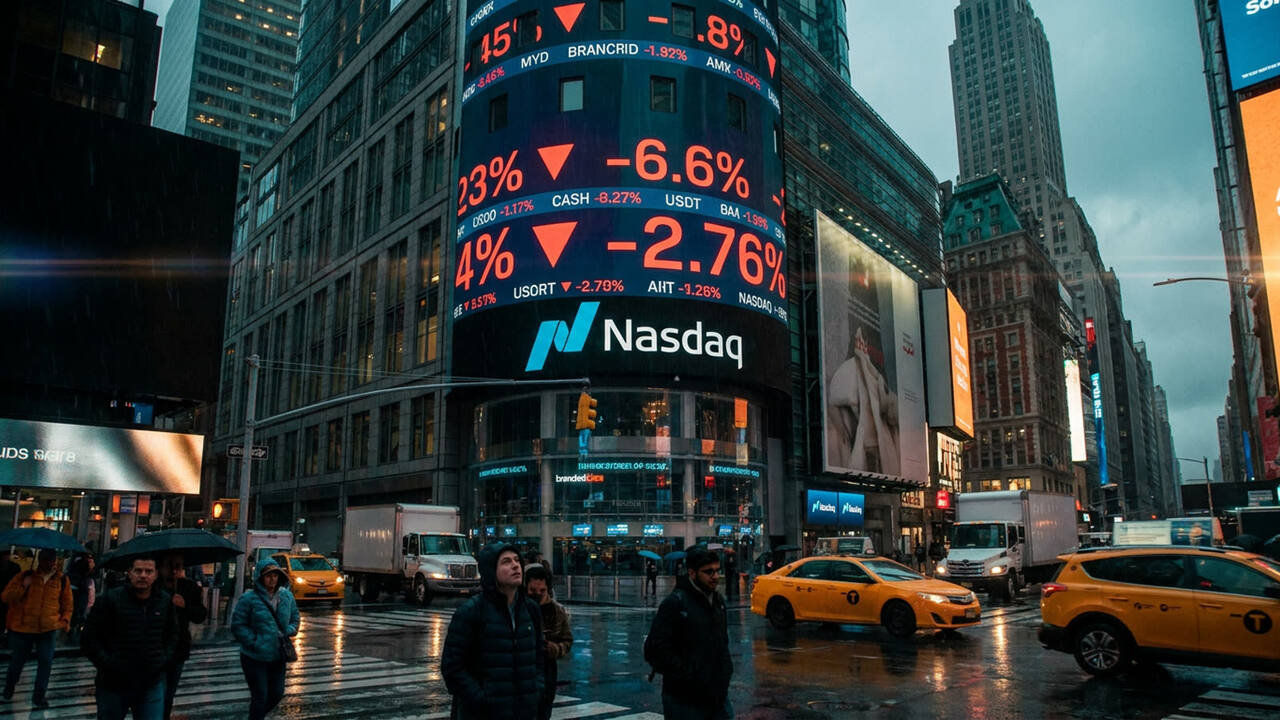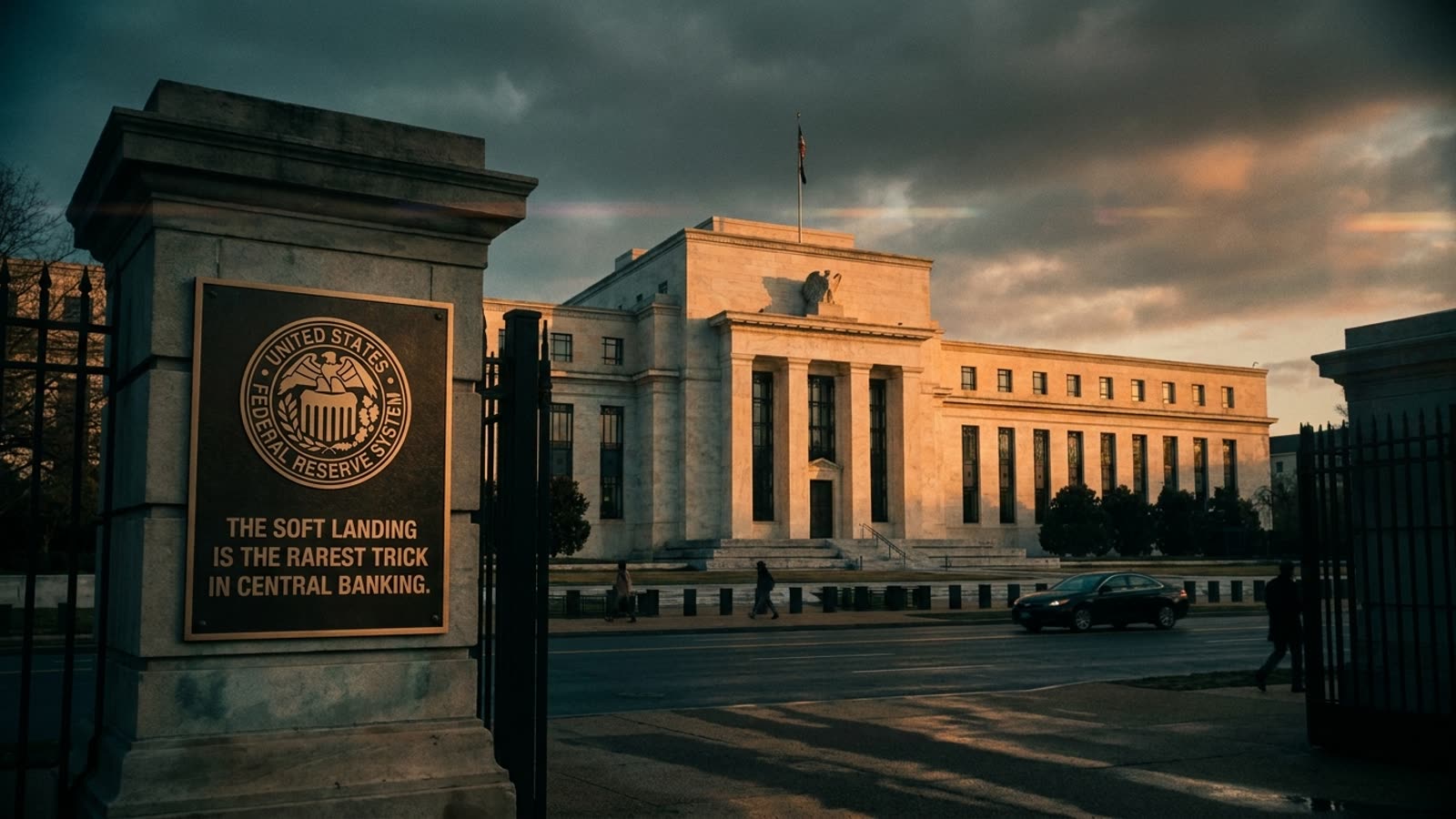
The phrase has become so ubiquitous in financial commentary that it risks losing all meaning: the soft landing, that mythical state in which a central bank raises interest rates enough to cool inflation but not so much as to tip the economy into recession. It sounds reasonable, even modest. In practice, it is extraordinarily difficult, and the historical record suggests we systematically overestimate how often it succeeds.
The metaphor itself is instructive. Landing an aircraft softly requires precise control over speed, altitude, and descent rate in conditions that are largely predictable. Economies offer none of these luxuries. Central bankers operate with lagged data, blunt instruments, and an opponent — inflation expectations — that shifts based partly on what the bankers themselves say. They are landing a plane whose altimeter reports with an eighteen-month delay, whose throttle takes a year to respond, and whose passengers keep opening the emergency exits.
The historical scorecard
Economists debate exactly how many soft landings the Federal Reserve has achieved since it began actively managing inflation in the postwar era. The most generous count identifies three: 1965, 1984, and 1994-95. Skeptics argue that 1965 merely delayed an inevitable reckoning that arrived with the stagflation of the 1970s, leaving only two genuine successes in roughly seventy years of trying.
The 1994-95 episode remains the textbook case. Under Alan Greenspan, the Fed doubled the federal funds rate over twelve months, yet the economy continued growing and unemployment barely ticked up. What gets less attention is the context: productivity was accelerating due to early gains from information technology, oil prices were stable, and the federal budget was moving toward surplus. The Fed made good decisions, but it also caught favourable winds.
Contrast this with 2006-07, when the Fed raised rates into what it believed was a healthy expansion, only to discover that the housing market had become a bomb with a lit fuse. The data looked fine until it suddenly didn't.
Why the base rate is so low
Several structural factors make soft landings improbable. First, inflation typically accelerates because something has already gone wrong — an oil shock, excessive fiscal stimulus, a supply-chain rupture — and by the time the central bank responds, momentum has built. Second, the transmission mechanism of monetary policy is uneven: rate hikes hit interest-sensitive sectors like housing and auto sales quickly, while services and wages adjust slowly. This creates a period where the economy looks resilient right up until it isn't. Third, political and market pressure to stop hiking often arrives before the job is done, tempting policymakers to declare victory prematurely.
There is also a measurement problem. Recessions are only officially dated months or years after they begin. A central banker claiming success in real time is like a surgeon pronouncing an operation successful while the patient is still under anaesthesia.
Our take
None of this means soft landings are impossible, only that they deserve the reverence reserved for genuine achievements rather than the casual expectation that competent management will deliver them. The phrase has become a security blanket for markets, a way of saying "this time will be fine" without engaging with the base rate of failure. Investors and commentators would do well to remember that central banking is not engineering. It is applied uncertainty, practiced in public, with consequences that unfold over years. When a soft landing does occur, the appropriate response is mild astonishment — not the assumption that it was ever the likely outcome.