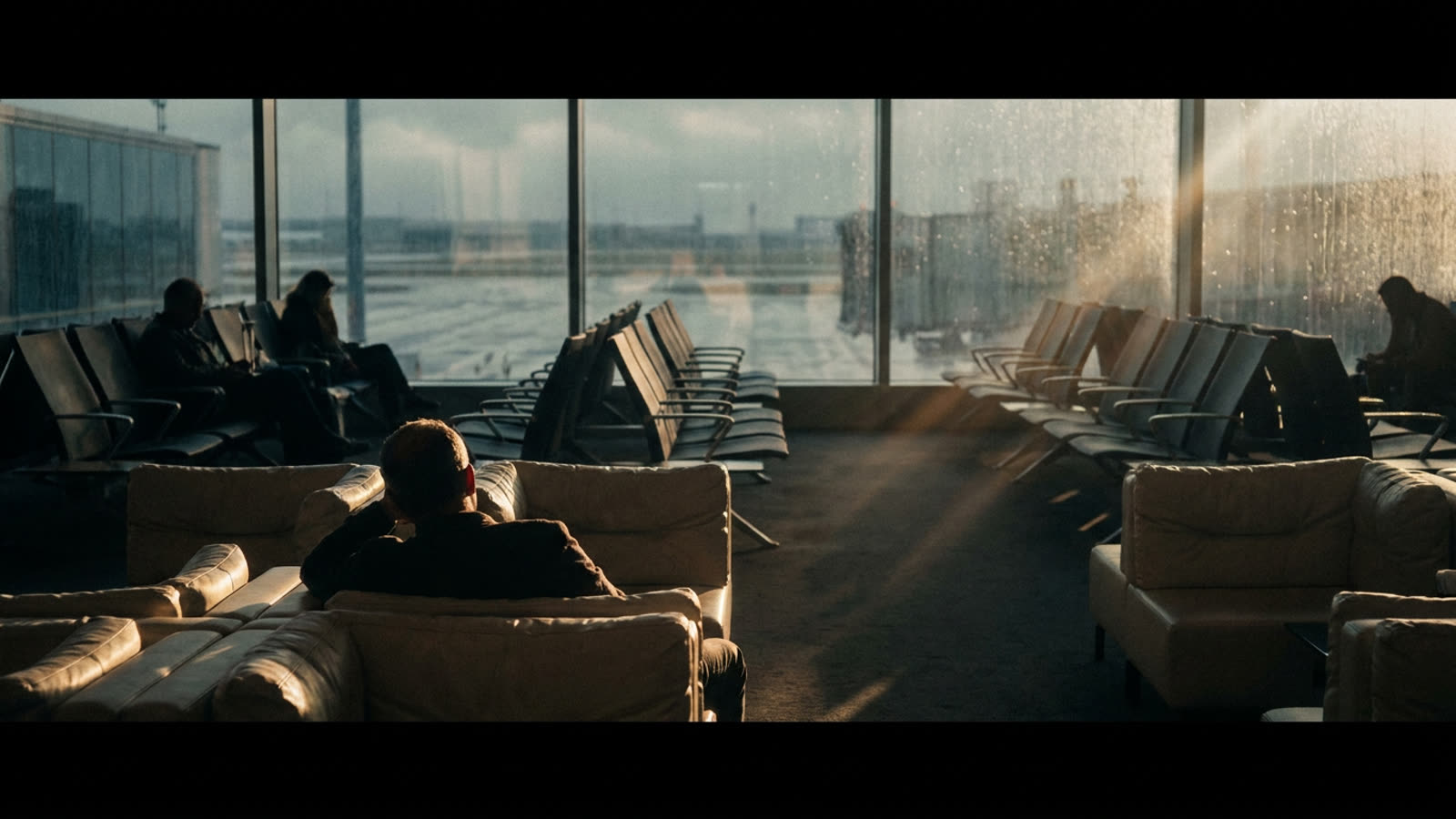
The modern airport is a masterpiece of controlled degradation. You remove your shoes, surrender your water bottle, shuffle through security theater, and emerge into a fluorescent purgatory of overpriced sandwiches and seats designed to prevent sleep. The airport lounge exists because someone realized they could charge handsomely to undo all of this.
The business model is elegant in its cynicism: first, the travel industry strips away every comfort that was once standard, then it sells those comforts back to you at a premium. The lounge is where you buy your way out of the consequences of deregulation, unbundling, and the relentless pursuit of load factors.
The accidental empire
Airport lounges began as modest diplomatic courtesies in the years following the Second World War. Airlines offered private waiting areas to their most valuable passengers—government officials, business executives, the occasional film star. The spaces were functional, not luxurious. A quiet room, a telephone, perhaps a drink.
The transformation came when airlines discovered that access itself was the product. By the 1970s, carriers began charging for lounge membership, creating the first tier of a system that would eventually stratify air travel into something resembling a caste system. Today, the global airport lounge market represents billions in annual revenue, with independent operators, credit card companies, and airlines all competing for the privilege of selling you refuge from the terminal they helped create.
The psychology of the velvet rope
What lounges sell is not champagne or shower suites or unlimited hummus. They sell separation. The appeal is fundamentally about not being in the main terminal with everyone else—the screaming children, the delayed travelers sleeping across three chairs, the general atmosphere of collective endurance.
This is why lounge quality matters less than lounge access. Studies of consumer behavior consistently show that the satisfaction of lounge visitors correlates weakly with the actual amenities and strongly with the simple fact of admission. The velvet rope does most of the work. The sparkling wine is almost incidental.
The overcrowding paradox
Success has become the lounge industry's central problem. Credit card companies discovered that lounge access was the single most effective perk for acquiring premium customers, so they began issuing cards with lounge privileges to anyone with reasonable credit. The result is predictable: the very exclusivity that made lounges valuable has been diluted by the volume of people trying to access it.
Priority Pass, the largest independent lounge network, now grants access to tens of millions of cardholders. At peak hours, popular lounges turn away visitors or impose time limits. The sanctuary has become crowded. The industry's response has been to create new tiers—the lounge within the lounge, the invitation-only space, the private suite. The ladder extends upward indefinitely.
Our take
The airport lounge is a monument to what economists call manufactured scarcity. The discomfort of modern air travel is not inevitable; it is designed, optimized, and monetized. Lounges exist because airlines learned they could make the baseline experience just unpleasant enough that a significant percentage of travelers would pay to escape it. This is not a criticism so much as an observation: the lounge is perhaps the purest expression of contemporary capitalism, a product that solves a problem its own industry created. And still, when the gate agent announces yet another delay, we find ourselves grateful for the quiet room and the free coffee. The system works exactly as intended.