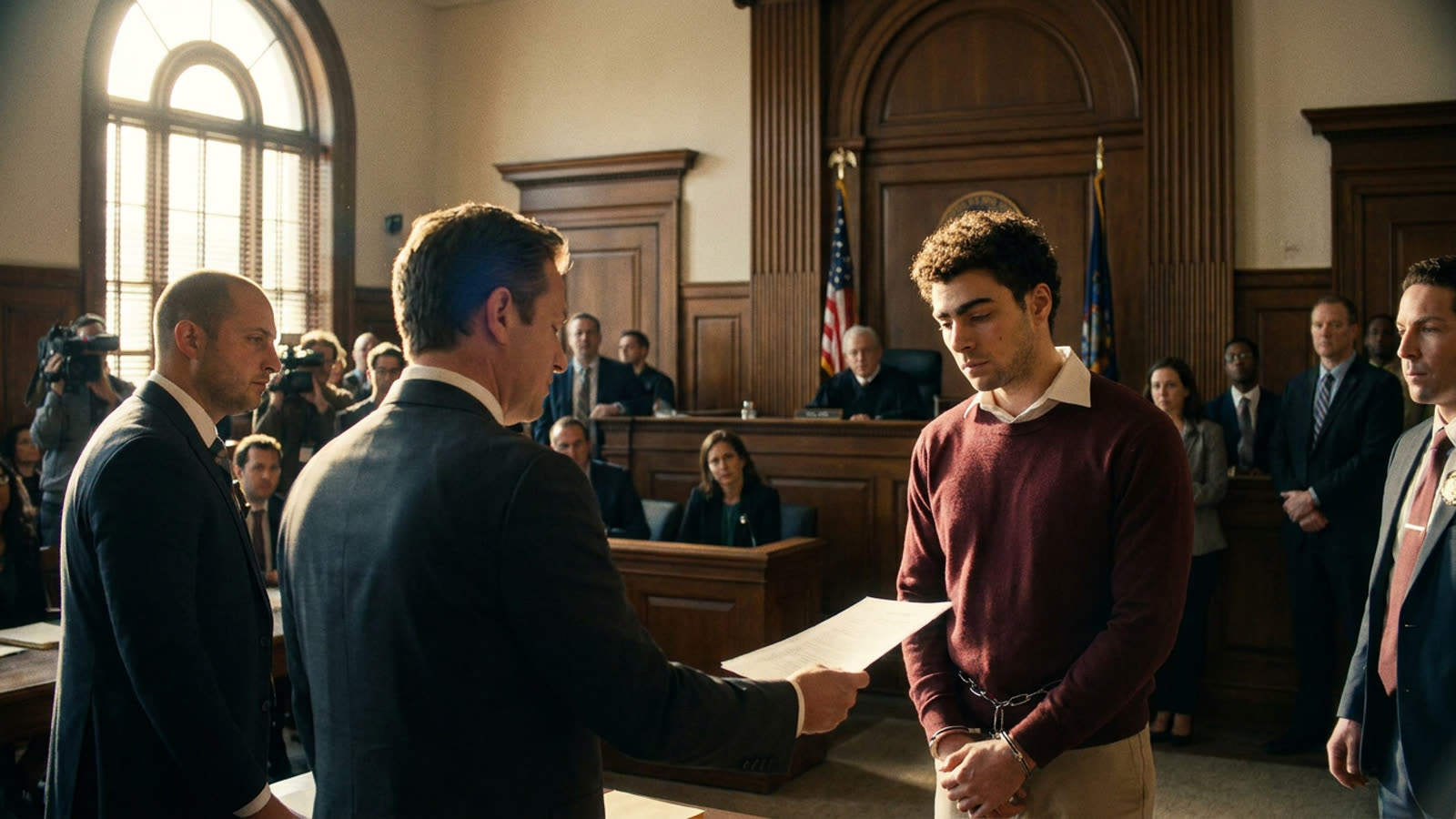
The defendant who became an unlikely folk hero for allegedly assassinating a health insurance executive has made a surprising courtroom maneuver: Luigi Mangione has withdrawn his emotional disturbance defense, at least for now, signaling that his legal team is recalibrating its approach to the most watched criminal trial since Kyle Rittenhouse.
The decision, revealed in court filings this week, strips away what had seemed like the obvious play for a defendant whose alleged manifesto railed against the American healthcare system. An emotional disturbance defense would have acknowledged the killing while arguing diminished culpability — a path that might have resonated with the substantial portion of the public that has expressed sympathy for Mangione's apparent grievances, if not his methods.
A Riskier Gambit
Withdrawing the defense suggests Mangione's attorneys see a different path forward. Without the emotional disturbance argument, the defense must either mount a more aggressive challenge to the prosecution's evidence or prepare for a trial strategy that leans into the political dimensions of the case. Neither option is safe, but both preserve something the mental-health defense would have surrendered: the ability to cast Mangione as a rational actor responding to systemic injustice rather than a disturbed individual who snapped.
This matters because Mangione's cultural moment has been defined by people who see him as a symptom of a broken system. A defense predicated on emotional disturbance would undercut that narrative, reducing him from symbol to patient.
The Prosecution's Adjustment
Manhattan prosecutors now face a defendant who appears willing to fight on factual grounds rather than seek a reduced charge through psychiatric mitigation. This could extend the trial, increase the evidentiary burden on both sides, and guarantee that the healthcare industry's practices remain central to courtroom testimony. The prosecution had likely prepared for a defendant trying to minimize culpability; they may now face one trying to maximize attention.
Our take
Mangione's legal pivot is either brilliant or reckless, and possibly both. By refusing the emotional disturbance off-ramp, he and his attorneys are betting that a jury — or at least the court of public opinion — will engage with the substance of his apparent beliefs rather than dismiss him as mentally unwell. It is a gamble that treats the trial as a platform rather than merely a proceeding. Whether that serves Mangione's interests or simply extends his notoriety remains the open question that will define the coming months.