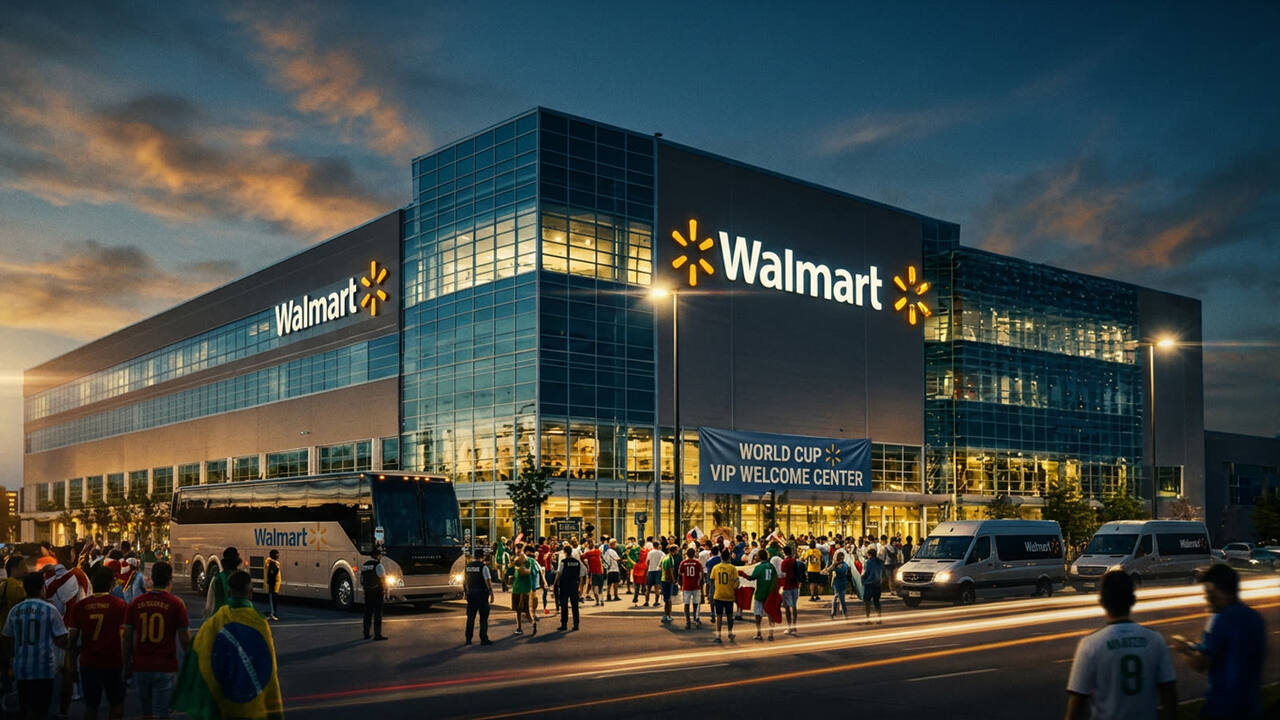
The 2026 World Cup has produced plenty of surreal images—Messi weeping in extra time, Belgian fans storming the pitch in protest, Swiss neutrality weaponized as a counterattacking philosophy. But perhaps none captures the tournament's American essence quite like this: Walmart is now offering VIP tours to visiting supporters.
The retail giant, whose supercenters dot the landscape around every host city, has begun marketing curated shopping experiences to the millions of international fans flooding into the United States. The tours promise everything from exclusive merchandise access to guided introductions to American consumer culture—a phrase that, in any other context, might read as satire.
The logic is obvious, the execution is not
Walmart's play makes a certain brutal commercial sense. The World Cup is projecting 3.5 million in-person attendees across its 48-match American leg, with surveys suggesting the average international visitor will spend substantially more per day than domestic tourists. These fans need somewhere to buy sunscreen, phone chargers, and the inexplicable quantities of snacks Americans consider normal. Why not make the transaction memorable?
But the execution raises questions. What exactly constitutes a "VIP" experience at a Walmart? Priority access to the self-checkout lanes? A personal greeter who explains why Americans buy mayonnaise in gallon containers? The company has been coy about specifics, suggesting the tours will be "tailored to each visitor's home country" and include "cultural touchpoints." One imagines a German fan being solemnly introduced to the spray cheese aisle.
The stadium-adjacent economy
What Walmart understands—and what many American sports executives have been slower to grasp—is that the World Cup creates an entirely different commercial ecosystem than domestic leagues. NBA Finals viewers are already acculturated to American retail. They know Target from Costco, understand that CVS receipts are inexplicably long, have opinions about Trader Joe's wine selection.
World Cup visitors do not. For millions of fans from Europe, South America, Africa, and Asia, this tournament represents their first extended encounter with American consumer infrastructure. Walmart is betting that first impressions matter, that a guided tour through the temple of low prices might create brand loyalty that outlasts the tournament.
Our take
There is something deeply American about turning a supermarket visit into a ticketed attraction, about recognizing that the real show might not be on the pitch but in the aisles. Walmart's World Cup gambit is crass, obvious, and probably brilliant. The company has correctly identified that for international visitors, American retail excess is itself a spectacle—one that requires no translation, no cultural context, no understanding of the offside rule. The beautiful game meets the beautiful margin.