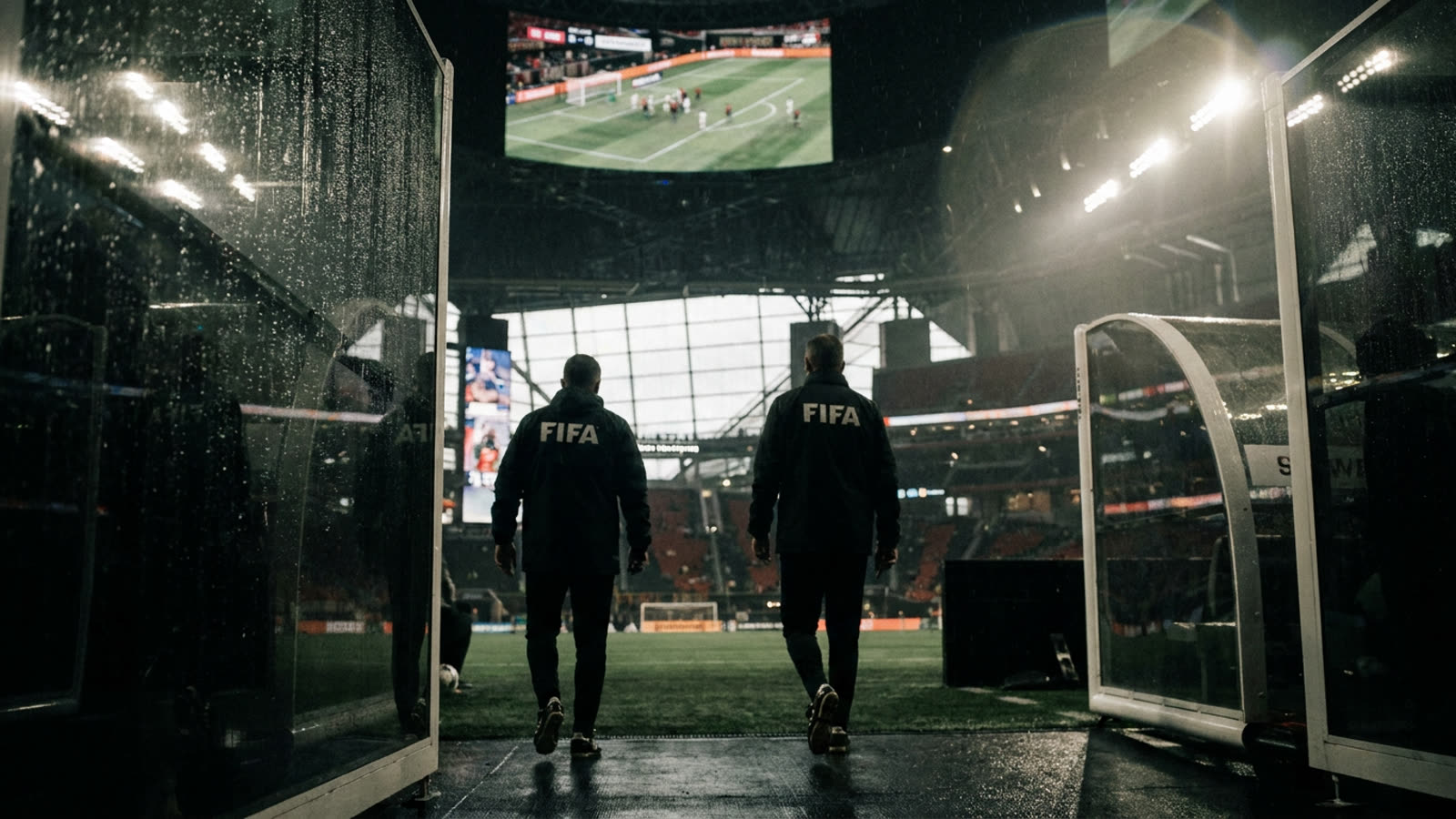
The timing could not have been more uncomfortable. With the United States preparing to face Belgium in what promises to be one of the most-watched matches of the tournament's American edition, FIFA announced it had suspended two U.S. officials from the game — a belated acknowledgment of the obvious conflict that somehow required formal intervention.
The suspensions underscore a peculiar vulnerability in FIFA's officiating apparatus: the host nation's referees cannot simply be quarantined from proceedings when that nation fields a competitive squad advancing deep into the bracket. The governing body's statement offered bureaucratic boilerplate about "maintaining competitive integrity," but the subtext was unmistakable — someone, somewhere, had allowed the assignment process to drift perilously close to farce.
The mechanics of referee allocation
FIFA typically maintains strict protocols preventing officials from working matches involving their home countries. The system relies on a combination of automated exclusions and human oversight from the Referees Committee. That two American officials were in position to require last-minute suspension suggests either a procedural breakdown or — more charitably — that their original assignments to other matches created downstream scheduling conflicts that briefly put them in proximity to the Belgium fixture.
Neither explanation flatters the organization. World Cup officiating pools are assembled years in advance, with contingencies mapped for precisely these scenarios. The tournament's expansion to 48 teams has stretched resources, but the host nation's path through the bracket is hardly unpredictable.
Belgium's quiet complaint
Belgian federation officials reportedly raised concerns through back channels after the round-of-16 draw confirmed the matchup. Whether those concerns prompted FIFA's action or merely coincided with an internal review remains unclear. The Belgian camp has declined to comment publicly, aware that any appearance of lobbying creates its own narrative complications.
The Red Devils enter the quarterfinal as slight underdogs against an American side buoyed by home support and a favorable draw. Kevin De Bruyne, still nursing the ankle that limited him against Japan, is expected to start but may not complete ninety minutes. Belgium cannot afford to spend pre-match energy relitigating officiating assignments.
The broader pattern
This is not FIFA's first referee controversy of the tournament. The group stage produced several VAR interventions that left managers fuming and pundits divided. The technology, now a decade into its World Cup deployment, has not eliminated contentious calls so much as relocated the arguments to different rooms. Adding nationality questions to the mix risks compounding skepticism about the tournament's administration.
Host-nation advantages are as old as international football itself. Favorable draws, familiar conditions, crowd support — these are accepted, even celebrated, features of the format. Officiating is the one domain where the appearance of impartiality is supposed to be absolute. FIFA's suspension announcement, however necessary, concedes that the appearance had already been compromised.
Our take
The suspensions are the right call, obviously. But they arrive too late to be reassuring. A competent organization would have ensured American officials were never within administrative proximity of a U.S. knockout match in the first place. That FIFA needed to issue a formal suspension days before kickoff suggests the governing body's vaunted integrity protocols are more aspirational than operational. Belgium and the United States will play their quarterfinal under a small cloud that should never have formed. The match deserves better framing than "at least the refs aren't American."